Vienna’s past shows up in 3D. You ride past the big sights, then put on VR glasses to meet the city’s famous people. I like the air-conditioned minibus setup for comfort, and I like that you don’t need museum tickets to get a sense of what major events looked like.
One catch: this isn’t for everyone. The tour is marked not suitable for children under 7, people with mobility impairments, or visually impaired guests.
In This Review
- Key things to know before you go
- Future Bus + VR in Vienna: what you’re really buying for $32
- Where the tour starts: Albertinaplatz and the purple minibus
- The 1-hour loop: how the bus ride teaches Vienna fast
- VR stop 1: meeting Eugene of Savoy, Archduke Charles, and Maria Theresia
- VR stop 2: Vienna City Hall and the Burg theatre area
- VR stop 3: Schottentor and the Votive Church assassination story
- The bus ride highlights you’ll see between VR moments
- VR stop 4: Ringstraße and the final return to Albertinaplatz
- Who this tour is best for (and who should skip it)
- Booking tips so you don’t waste the first 10 minutes
- Should you book the Vienna bus tour with VR?
- FAQ
- How long is the Vienna bus tour with VR?
- Where do I meet the tour, and where does it end?
- How much does it cost?
- How many virtual reality stops are included?
- What’s included in the ticket price?
- What languages are available for the audio guide?
- What do I need to bring with me?
- Are food or drinks allowed on the vehicle?
- Is the tour suitable for children and mobility needs?
Key things to know before you go
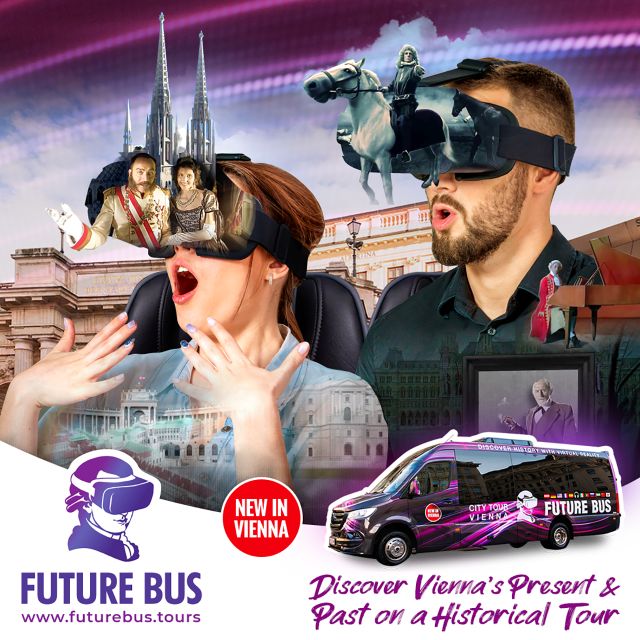
- Meet at Albertinaplatz, behind the State Opera on a purple minibus
- 4 virtual reality stops timed into a 1-hour loop on Vienna’s main highlights
- Audio guide is multi-language (including English and several others) with a professional guide
- You’ll see landmark architecture from the windows between VR moments
- Bring ID and plan on no food or drinks in the vehicle
Future Bus + VR in Vienna: what you’re really buying for $32
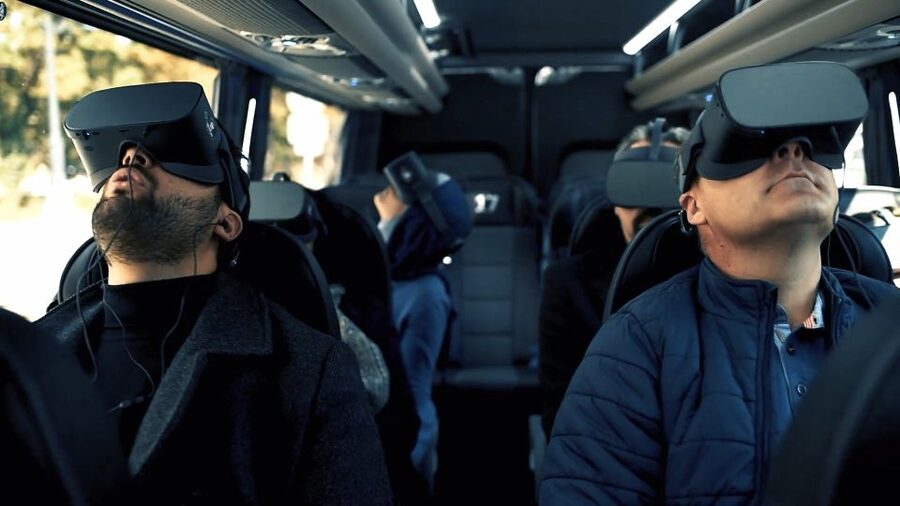
At $32 per person for about an hour, this tour is a “hits-and-context” option. You’re not paying for building entry, long walking routes, or a full-day schedule. Instead, you’re paying for two things working together: a guided minibus loop plus high-quality VR scenes that explain what you’re seeing.
I like that the time is tight. Vienna is huge in scope, and if you only have a short window, it can be hard to decide what to do. This makes your sightseeing more structured: you get the Ringstraße view, the big civic buildings, and the story links that help them mean something.
The VR stops are also the main reason this doesn’t feel like a standard bus tour. You’re given instructions to put on the glasses, then you meet key historical figures during those scheduled moments. Think of it as a fast way to connect people and places, rather than just recognize facades.
Where the tour starts: Albertinaplatz and the purple minibus
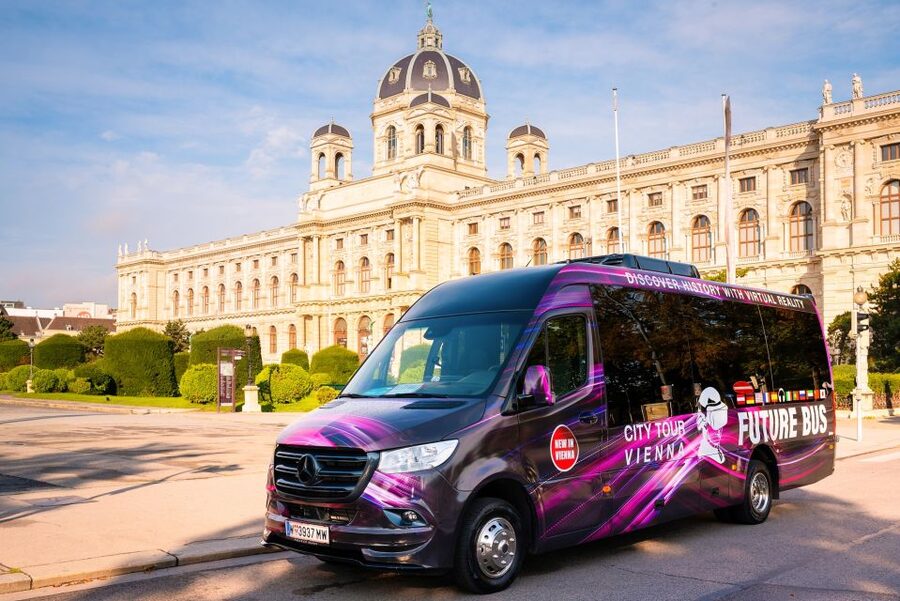
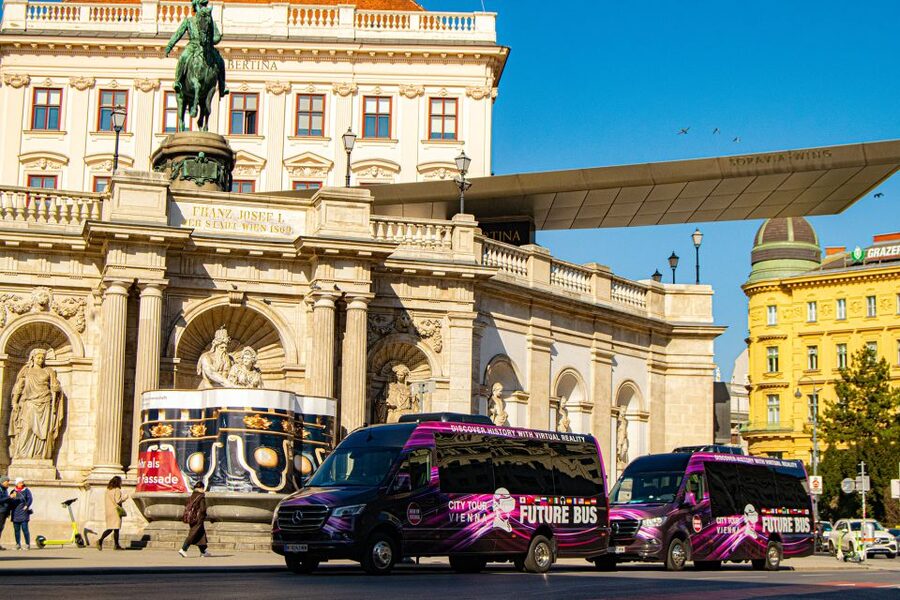
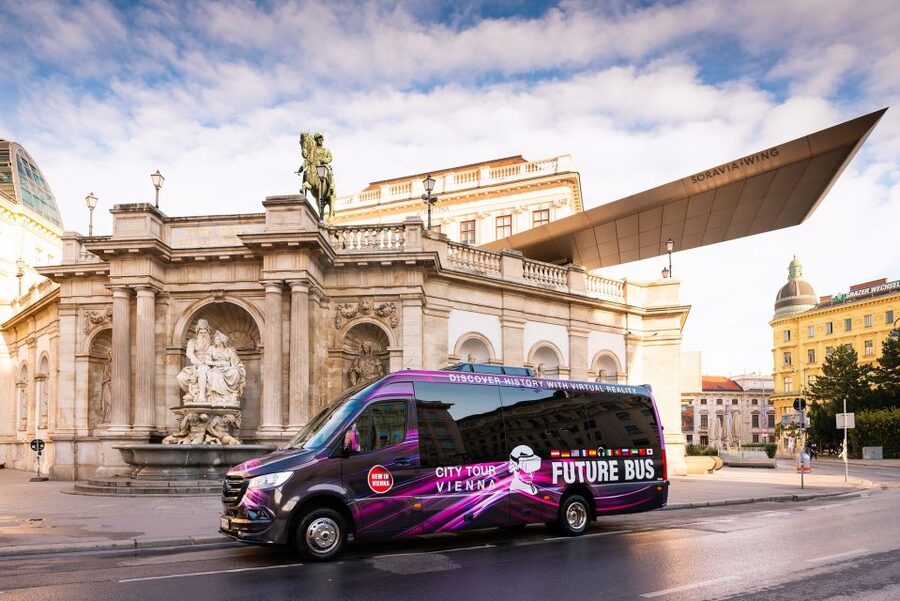
Your tour begins and ends at the same spot: Albertinaplatz, right behind the State Opera. You’ll want to arrive at least 10 minutes early, because the tour starts on time and the driver needs everyone settled before moving out.
The vehicle is a purple minibus, and the driver wears a purple shirt. That sounds small, but it matters when you’re arriving in a busy area with lots of other tour buses around. The cleaner you make the start, the less you waste time before the first stories kick in.
Also note a practical point: you’ll be using earphones for the audio guide. So if you’re the type who forgets chargers and accessories, this is a good moment to double-check you’re ready to listen clearly and stay with the group instructions.
The 1-hour loop: how the bus ride teaches Vienna fast
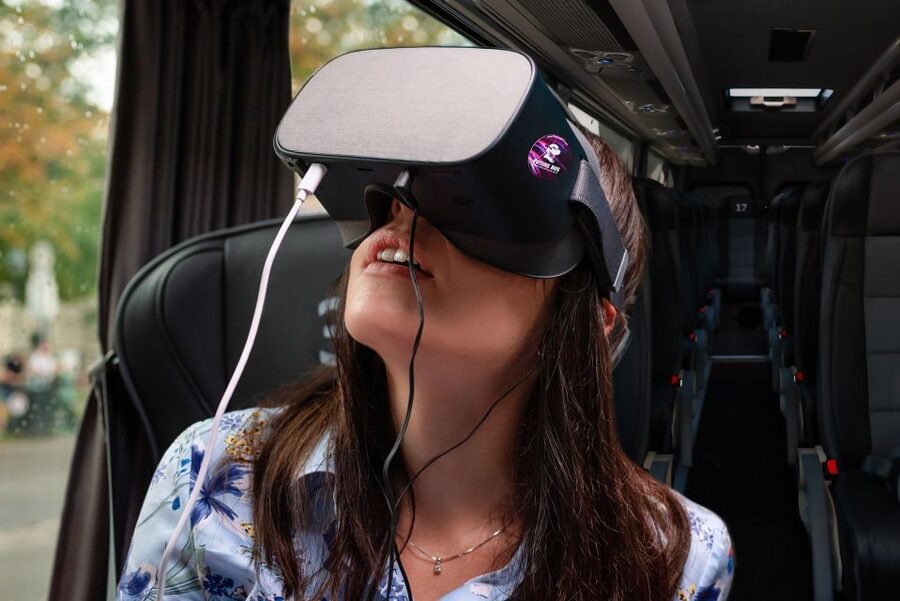
The route is designed like a guided highlight reel. The minibus takes you past major landmarks, while the audio guide sets context so you don’t just see impressive buildings—you understand why they matter.
You’ll start by passing major sights including the State Opera, Heroes Square, and Maria Theresia Square. Then you’ll make a first out-of-four VR stop, where the VR experience is paired with stories about major figures tied to Vienna’s rise and power.
Between VR moments, you’ll also see a lot from the large windows beside you. That’s a real advantage over tours where you’re stuck looking down at your phone while moving. Here, you’re meant to glance outside for recognizable skyline points while the guide keeps the narrative moving.
One smart detail: the stops are spaced so you don’t feel like the bus is only transport. The ride time is part of the storytelling, then the VR is used as the “story payoff” at specific moments.
VR stop 1: meeting Eugene of Savoy, Archduke Charles, and Maria Theresia

The first VR experience happens after you begin by seeing Vienna’s prominent buildings, including the State Opera area and the squares tied to the Habsburg-era world. At this stage, you hop off for your first of four virtual reality stops.
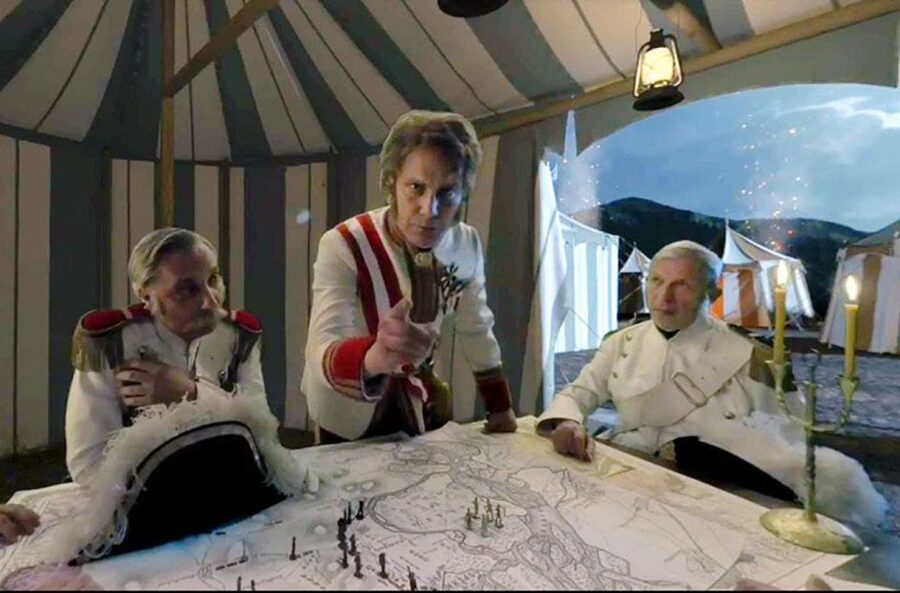
Then the instructions start: you wear the VR glasses and follow what the guide tells you to do. The big theme here is meeting some of Vienna’s most famous people—specifically Eugene of Savoy, Archduke Charles, and Maria Theresia.
Why this works: it turns name recognition into something you can visualize. Instead of reading a plaque at a distance, you get a guided introduction during the VR segment. Even if you’re not a deep-history person, pairing “who” with “where” is the fastest way to make a city stick in your memory.
A small realism point: VR is a guided experience that runs within a short time window. So treat this as an overview tool. If you want to study Vienna’s politics and wars in detail, you’ll still want longer museum time later—but for a one-hour plan, this is doing a good job of framing.
VR stop 2: Vienna City Hall and the Burg theatre area
After the first VR segment and the tour continues, the bus passes by the Volksgarten and the Austrian Parliament. Then you stop in front of Vienna’s city hall, near the Burg theatre area. This is where the second VR stop happens.
This part of the route matters because Vienna’s civic spaces are visually loud. The architecture is designed to project power, stability, and identity. When your audio guide ties that design to the city’s past, the buildings stop feeling like wallpaper.
The VR moment here adds a second chapter to what you’re learning. You remove the glasses after each VR stop and continue by bus, which keeps the experience moving. You’re not stuck in a single place long enough to lose energy, and you’re not only rushing from one photo spot to another.
If you like having a reason for why you’re at a place—rather than collecting photos—this is a good rhythm.
VR stop 3: Schottentor and the Votive Church assassination story
The third VR stop is near the Neo-gothic Votive Church. On the way there, the bus travels toward Schottentor, and then you get the next VR segment after passing the surrounding landmarks.
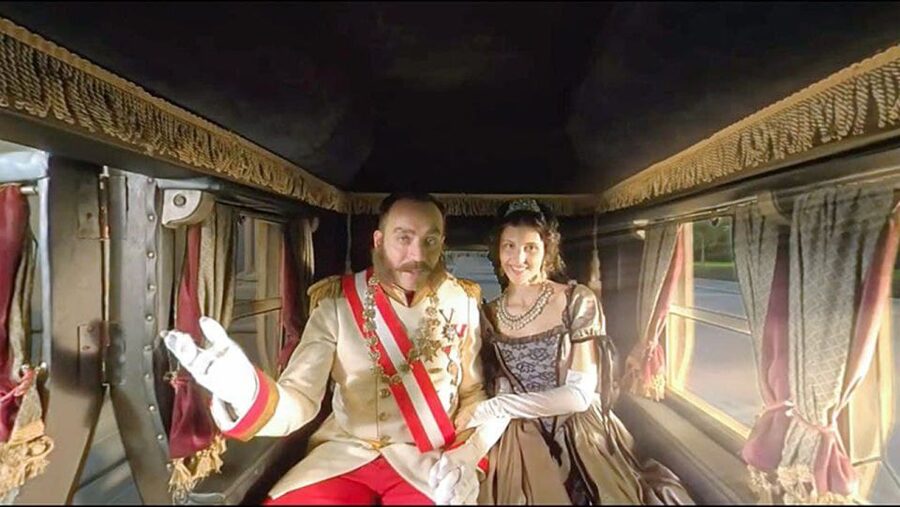
This stop’s story focus is intense: you’ll learn about an assassination attempt involving Emperor Franz Joseph and his brother Maximilian. That topic is not subtle, and using VR here makes the moment feel more grounded in a setting, even if it’s a dramatized educational experience.
Between the dramatic storyline and the Gothic/neo-gothic look of the Votive Church area, this stop gives the tour its emotional center. It’s one of the best examples of how the tour tries to teach through narrative, not just sightseeing.
Practical note for your comfort: plan to follow the guide’s pace closely during VR. Short tours add up quickly, and if you fumble the glasses or instructions, you’ll feel it.
The bus ride highlights you’ll see between VR moments
Your minibus window time is a major part of the value. The tour passes or slows by landmarks including:
- Volksgarten
- Austrian Parliament
- Vienna city hall and the Burg theatre area
- Volks theatre
- Museumsquartier
- Secession building
- Naschmarkt
- Karlskirche
- Plus a final return toward the Ringstraße area
Here’s why I think these window views are useful: Vienna isn’t just one iconic building. It’s an outfit of eras—classical, imperial, and later styles. A quick bus loop is one of the only realistic ways to sample that variety in a single hour without sprinting on foot.
Also, you get to admire these sights from inside the air-conditioned minibus. That matters because Vienna weather can shift fast. Even when it’s chilly or wet outside, the bus keeps you from getting bogged down by discomfort.
VR stop 4: Ringstraße and the final return to Albertinaplatz
After the third VR stop and more audio-guided passing of landmarks, you’re driven back toward the Ringstraße. This is the tour’s closing sightseeing spine—Vienna’s most famous boulevard layout in a nutshell.
Then you return to your starting point behind the Opera for the final VR stop. That pacing is deliberate. You finish with the Ringstraße area, so the tour leaves you with a clear “main corridor” in your mind. It makes it easier to plan your next stop on your own, because the city’s most recognizable geography is now in your head.
Once the final VR moment is done, the tour ends back where it started at Albertinaplatz.
Who this tour is best for (and who should skip it)
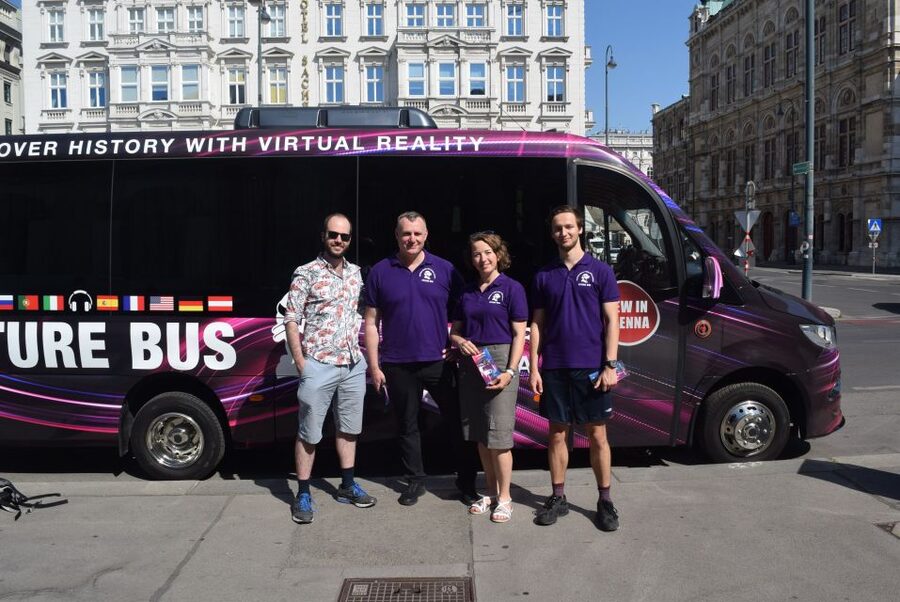
This works especially well if you want to learn without spending time in lines. You’ll get the bus sightseeing, the guided narration, and 4 VR segments without needing building entry tickets.
It’s also a strong choice for families with kids old enough to handle VR glasses and follow the group pace. The tour isn’t suitable for kids under 7, but for older kids, the structure is built for short attention spans: ride, learn, VR stop, continue.
Where you might want to skip it:
- If you’re mobility-limited or visually impaired, because the tour is marked not suitable for those needs.
- If you want deep, slow walking tours with lots of on-street time. This is fast by design, and you’ll only spend a short amount of time at each VR stop area.
If you’re a first-timer in Vienna and you’re choosing between a basic bus loop and this bus-plus-VR concept, I’d lean toward this one. It’s more likely to change how you remember the city rather than just how you photograph it.
Booking tips so you don’t waste the first 10 minutes
A couple of small things make your experience smoother.
- Arrive early at Albertinaplatz behind the Opera so the minibus can leave on time.
- Bring passport or an ID card, since that’s required for the activity.
- Plan on no food or drinks in the vehicle, so if you need a snack, do it before you meet up.
- If you’re deciding between languages, check what’s available for you since the driver and audio guide have multiple options.
Also, the tour uses a mix of audio guide listening and VR glasses. If you’re prone to motion sensitivity, consider whether VR plus a bus ride is a good match for you. The tour is short, but it’s still movement plus screens.
Should you book the Vienna bus tour with VR?
If your main goal is a one-hour way to understand Vienna’s key places and people, I think this is a solid booking. For $32, you’re getting a structured bus circuit plus four VR moments that turn landmark architecture into stories you can recall.
I’d skip it if accessibility is an issue, if you’re traveling with someone who can’t use VR glasses comfortably, or if you need a slow, leisurely walking style of tour. And if you crave deep museum-level time, you’ll still want other stops later.
But for the sweet spot—first-time Vienna, limited time, and a preference for learning while you see the city—this one earns a place on the itinerary.
FAQ
How long is the Vienna bus tour with VR?
The tour lasts about 1 hour.
Where do I meet the tour, and where does it end?
You start at the welcome stop at Albertinaplatz, right behind the State Opera. The tour ends back at the same meeting point.
How much does it cost?
The price is $32 per person.
How many virtual reality stops are included?
You get 4 VR stops during the tour.
What’s included in the ticket price?
You get a bus tour through Vienna’s main sights, an audio guide with commentary, and a virtual reality experience through high-quality VR glasses.
What languages are available for the audio guide?
The audio guide is available in English, German, Spanish, French, Italian, Japanese, Chinese, Russian, Portuguese, and Arabic.
What do I need to bring with me?
You should bring a passport or ID card.
Are food or drinks allowed on the vehicle?
No—drinks in the vehicle and food in the vehicle are not allowed.
Is the tour suitable for children and mobility needs?
It’s not suitable for children under 7 years. It’s also not suitable for people with mobility impairments, and it’s not suitable for visually impaired people.