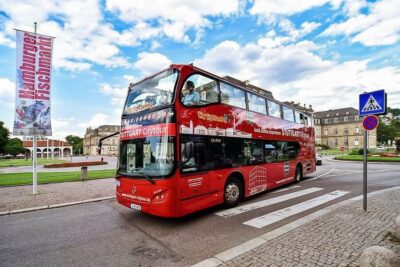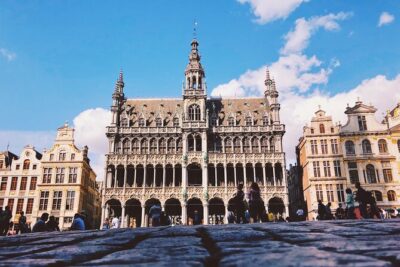
Vienna in one ride, then your pace. This hop-on hop-off bus tour is built for quick orientation: you ride, listen, and jump off when something grabs you. I especially love the flexibility of hop on and hop off as often as you want, and the 19-language audio that keeps each stop clear. The main catch is simple: if you pick a short ticket like 24 hours, your time on the ground can feel rushed.
What makes it work well is the way the routes connect big-name sights to practical places in town. You’ll get GPS live tracking on the website, plus free Wi-Fi on board, so you’re not stuck waiting in the street with nothing to do. One more thing to note: the Green Line runs only in the summer months, so your plan should be seasonal.
The bus tour also plays nicely with walking time. Your ticket includes a self-guided walking tour app with a route that ties together major music and culture stops, including the Vienna State Opera and Beethoven-related sights.
In This Review
- Key Things I’d Actually Plan Around
- How The Hop-On Hop-Off Pass Works in Vienna
- Red Route Along the Ring Road: Opera, Museums, and Imperial Blocks
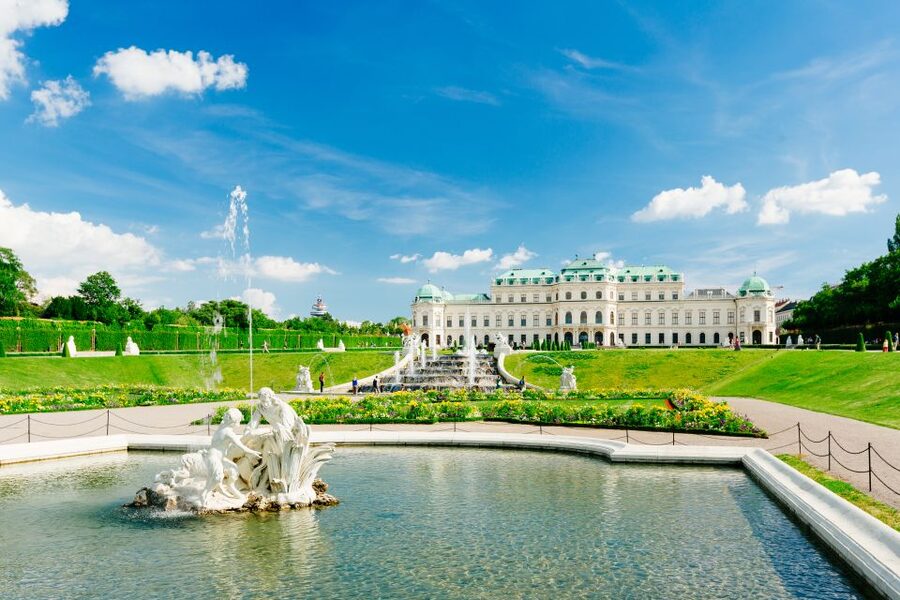
- Yellow Route to Schönbrunn and Belvedere: Palaces on Two Tracks
- Blue Route Through Prater and the Danube: Hundertwasser to Riesenrad
- Green Line Summer Views: Grinzing and Cobenzl Panoramas
- The QuietVox Walking Tour App: Beethoven to the Opera at Your Pace
- Audio Guide in 19 Languages + Free Wi‑Fi on Board
- Timing and Stop Strategy for 24, 48, and 72 Hours
- If you have 24 hours
- If you have 48 hours
- If you have 72 hours
- Price and Value: Is Around $41 a Smart Deal?
- What to Watch Out For: Frequency, Weather, and Audio Quirks
- Frequency can change your pace
- Stop time can feel long if you’re in a hurry
- Audio quality depends on setup
- Weather changes comfort
- Who Should Book This Hop-On Hop-Off Bus Tour
- Should You Book This Vienna Hop-On Hop-Off Bus?
- FAQ
- How long is the hop-on hop-off ticket valid?
- How many routes can I use?
- How often do buses arrive on each route?
- What’s included besides bus rides?
- Do I need to buy separate entrance tickets?
- What languages are available for the audio guide?
- Where do I board the buses and get my ticket?
- Are pets allowed on the tour?
- Are there any restrictions I should know before riding?
Key Things I’d Actually Plan Around
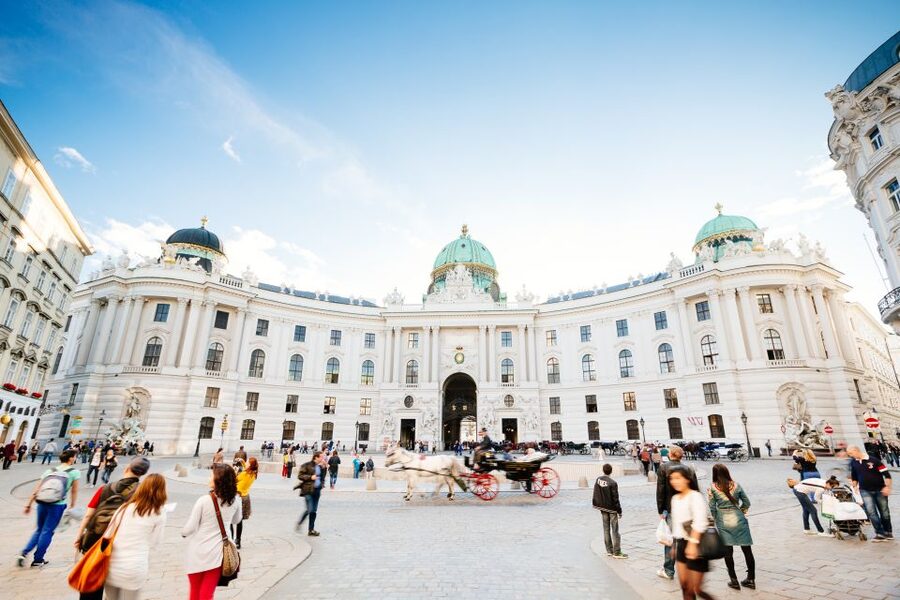
- Up to 4 routes, one ticket: Red, Yellow, Blue, and (in summer) Green help you avoid crisscrossing the city.
- Audio in 19 languages: Choose from major European and global languages, including Polish, Korean, Serbian, plus Arabic.
- Regular bus frequency: Red runs about every 30 minutes; Yellow every 20–25; Blue about every 20.
- Comfort perks: Free Wi‑Fi on all buses, and GPS live tracking to reduce guesswork.
- Seasonal panoramic bonus: Green Line covers Grinzing and Cobenzl viewpoints only during summer service.
- Walking tour app included: QuietVox Guiding App ties music/culture highlights together at your own pace.
How The Hop-On Hop-Off Pass Works in Vienna
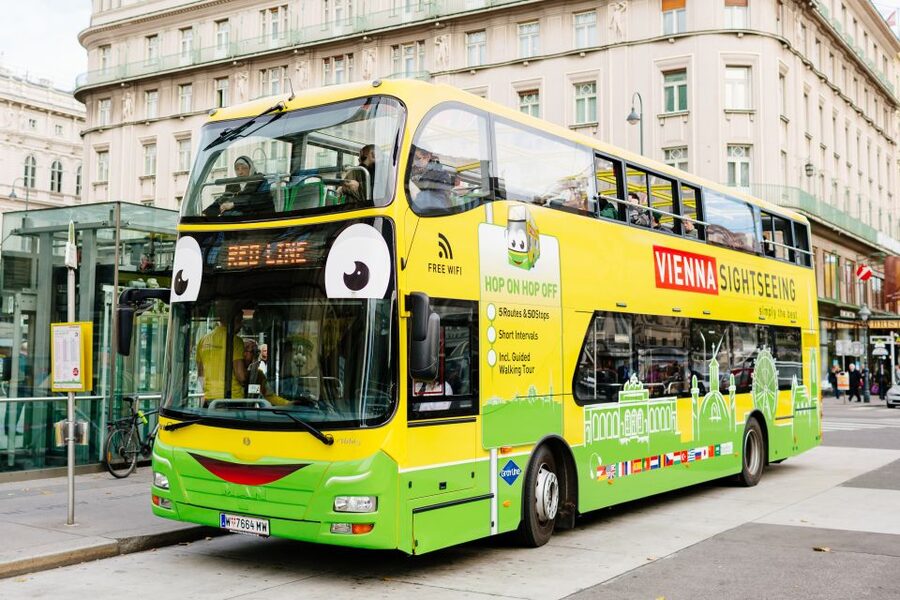
This is a classic hop-on hop-off setup. You board the yellow buses operated under the Vienna Sightseeing Tours name, then you can get off at any stop on your chosen routes. When you’re ready, you hop back on at that same stop for the next bus.
Your ticket options are 24, 48, or 72 hours, so you can match the tour to your stay. You’re also not locked into a “start at Stop X” mindset—you can start where it’s easiest for you, then build your day around the sights you actually want.
Two practical tools make the experience feel smoother than older hop-on hop-off versions:
- GPS live tracking via the website (so you can time your walk back to the stop).
- Free Wi‑Fi on board, useful if you’re also mapping out museum times.
At the start, you’ll look for the yellow buses and signage reading Vienna Sightseeing Tours, then show your voucher to a representative to receive your ticket. If you’re traveling with kids, there’s a children’s commentary channel (German and English), which can help reduce the “are we there yet?” factor.
Red Route Along the Ring Road: Opera, Museums, and Imperial Blocks

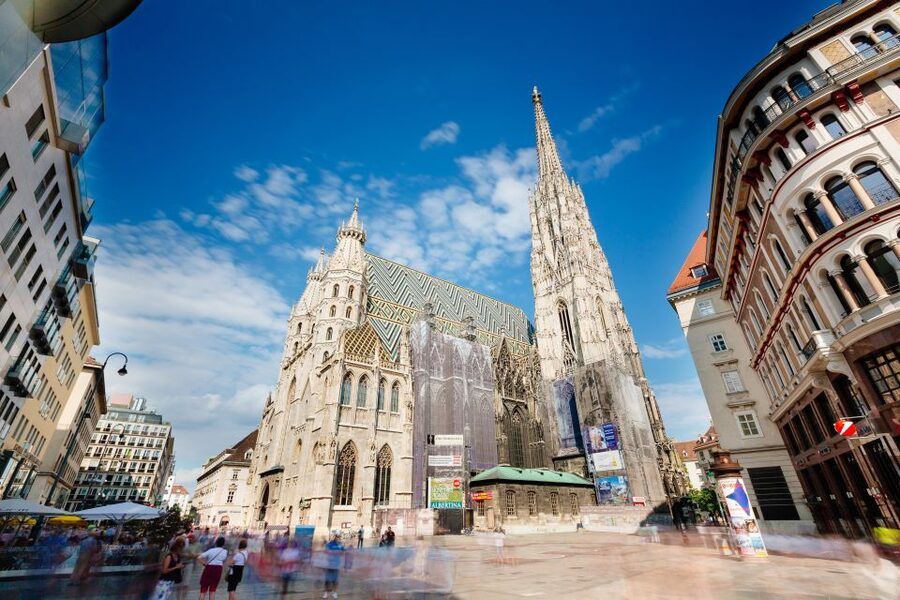
If you want the “big Vienna” view fast, the Red Route is usually the one I’d put first. It takes you along the Ring Road area, where grand architecture stacks up like a visual timeline. The ride runs about 60 minutes, and buses arrive about every 30 minutes.
Here’s how the stops read in real life—what you see, and why it matters:
State Opera
This is one of the busiest boarding areas and a helpful starting point. Even if you don’t go inside, it sets the tone for the city’s musical identity.
Museum of Art History / Heroes’ Square
This stop is all about class and scale. It’s a strong area for photos, and it puts you in walking distance of major museum energy.
Mariahilfer Straße / Shopping Street
Use this stop strategically. If you need a break from monuments, this is where you can mix in a casual stroll and pick up what you forgot.
Burgtheater / City Hall
This is “Vienna looks like Vienna” territory. You’re right in the center of the city’s civic and cultural display.
University + Liebenberg Denkmal / University
Two stops close to the same educational zone. I like them because you can choose how much you want to explore on foot.
Liechtensteinstraße / Sigmund Freud Museum
This is a great example of the tour doing more than postcard classics. Freud’s presence in this stop makes it easy to decide whether you want to lean into psychology/history.
Votiv Church
A stop that helps you spot the city’s spiritual architecture without needing advance planning.
Vienna Airport Lines + DDSG City Cruises
This is one of those “practical bonus” pairings. The airport-lines stop can be handy for getting oriented if your schedule is tight. The City Cruises stop points you toward boat options, which can be a nice change from all the walking and museum hours.
MAK / Museum of Applied Arts + City Park + Strauss Monument
This stretch makes the route feel less like a checklist. You get art + a green pause in the middle of the city, plus an easy photo moment at the Strauss Monument.
State Opera (back to start)
The loop ends where it began, so you can reposition yourself for another route without wasting time.
The Red Route’s best use: do one full loop on your first day, then hop off later only where you want a longer visit.
Yellow Route to Schönbrunn and Belvedere: Palaces on Two Tracks
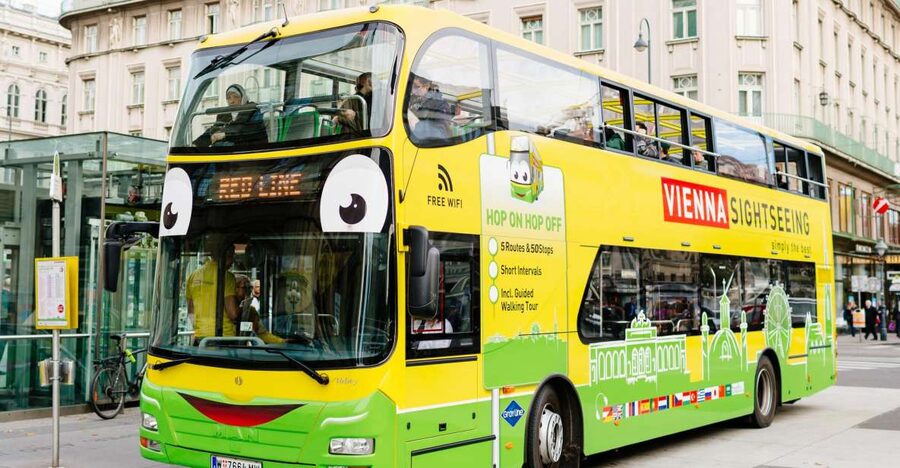
The Yellow Route is the palace-focused day plan. It runs about 90 minutes, with buses arriving roughly every 20–25 minutes. If your Vienna to-do list includes Schönbrunn and Belvedere, this route is the shortcut.
Key stops, and what they’re good for:
State Opera
Yes, it starts again. That’s intentional: the tour keeps you connected to Vienna’s central hub logic.
Westbahnhof (Train Station)
This stop can be handy if you’re staying near a station or want an easy transfer point.
Schönbrunn Palace
This is the reason many people buy the ticket. Even if you only walk the palace area for a while, having direct access saves you from transit stress.
Main Station (Hauptbahnhof)
Another practical connection. It’s useful for people who move hotels mid-trip or want to keep their transit options flexible.
Museum of Contemporary Art
If you’re balancing classic palaces with modern culture, this is where you can test that interest.
Belvedere Palace + Lower Belvedere
Belvedere is a whole mood. Plan time here because it’s not just a building—it’s a place you’ll likely want to wander.
State Opera (back)
You return to the center so you can continue your day with dinner, museums, or another bus route.
The Yellow Route’s best use: do this on a day you want “Vienna highlights” without spending your limited vacation time figuring out connections.
Blue Route Through Prater and the Danube: Hundertwasser to Riesenrad
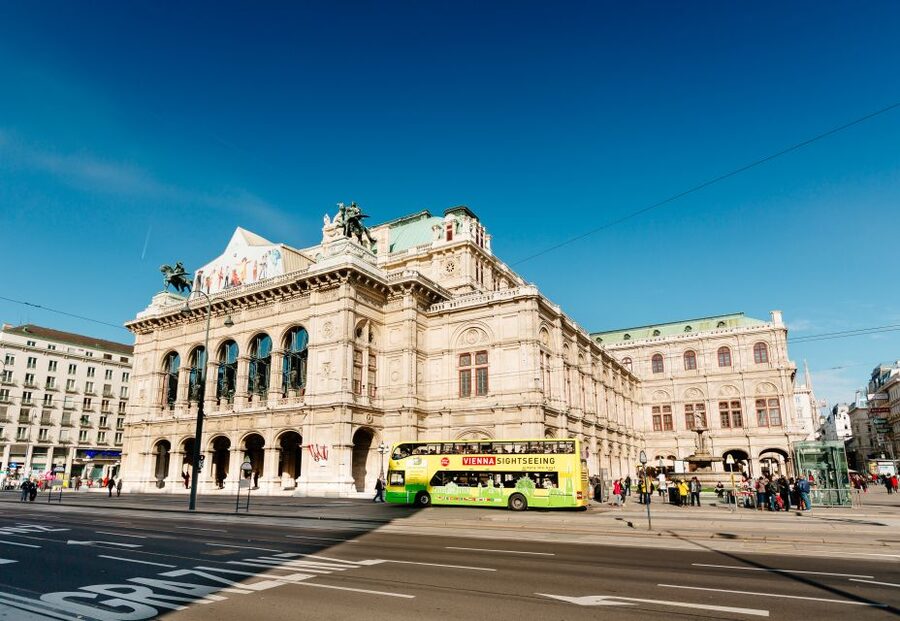
The Blue Route is the long ride, and that’s the point. It runs about 120 minutes, and buses arrive about every 20 minutes, so you’re not stuck waiting as long as you might fear. This loop helps you reach spots that feel spread out—especially around the Prater area and toward the Danube.
The stops you’ll recognize quickly:
MAK / Museum of Applied Arts + City Park + Strauss Monument
You start with a familiar “Ring and green pause” feel.
State Opera and Heroes’ Square / Mariahilfer Straße / Burgtheater
These central stops help you connect from classic Vienna into more quirky, modern territory.
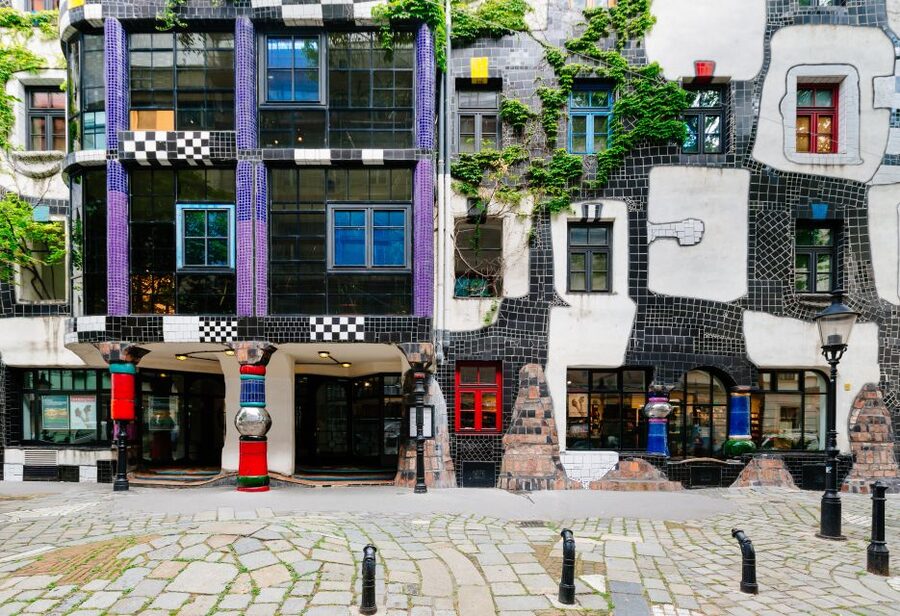
Kunst Haus / Museum Hundertwasser
Hundertwasser is your signal you’re leaving the straight-laced postcard. If you want color, curves, and a different kind of museum vibe, this stop is why the Blue Route exists.
Riesenrad / Giant Ferris Wheel
This is one of Vienna’s most photographed “fun” landmarks. Even if you don’t ride it, seeing it from the street is an easy win.
Pier6 Imperial Bridge + Donauturm (Danube Tower)
Now you’re thinking river and skyline. The Danube Tower stop is especially useful if you want a visible marker for the area.
Alte Donau / Old Danube + Donauinsel / Danube Island
This is a gentle shift toward the outdoors. It’s a nice contrast if your plan includes lots of indoor time.
Uno City + Praterstern / Train Station
More transit-smart stops. Uno City makes the route feel less like pure tourism and more like real Vienna.
Taborstraße / Museum of Crime + DDSG City Cruises
This pairing can be a great “one weird choice” moment. If crime history, pop culture style, or darker museum themes interest you, this stop gives you a ready-made option.
Back to MAK / Museum of Applied Arts
The loop returns, letting you switch back to another route without a long rethink.
The Blue Route’s best use: use it when you want both iconic and offbeat stops in one connected day.
Green Line Summer Views: Grinzing and Cobenzl Panoramas
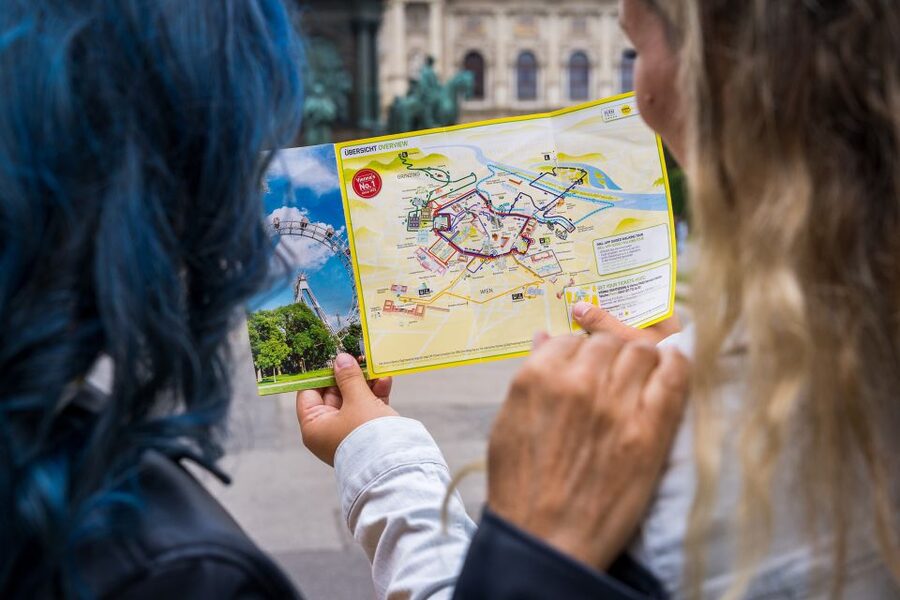
The Green Route is a seasonal treat. It operates only in the summer months, and it’s included only in the 24, 48, or 72 hour ticket types during that time.
This line focuses on views—so you’re planning it differently than the palace or Ring Road routes. It runs about 60 minutes, with buses arriving about every 60 minutes, and it typically operates from 10:45 AM to 4:00 PM.
The big takeaway: this isn’t meant to be “one more stop.” It’s a half-mood shift. Grinzing and Cobenzl are ideal when you want a break from museums and monuments and want to look out over the city instead of at it.
My planning tip: if you’re counting on the Green Line, build your day around it. With the longer 60-minute headway, you’ll want to avoid tight back-to-back plans that assume constant frequent service.
The QuietVox Walking Tour App: Beethoven to the Opera at Your Pace
Your ticket also includes a self-guided walking tour app. This part is different from the buses: it’s about moving through Vienna on foot with headphones and a map.
You pick up the headphones and map from a local partner’s service center, then follow the instructions in the QuietVox Guiding App. The walking route focuses on major music and culture sights, including:
- Vienna State Opera
- Beethoven Statue
- Vienna Concert House
- House of Music
- Beethoven Museum
This is one of the most useful add-ons if you like to do one day that feels human-scale. Bus stops are great, but walking connects the dots. You can also use the bus to shorten the distance between walking segments.
Where it shines: when you want to slow down for a focused theme—classical music history and landmarks—rather than treating everything as a sprint.
Audio Guide in 19 Languages + Free Wi‑Fi on Board
The audio guide is a big part of why this tour can feel worth it. You get commentary available in 19 languages, and the list includes German, English, Italian, French, Spanish, Portuguese, Dutch, Romanian, Czech, Hungarian, Turkish, Greek, Russian, Japanese, Chinese, Serbian, Korean, Polish, and Arabic.
The tour also notes new audio language options including Polish, Korean, and Serbian. That matters if you’re traveling with someone who struggles with English-only narration.
Two practical comfort points:
- You get free Wi‑Fi on all buses.
- The route timing plus stop announcements help you avoid wandering around wondering if you missed something.
In practice, the audio does the heavy lifting. You don’t need to read every sign or memorize street names to get the story behind major buildings.
If you’re traveling with kids, the children’s commentary channel (German and English) can help keep attention during longer loops.
Timing and Stop Strategy for 24, 48, and 72 Hours

This is where you’ll get the best value: you match your ticket length to the route rhythm.
If you have 24 hours
You’ll likely get the most satisfaction by choosing one loop as your backbone. The Red Route takes about 60 minutes, Yellow about 90, and Blue about 120. With hop-on hop-off flexibility, you can still add a second route if you time it carefully, but don’t assume you’ll do everything and also linger everywhere.
If you get off frequently for photos or short walks, 24 hours can turn into a lot of boarding and re-boarding. The fix is simple: pick fewer “must-see” stops and give them your best time.
If you have 48 hours
This is the sweet spot for many people because you can do two routes with breathing room. A common pattern is pairing the Red Route for central landmarks with either the Yellow Route for palaces or the Blue Route for Hundertwasser and the river zones.
If you have 72 hours
This is where the tour starts to feel like a system instead of a schedule. You can repeat a route if you want better lighting for photos, and you can add time for the walking tour app without feeling like you’re constantly rushing back to the curb.
One smart rule: if you’re unsure, start with Red or Blue for orientation, then use Yellow for the palace day you’ll remember.
Price and Value: Is Around $41 a Smart Deal?
The advertised price is $41 per person, and that’s only meaningful when you look at what’s actually included. You’re not just buying seats on a bus. You’re paying for a package that combines:
- Access to hop-on hop-off buses for a set window (24/48/72 hours)
- Up to four routes depending on your ticket option and season
- GPS live tracking
- Free Wi‑Fi
- Audio commentary in 19 languages
- A self-guided walking tour app with headphones and a map pickup
When you compare that to paying for separate guided services just to get a basic overview, it can be a strong value—especially for first-time visitors who want to cover ground efficiently.
That said, if you’re the type who wants only one or two sights in-depth and you already know your transit plan, this tour can feel like paying for convenience you might not use. The tour earns its value when you’re still figuring out your priorities.
What to Watch Out For: Frequency, Weather, and Audio Quirks
This experience is mostly smooth, but a few real-world points can affect your day.
Frequency can change your pace
Red is about every 30 minutes, Blue is about every 20, and Yellow is about every 20–25. That’s good. The Green Line is the exception—it runs about every 60 minutes in its operating window. If you rely on it, plan with that spacing in mind.
Stop time can feel long if you’re in a hurry
One small frustration that can happen with hop-on hop-off tours is how quickly buses cycle through stops. If your goal is “get off and walk for two minutes,” you’ll want to be ready, because you might not get unlimited time at every stop.
Audio quality depends on setup
The audio is clear in general, but like any app-based or device-based system, you might occasionally run into a playback issue or a language mismatch. If that happens, switching languages or waiting for the next bus cycle usually solves the problem.
Weather changes comfort
This is Vienna, so plan for cool or rainy days. The buses do offer a more comfortable ride than walking around in poor weather, and the Wi‑Fi helps pass time while you regroup.
Who Should Book This Hop-On Hop-Off Bus Tour
I’d point you toward this tour if any of these describe you:
- You’re in Vienna for a short stay and need fast orientation
- You want to mix major landmarks with a few “choose your own adventure” detours
- You value multi-language audio and clear stop announcements
- You’re traveling with family and want a flexible pace without strict timetables
- You want an easy way to decide what deserves a second visit
I’d steer you toward a different plan if you already have a tight itinerary built around specific museum hours and you only need local transit support. In that case, hiring one guided day or doing targeted self-guided routes might suit you better.
Also note the rules: no smoking and no pets are allowed on board (assistance dogs are allowed).
Should You Book This Vienna Hop-On Hop-Off Bus?
If you want a low-stress, high-coverage way to get your bearings and match your pace, I think this is a smart booking. The combination of up to 4 routes, stop flexibility, free Wi‑Fi, GPS tracking, and 19-language audio makes it easier to plan without turning your vacation into a spreadsheet.
Book it especially if you’re a first-timer or you’re traveling with people who don’t all want the same kinds of attractions. It’s not a replacement for museums and palace visits, but it’s a strong way to decide which ones are worth your time once you’re in Vienna.
FAQ
How long is the hop-on hop-off ticket valid?
You can book a ticket for 24, 48, or 72 hours, and the bus routes operate within set daily time windows.
How many routes can I use?
You can access up to 4 routes: Red, Yellow, Blue, and Green (Green is only included in summer months on the 24/48/72 hour tickets).
How often do buses arrive on each route?
The Red Route arrives about every 30 minutes, Yellow about every 20–25 minutes, and Blue about every 20 minutes. The Green Route runs about every 60 minutes during its summer operating period.
What’s included besides bus rides?
Your ticket includes GPS live tracking, free Wi‑Fi on buses, audio commentary in 19 languages, a children’s channel (German and English), and a self-guided walking tour app.
Do I need to buy separate entrance tickets?
Yes. Entrance fees to attractions are not included.
What languages are available for the audio guide?
Audio commentary is available in 19 languages, including German, English, Italian, French, Spanish, Portuguese, Dutch, Romanian, Czech, Hungarian, Turkish, Greek, Russian, Japanese, Chinese, Serbian, Korean, Polish, and Arabic.
Where do I board the buses and get my ticket?
Look for the yellow buses with Vienna Sightseeing Tours signage. Show your voucher to a representative to receive your ticket, then board and hop off at stops on the Red, Yellow, Green, and Blue lines.
Are pets allowed on the tour?
Pets are not allowed, but assistance dogs are allowed.
Are there any restrictions I should know before riding?
You’ll need to follow the basic rules: no smoking and no pets (with assistance dogs allowed).