
A bright yellow bus and a city full of views. This is one of the easiest ways to get around Lisbon without wrestling hills or committing to a fixed walking route. You can ride the open-top double-decker at your pace, then hop off for Belém-area icons like Torre de Belém or switch to the Modern Lisbon loop for Parque das Nações and the Oceanário area.
Two things I really like: first, the ticket is flexible enough for real sightseeing time, not just passing by from the window. Second, the pass includes Carris tram access during your validity, so you can stitch bus stops to tram rides like a local. One consideration: the on-board audio isn’t perfect for every seat and timing at major stops can feel fast, so plan to hop off when you want photos instead of relying on the bus to slow down.
In This Review
- Key Things That Matter Before You Ride
- The Big Idea: Why This Hop-On Hop-Off Plan Works in Lisbon
- Yellow Buses, Clear Route Signs, and the Easy Transfer System
- Belém Lisbon Route: From Rossio Squares to Torre de Belém
- Modern Lisbon Route: Parque das Nações and Oceanário-Area Energy
- Where You’ll Want to Get Off (and How Long to Stay)
- Price and Value: Why $25 Can Add Up Fast (or Not)
- Timing Tips for Photos, Heat, and Not-So-Slow Stops
- Drivers, Audio Guides, and the Human Touch
- Who This Tour Fits Best
- Should You Book This Lisbon Hop-On Hop-Off Bus Tour?
Key Things That Matter Before You Ride

- Two routes, one pass: Belém Lisbon (blue sign) and Modern Lisbon (pink sign), each about 1 hour 40 minutes per loop.
- Tram-friendly add-on: Your ticket includes Carris Lisbon public trams during validity, plus free entry to the Carris Museum with a valid ticket.
- Upper-deck views on demand: You’ll get the classic Lisbon angle over the Tagus River zones and down big boulevards like Avenida da Liberdade.
- Audio guide in many languages: Headphones offer multi-language narration, and some people switch seats if audio glitches.
- Schedule tools exist: There’s an online/live schedule link, and people report it helps you estimate wait times.
- Not everything is equally historical: The Modern loop is more about the city’s newer face than the deep-heritage Belém side.
The Big Idea: Why This Hop-On Hop-Off Plan Works in Lisbon

Lisbon is beautiful, but it’s also hilly. That’s the main reason I like hop-on hop-off buses here: they act like a moving “base layer” for your day. You’re still choosing what to see—you’re just doing it with a vehicle that drops you close to the stuff people actually travel for.
This setup is especially useful because the city’s highlights are split into different moods. The Belém side leans historical—think Age of Discoveries monuments and the riverfront feel. The Modern Lisbon loop leans contemporary—Parque das Nações, Oceanário-area architecture, and museum stops that break up the walking.
If you only do one loop, you’ll get a strong overview. If you have the full 48 hours, you can repeat the stops you care about, then use trams to fill the gaps.
Yellow Buses, Clear Route Signs, and the Easy Transfer System

Buses are yellow and open-top, and the two lines are identified by signs in the front window: blue = Belém Lisbon and pink = Modern Lisbon. That sounds simple (because it is), but getting it right saves time. You don’t want to wait at a stop for the wrong color bus and then realize too late.
A practical trick: when you arrive at a stop, confirm the route sign before you board. Some stops are easy to recognize; others are less obvious, and a few reviews mention that bus stop labeling could be clearer. If you’re unsure, check the live schedule link listed for up-to-date timing.
The good news is that the buses tend to be frequent enough to keep your day flexible. Many riders say they were prompt and frequent, and some specifically call out online tracking as helpful. That matters because hop-on hop-off works best when you can plan a “hop, explore, hop again” rhythm without long stand-and-wait gaps.
Also note what’s not allowed onboard: no drinks, no food, and no alcoholic drinks. That keeps things tidy on the ride, especially because you’re spending time in the sun on the upper deck.
Belém Lisbon Route: From Rossio Squares to Torre de Belém
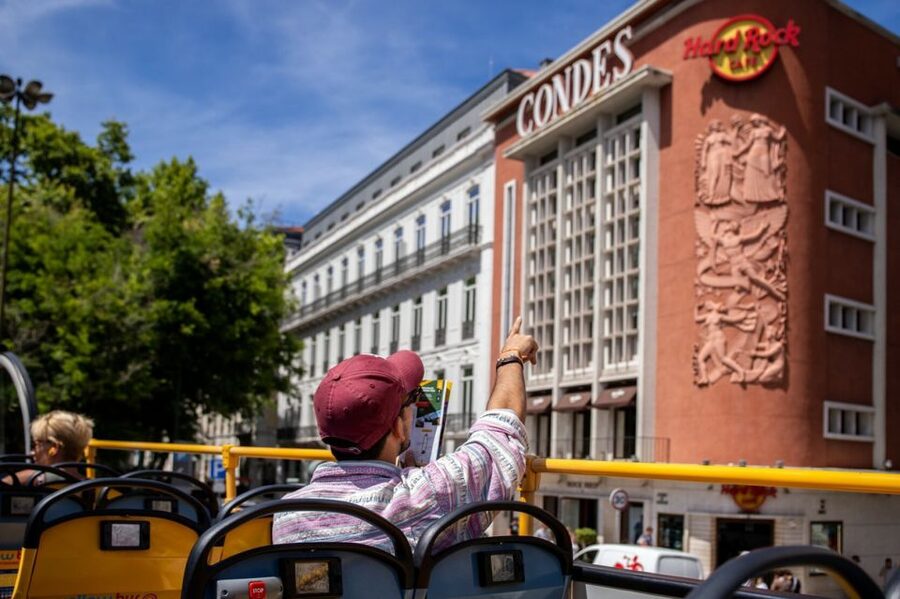
This is the loop most people will picture when they think Lisbon icons, and for good reason. The route is designed to link major landmarks and squares tied to Portugal’s historic story, including areas rebuilt after the devastating 1755 earthquake. Even if you don’t go inside every monument, you’ll see the city’s “why” as you ride.
The loop includes stops such as:
- Rossio Square (a key central landmark)
- Avenida da Liberdade (the elegant boulevard approach)
- Marquês de Pombal area
- Belém / Museu dos Coches (Coach Museum) and the Belém riverfront zone
- Mosteiro dos Jerónimos (Jeronimos Monastery)
- Torre de Belém (Belém Tower)
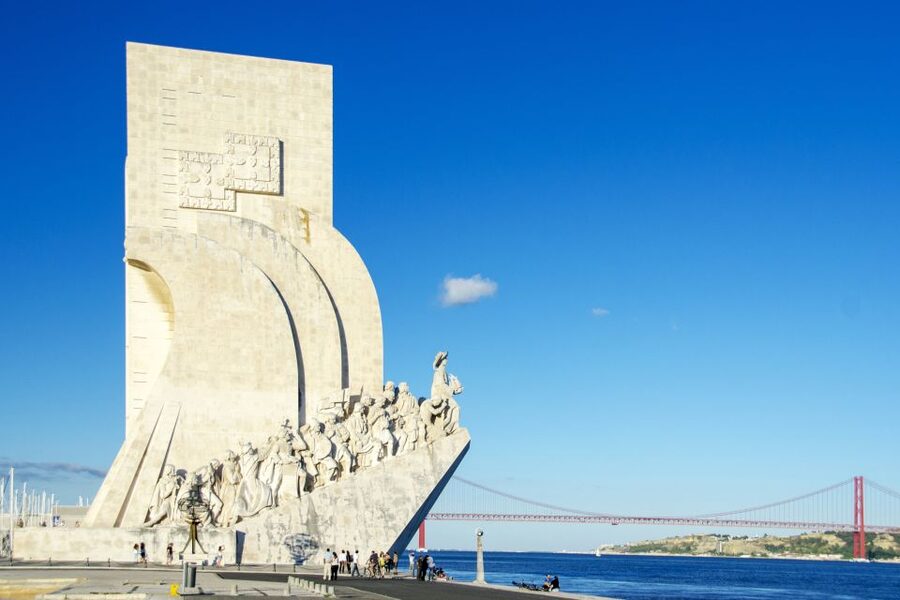
- Padrão dos Descobrimentos (Monument of the Discoveries)
- MAAT (Museum of Art, Architecture and Technology)
Here’s what makes these stops work in real life. Many of Lisbon’s top sights cluster in walkable chunks once you get into the Belém direction. So you can do one longer stretch—get off around the Jerónimos/Belém Tower axis—and then decide later whether you want to keep walking along the riverfront or return to the bus.
Torre de Belém is the obvious star. But I also like how the route helps you connect the dots. You’re not just seeing a single postcard. You’re seeing the Monument of the Discoveries and the broader riverfront context, which makes the Age of Discoveries story feel more “placed” and less like a standalone photo.
One downside to plan around: some riders feel the Modern Lisbon loop is less historical, so if your top goal is heritage, spend your extra time on Belém. In other words, don’t spread yourself too evenly if you’re chasing the oldest, most iconic sights.
Modern Lisbon Route: Parque das Nações and Oceanário-Area Energy

The Modern Lisbon tour is built for a different kind of Lisbon. This is where you switch from tiles and towers to more recent city design. The route explicitly includes Parque das Nações and the Oceanário area (admission not included), so it’s a smart pick if you want a break from the classic center vibe.
Stops listed on the Modern route include:
- Rossio Square and Restauradores area connection
- Avenida da Liberdade
- Graça (a neighborhood stop that can help with viewpoints)
- Panteão Nacional / Feira da Ladra zone
- Lisbon Cruise Terminal
- Museu do Azulejo
- Beato and other eastern expansion areas
- Oceanário
- Vasco da Gama shopping and FIL
- Torre Vasco da Gama
- Hotel Myriad and a Rossio Square return stop
Why this route feels useful: it helps you cover space that takes longer by foot. Lisbon’s center doesn’t cover every “Lisbon” mood, and the Modern loop keeps you from turning your day into a logistics puzzle.
A couple practical notes. First, the Oceanário and some museums can eat time. If you only have 1 day, treat this route as an overview plus one “main stop” you’re willing to commit to. Second, the Modern loop includes cultural stops like Museu do Azulejo, which is directly tied to Portuguese tile art. Even if you skip museum admission, these are stops that tell you where to go next if something catches your eye.
Also, the tour overview mentions potential stops tied to Azulejo and the Fado Museum. If Fado is a priority, plan your route around that idea rather than letting the bus decide for you.
Where You’ll Want to Get Off (and How Long to Stay)
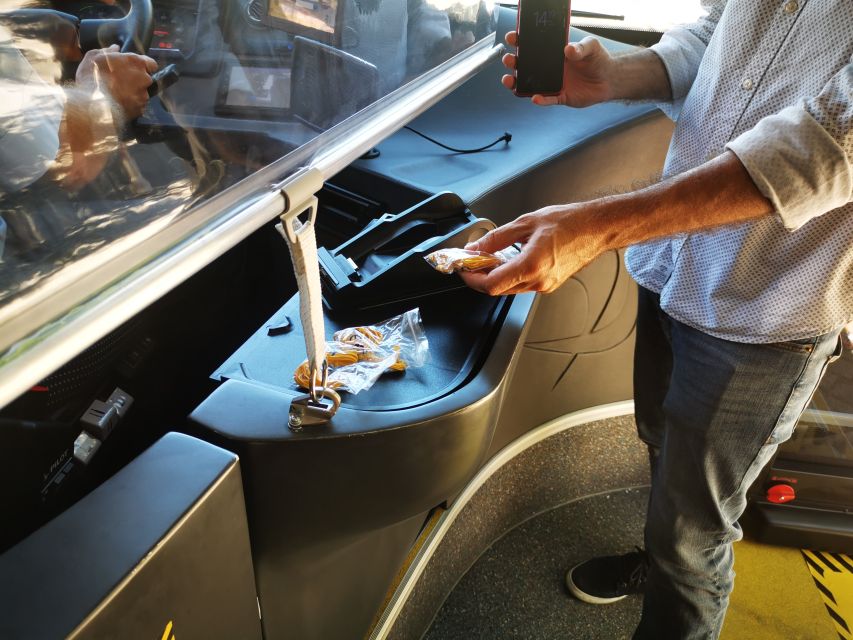
The hop-on hop-off part is the flexibility—so I’d build your day around “photo windows” and “time windows.”
For Belém Lisbon, I’d treat Jerónimos Monastery and Belém Tower as anchors. Even if you’re not going inside, the outside areas give you major Lisbon visual payoff. Add Padrão dos Descobrimentos nearby, and the riverfront story clicks into place.
For Modern Lisbon, decide what you want more:
- If you want contemporary sights and a clean visual line through the city, plan your time near Parque das Nações and the Oceanário area.
- If you want design and craft, make Museu do Azulejo a likely stop.
- If you want to mix viewpoint vibes, use the route’s stops in the Graça area as a chance to step out and see the city from a slightly different angle.
One review detail I think is worth taking seriously: some audio/device units didn’t work for certain seats. If you sit down and the headphones are silent or glitchy, try switching seats. You’ll still have the flexibility of hop-off timing while getting the narration that makes the stops feel more meaningful.
Price and Value: Why $25 Can Add Up Fast (or Not)

At around $25 per person for the Lisbon hop-on hop-off setup, the question isn’t just the price tag—it’s how much it reduces your daily friction.
Here’s where the value usually shows up:
- You get two route options with a flexible ticket window (the Belém and Modern loops are each about 1 hour 40 minutes).
- You also get Carris tram access during your ticket validity. Trams are part of Lisbon’s vibe and can save you from long uphill walks.
- You get free access to the Carris Museum with a valid ticket.
- The overview also mentions discounts at restaurants, which can help if you’re planning meals around your sightseeing schedule.
One note from real-world experience (and reflected in rider feedback): hop-on hop-off is strongest when you use it early. Several reviews recommend starting in the morning or late afternoon to avoid peak heat, especially during summer. If you do this on day one, you’ll use the bus to decide what you actually want to revisit later—meaning the ticket becomes less of a “ride” and more of a planning tool.
If you only ride one short section and never use the tram access, the value drops. If you use both loops across 1–2 days and pair buses with trams, the math starts looking a lot healthier.
Timing Tips for Photos, Heat, and Not-So-Slow Stops

Two timing realities show up repeatedly in feedback.
1) Wait times can vary. Even with online schedules, some riders report the live timing can drift. That doesn’t mean you should abandon it—it just means you should build in buffer time if you’re heading to a timed museum entry.
2) The bus may not always slow down long enough at big photo moments. A few reviews call out speed around important stops, so don’t assume you’ll always get a clean “pull over, take your time” window. If a photo is a must, hop off and walk a little—Lisbon is full of tight angles where a short walk beats trying to photograph from a moving deck.
Temperature matters too. One very practical tip: do it early morning or late afternoon to avoid the heat during summer. Upper deck sunshine is part of the appeal, but it’s also part of why you might want that timing strategy.
And yes: open-top seats can be damp if it rained overnight. One rider suggests carrying tissues to wipe the seat area before you settle in. It’s a small thing, but it makes the ride more comfortable.
Drivers, Audio Guides, and the Human Touch
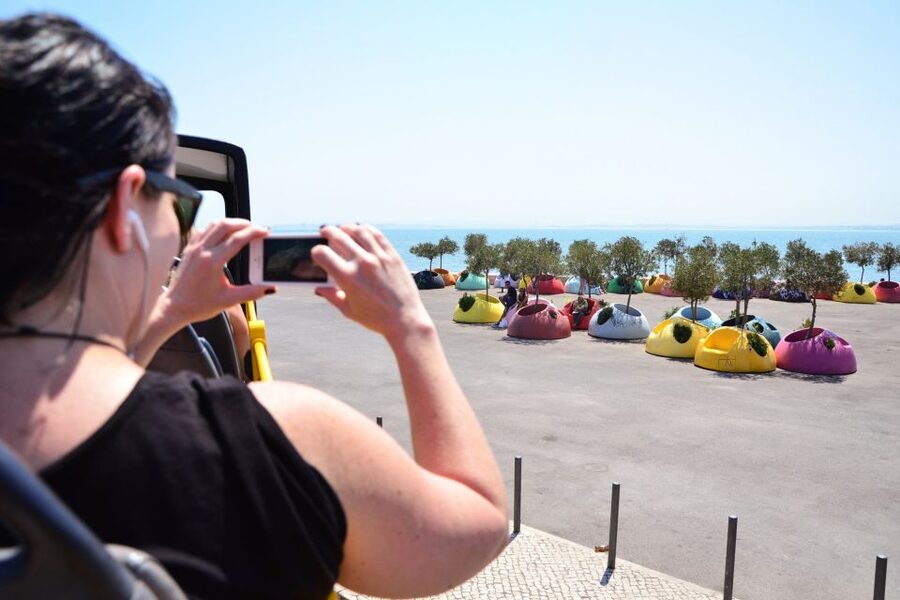
The best part of hop-on hop-off isn’t the bus. It’s what makes the city feel understandable while you’re moving.
Many reviews praise clear audio commentary and the fact that it matches what you’re seeing through the window. That connection is what turns random sightseeing into a story. If you don’t want to rely on headphones the whole time, you can still use the bus to position yourself, then use on-the-ground time for deeper looks.
Also, when things run smoothly, drivers can make a difference. A few named staff members show up in feedback—Miguel, Hugo, and Sergey are mentioned as standout guides or coordinators. Even if your day doesn’t include someone famous in the reviews, it’s worth knowing that the operation is staffed by people who can be helpful with questions in multiple languages.
One small caution: some riders would have liked live guidance from a coordinator rather than only recorded audio. If you’re the type who learns best by asking follow-ups, plan to do more of that at stops—ask questions at the bus stop if a representative is present, and then use your hop-on/hop-off freedom to act on the info.
Who This Tour Fits Best
I think this is a great match if you:
- Want an overview in Belém and Modern Lisbon without booking two separate private tours.
- Like planning with a flexible plan, hopping off to check things out and returning when you want.
- Don’t want to fight hills all day. Multiple reviews highlight how the bus helps on a city with challenging walking terrain.
- Appreciate multi-language audio and the ability to explore on your own schedule.
It may be less ideal if you:
- Want a slow, guided, stop-for-every-photo style experience.
- Expect perfectly timed narration for every exact landmark moment.
- Are sensitive to audio issues in specific seats—though switching seats usually solves that.
Should You Book This Lisbon Hop-On Hop-Off Bus Tour?
Yes, I’d book it if you’re doing Lisbon for 1–2 days and you want the easiest path to a real sense of the city. The best reason is simple: you’re buying flexibility plus built-in public transport support through Carris trams and free Carris Museum entry. That turns a bus ride into a practical travel tool.
If your priorities are strictly one neighborhood—say only Belém history—then you might not need two-day coverage. But if you want options and you like being able to change your mind mid-day, the Belém + Modern combination is exactly the sort of setup that makes Lisbon feel manageable fast.