Jeju, but with less moving stress. This west-side day trip runs from downtown Seogwipo and strings together tea fields, sea stops, and a real Buddhist climb without you having to plan every turn yourself. I especially like the mix of classic Jeju scenery with quieter moments like Shinchang windmill coastal and the Sanbanggulsa grotto stairs.
My second favorite part is the guide and pacing—English-speaking support plus enough time to actually walk and take photos. One thing to consider: Jeju is windy, and you’ll be outside for coastal roads and the Sanbang Mountain climb, so a wind jacket matters.
In This Review
- Key things I think you’ll care about
- West Jeju is easier when you start in Seogwipo
- Meeting points and how the day actually flows
- O’sulloc Green Tea Museum: where the day starts green
- Innisfree brand shop and Aewol Cafe Street breaks
- Hyeopjae and Geumneung beaches: Biyangdo island views
- The island of wind: Shinchang windmill coastal road
- Dolphin chances without paying for a boat
- Sanbang Mountain and Sanbanggulsa grotto: the best payoff
- What Fabio’s guiding does for your day
- Price and value: what $93 really buys you
- Who should book this west Jeju trip
- Should you book this West Jeju bus tour?
- FAQ
- Where does the tour pick up in Seogwipo?
- How long is the tour?
- What places does the tour include?
- Is lunch included?
- Do I need to pay extra for park admission?
- Will I ride a boat to see dolphins?
- What language will the guide speak?
- What should I bring for Jeju’s weather?
Key things I think you’ll care about
- Seogwipo pickup: you avoid commuting to Jeju City or the airport area to start your day
- O’sulloc Green Tea Museum: tea fields plus a focused stop that feels worth the drive
- Aewol Cafe Street: an easy break with a light walk and time for tea or coffee
- Real coastal time: Hyeopjae and Geumneung beaches with Biyangdo island views
- Sanbanggulsa grotto: a guided look at Buddhist culture with well-made stairs
West Jeju is easier when you start in Seogwipo
Most Jeju itinerary problems start with logistics. This tour is built around leaving Seogwipo city (pickup at 카사로마호텔 / Casaloma Hotel), so you spend less time back-and-forth and more time seeing the south and west. You get a day that feels like a guided “greatest hits” loop, but still includes breaks where you can move at your own pace.
If you’re staying in Seogwipo, you’ll probably like not having to drag yourself toward the airport zone first. It’s also a relief to know the tour ends back at Casaloma Hotel, so you’re not stuck figuring out last-mile transport late in the day.
Meeting points and how the day actually flows
Pickup is centered around Casaloma Hotel in Seogwipo, and you’ll receive a message with pickup time and exact location. The ride style depends on group size: you could be in a family van (up to 7), small bus (up to 13), mini bus (up to 18), or a larger coach (up to 44). That flexibility is one reason this feels workable for different group sizes, from couples to small groups.
The whole tour is about 9 hours. You’ll get a steady rhythm: short driving legs, time at the stops, and guided segments where it counts (especially the Sanbanggulsa part). Expect the day to feel full, not rushed, because the stops include both guided viewing and free time.
One practical note: Jeju is windy. The tour info directly flags that wind jackets are needed, and you’ll likely feel it most on the coastal road and windmill area.
O’sulloc Green Tea Museum: where the day starts green
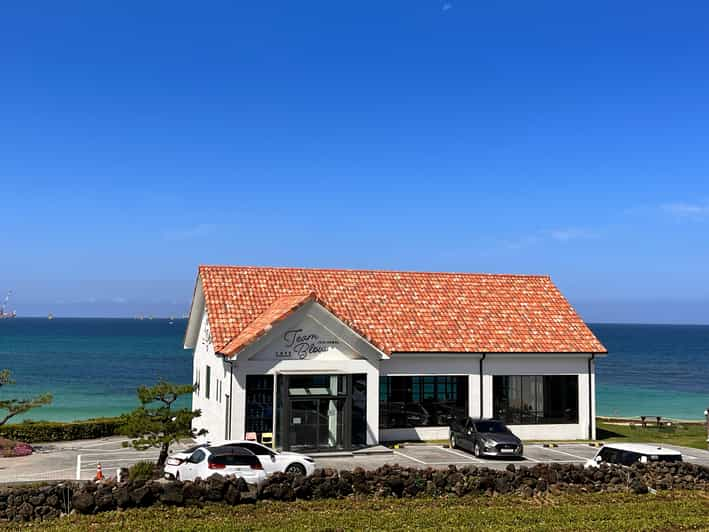
The tour’s first major sightseeing stop is O’sulloc Green Tea Museum, famous for its green tea fields. You’ll have about 1 hour here, which is long enough to enjoy the scenery and take your time inside the museum area.
What I like about this stop is that it’s not just a quick photo stop. Tea plants are a big part of Jeju’s identity, and this is a structured place to connect that look-and-feel with something real, not just roadside farming views. If you enjoy calm walking, this is one of the easiest places to settle in early.
Downside? You may share the space with tour groups and café crowds, since this is a popular Jeju name. If you’re the type who hates waiting, go in with the mindset that this is an early-day “anchor stop,” then you’ll have quieter moments later.
Innisfree brand shop and Aewol Cafe Street breaks
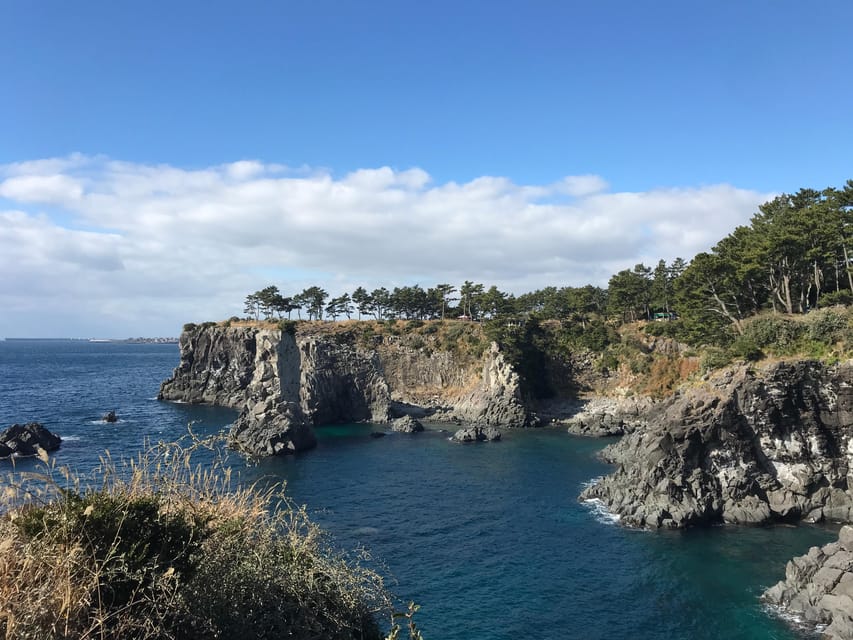
After O’sulloc, there’s a stop at the Innisfree brand shop. It’s a straightforward brand visit with free time, so you can browse or skip it depending on your interests.
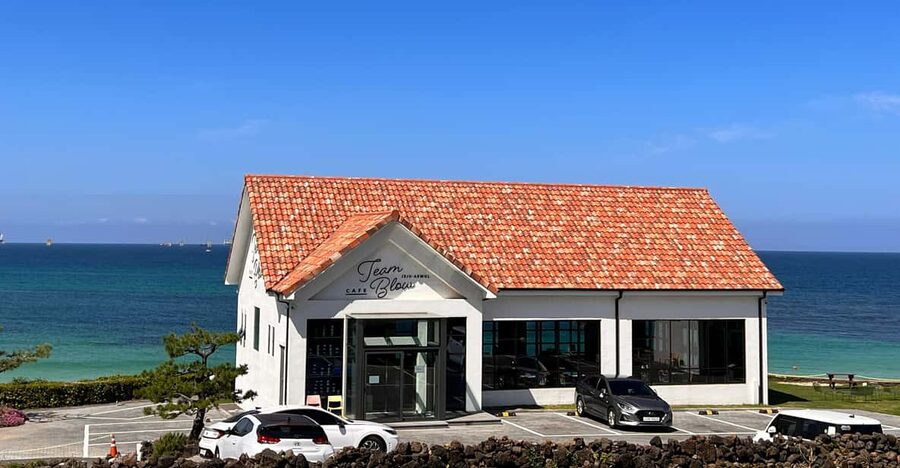
Next comes Aewol Cafe Street. You’ll get about 50 minutes plus a light walk, and the tour is set up for a tea/coffee break. This is a nice change of pace after tea fields—more local vibe, more cafés, and more “wander without stress” time.
A small caution: this is also where you’ll feel how windy Jeju can be, especially if you’re hopping between café fronts. Bring layers and keep an eye on comfortable shoe choice for walking.
Hyeopjae and Geumneung beaches: Biyangdo island views
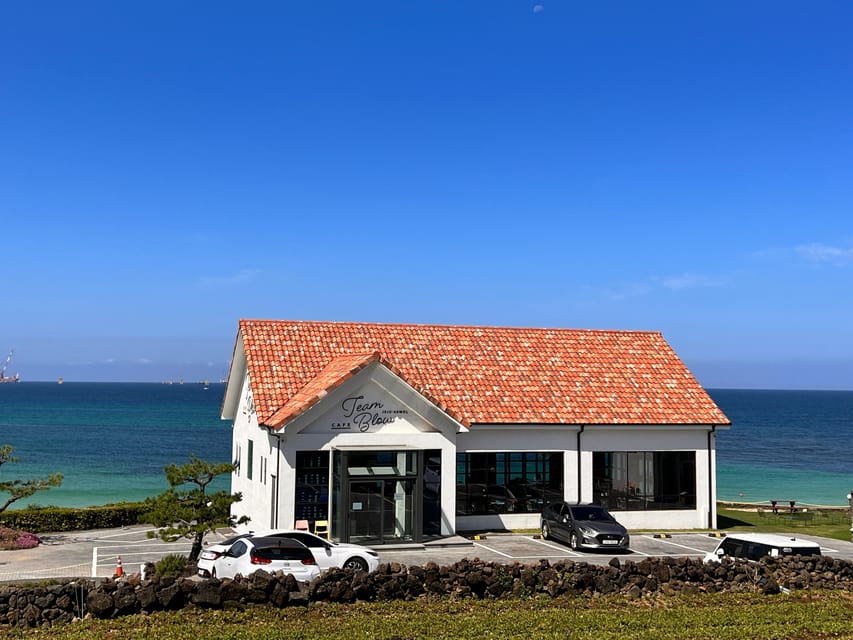
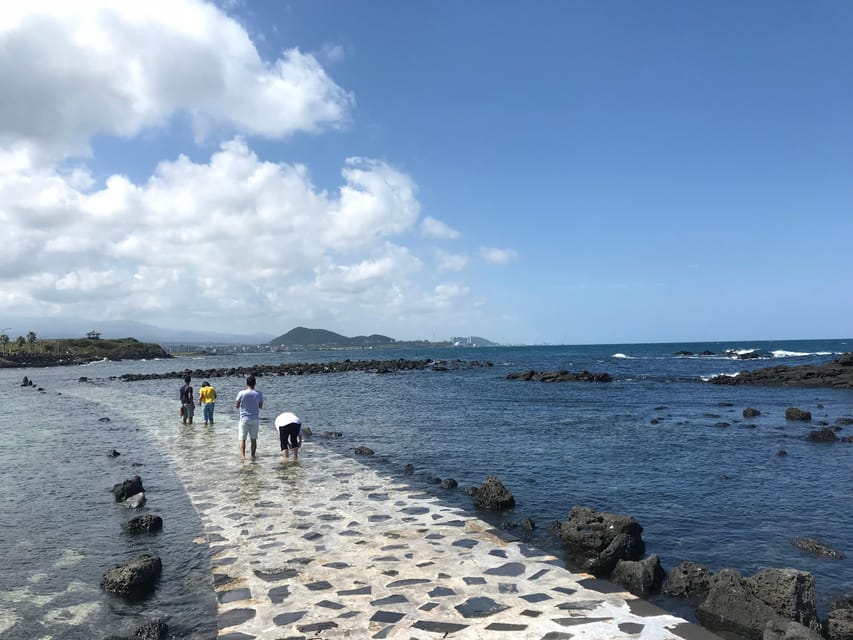
From Aewol, you’ll head toward the west-coast beach area, with time around Hyeopjae and Geumneung beaches. This part of the tour is built around sea views and open-air time, including the chance to see Biyangdo island from the shore.
You’ll have roughly 1 hour of free sightseeing here, plus the schedule makes room for a lunch time at the resting/lunch area. This is where the trip earns its “Jeju postcard” power without requiring a boat ride.
What to expect on the ground: you’re mostly outdoors looking across the water. If the wind picks up, it can be bracing, not romantic. Still, those sea colors are the reason this stop stays on so many west Jeju routes.
The main consideration is that beach areas mean more walking on uneven spots depending on where you choose to stand and photograph.
The island of wind: Shinchang windmill coastal road
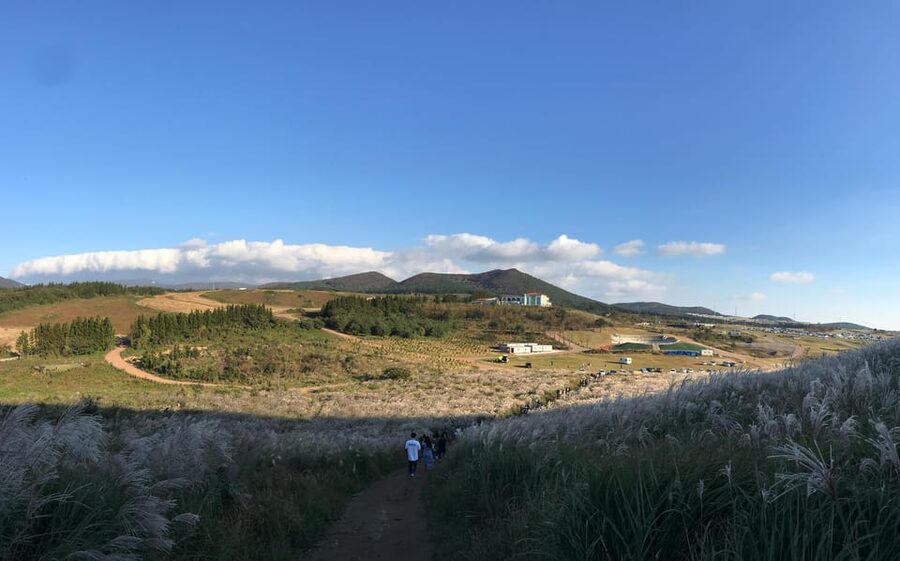
One of the most memorable parts of the tour is Shinchang windmill coastal road, where you really feel the island nickname: the island of the wind. The stop includes about 30 minutes of walking in that coastal setting.
This is one of those places where the scenery isn’t just visual—it’s physical. Wind whips off the sea, and you’ll see people dressed for it: hooded layers, windbreakers, hair tied back.
I also like that the tour doesn’t treat wind as background noise. It’s a theme. That helps the whole day feel coherent, not like a random list of stops.
Dolphin chances without paying for a boat
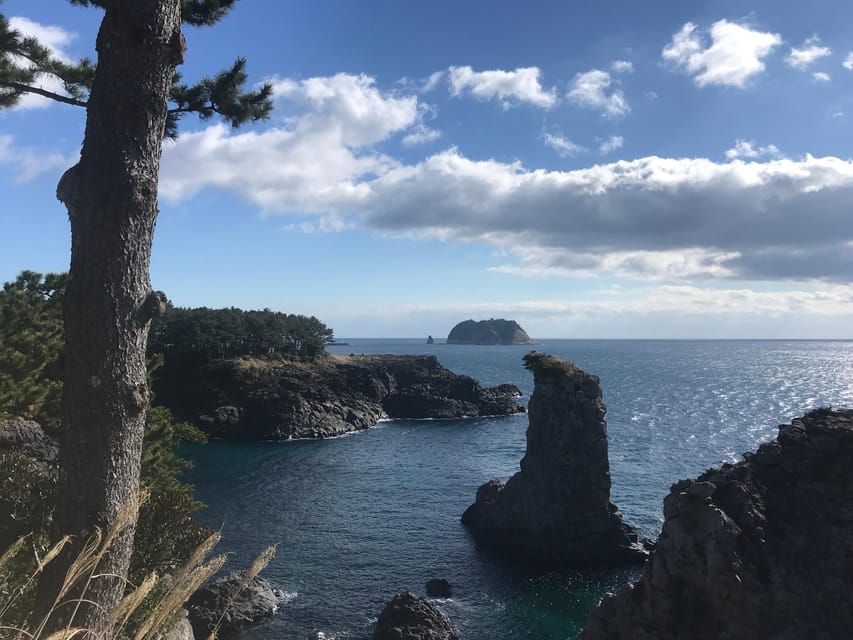
From the Shinchang area, the route continues along the south west coastal line with a goal of spotting Jeju dolphins. The key detail is that you do not need to get on a special boat. The tour frames this as a “hope for luck” style coastal viewing—dolphins are near you, if the day and conditions cooperate.
So how do you plan your expectations? Treat it as a bonus. If you’re lucky, you’ll see movement from shore or a coastal pull-over moment. If you’re not, you still get the sea views and windmill-coast vibe as the core experience.
This approach is also part of the value. You’re not paying extra for an add-on tour that may or may not deliver.
Sanbang Mountain and Sanbanggulsa grotto: the best payoff
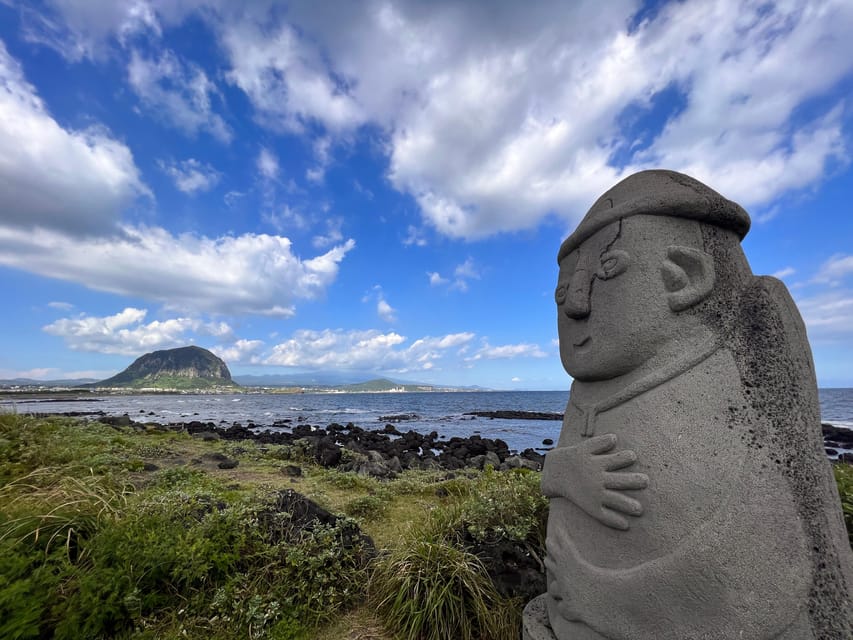
The final and most culturally grounded stop is Sanbang Mountain and the Sanbanggulsa temple grotto area. You’ll get a guided tour and about 50 minutes of walking.
Here’s the practical part: the area includes well-made stairs that let tourists climb up to the grotto level. You’ll reach a place where you can see the real beauty of Jeju’s Buddhist culture in a setting that feels specific to the island’s volcanic terrain.
If you like geology, this part has extra interest. The tour notes the mountain as a trachytic tuff lava dome connected to the sedimentary layer of Yongmeori Beach. You don’t need to memorize the wording, but it gives you a reason to pay attention to how the rocks look and why the terrain feels unusual.
Main consideration: this is the one part of the day where stamina matters more. If your legs don’t love stairs or uneven ground, you’ll want to move carefully and pace yourself.
What Fabio’s guiding does for your day
A strong theme in the guide feedback is consistency: Fabio comes across as attentive, patient, and flexible. That matters because a good day trip isn’t just a list of stops—it’s how long you spend and what you learn while you’re there.
Expect a guide who speaks English and Korean, and who helps you make the most of the guided portions rather than dropping you off and disappearing. In particular, the tour style includes room for questions, plus guidance around sites that benefit from context—especially Sanbanggulsa.
One more helpful detail from the real-world experience: if you need a vegetarian option for lunch, the guide can try to find something suitable. That kind of on-the-fly help is hard to replicate when you self-drive.
Price and value: what $93 really buys you
At $93 per person, this tour is priced like a guided day you don’t have to manage yourself. What you’re paying for is more than the vehicle: the package includes an English-speaking licensed guide, the driver, parking fees, admission fees for all parks, plus vehicle insurance.
You also get a clear schedule that covers multiple distinct Jeju zones—tea fields, café street time, beach time, windmill coastline, and a temple grotto climb. If you tried to piece this together by yourself, you’d spend your own time figuring out admissions, parking, and timing, and you’d still have to drive back toward Seogwipo at the end.
What’s not included is important: lunch is not included, and you’ll handle your own travel insurance and personal expenses. Flights and hotels are obviously separate too.
If you like your day trip to be low-friction—transport planned, entry tickets handled, guide there for context—this price is easier to justify.
Who should book this west Jeju trip
This tour is a strong match if you:
- are staying in Seogwipo and want a west-side day without going back to Jeju City or the airport area
- want a mix of nature (tea fields, beaches, wind) and culture (Sanbanggulsa grotto)
- prefer a guided day with English-speaking support and structured time at stops
You might want to think twice if you:
- hate windy weather and plan to spend lots of time outdoors without a wind jacket
- struggle with stairs, since the Sanbanggulsa area involves climbing via well-made steps
- need accessibility support beyond what a typical sightseeing climb can offer (the tour notes it is not suitable for people over 95 years)
Should you book this West Jeju bus tour?
If you’re based in Seogwipo and you want one well-run day that hits tea fields, cafés, dramatic coast views, wind energy, and a Buddhist grotto climb, I think you’ll enjoy it. The biggest win is the Seogwipo-centered starting point plus the way the day combines free time with guided context—so you’re not just riding and snapping photos.
Book it if you pack a wind jacket, wear comfortable shoes, and keep lunch flexible. Skip it if you want a slow, quiet itinerary or you don’t want any stair climbing at the end of the day.
FAQ
Where does the tour pick up in Seogwipo?
Pickup is at 카사로마호텔 (Casaloma Hotel) in downtown Seogwipo. You’ll get a message with your pickup time and exact location.
How long is the tour?
The duration is about 9 hours. Starting times depend on availability.
What places does the tour include?
Key stops include O’sulloc Green Tea Museum, Innisfree Brand Shop, Aewol Cafe Street, Hyeopjae and Geumneung beaches, Shinchang windmill coastal road, and Sanbang Mountain / Sanbanggulsa.
Is lunch included?
No. Lunch is not included, though the schedule includes time for a lunch break at a rest/lunch place.
Do I need to pay extra for park admission?
No. Admission fees for all parks are included in the tour price.
Will I ride a boat to see dolphins?
No. You do not need to get on a special boat. The route includes coastal viewing where dolphins may be near you, depending on luck.
What language will the guide speak?
The tour includes a live guide who speaks English and Korean.
What should I bring for Jeju’s weather?
Jeju is windy. Bring a wind jacket, since you’ll spend time outdoors at multiple coastal stops.