Deer and temples meet in one Nara loop. This Kyoto to Nara half-day tour pulls together Kasuga Taisha, Todaiji, and Nara Park, with an English-speaking guide helping you understand what you’re seeing as you go. I like how the guide work keeps the route from feeling random, and I like that the Great Buddha at Todaiji is explained in a way that makes the scale feel real.
Because it’s a group tour with a fixed timetable, you should expect some crowd pressure and a bit of walking. If you hit a festival day or run into construction areas, you might see slightly different views than you hoped.
In This Review
- Key things that make this Nara tour tick
- Nara in half a day: what you’re really signing up for
- Starting from Kyoto Station: the 7:45am reality check
- Kasuga Taisha Shrine: free entry and the worship-focused stop
- Todaiji Temple: the Great Buddha, scaled up in your mind
- Nara Park deer time: fun energy, plus crowd math
- Lunch included: Japanese-style meal plus a souvenir add-on
- Shopping time after lunch: small mementos, low stress
- English-only guide: why the human factor matters here
- Price and value: does it make sense for you?
- Group tour logistics: how to have a calmer day
- Should you book this Nara half-day tour?
- FAQ
- What’s the duration of the Kyoto to Nara tour?
- Is the tour guided, and what language is it in?
- Where do I meet the group in Kyoto?
- What time does the tour start?
- What stops are included on the tour?
- Is lunch included?
- Are temple or shrine admission tickets included?
- Is the Kasuga Taisha Museum included?
- How big is the group?
- What’s the cancellation policy?
Key things that make this Nara tour tick
- English-speaking guidance on the ground to connect the dots between shrines, temple halls, and park scenes
- Todaiji admission included so you can focus on the main show instead of ticket math
- Kasuga Taisha time with free entry to the main sanctuary area for general worship
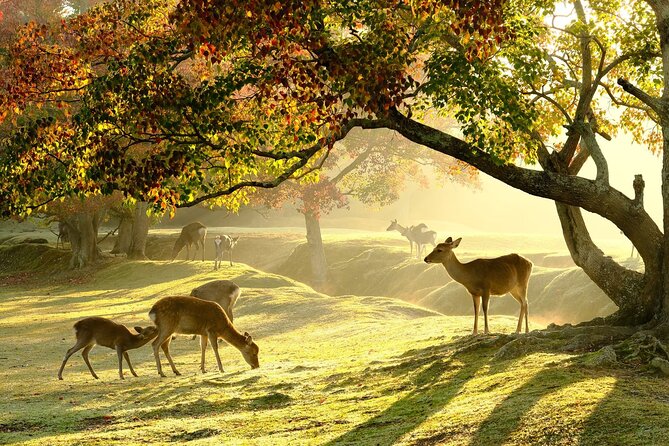
- Nara Park deer time where you’ll actually be in the thick of the famous atmosphere
- About 5.5 hours total with a group-size limit of up to 40 people
Nara in half a day: what you’re really signing up for
This is a “hit the highlights” day trip from Kyoto, built around three classic Nara stops: Kasuga Taisha Shrine, Todaiji Temple, and Nara Park. The timing is tight enough that the day feels like a tour (not a slow wander), but long enough to absorb the big visuals without constantly sprinting.
The good part is that the structure helps you spend your energy where it matters. You’re not trying to plan buses, decide ticket order, or guess how long everything takes on your own.
You should also go in with realistic expectations about pace. Even with a steady rhythm, you’ll be on foot for multiple blocks, and crowds can change the flow of the day.
Starting from Kyoto Station: the 7:45am reality check
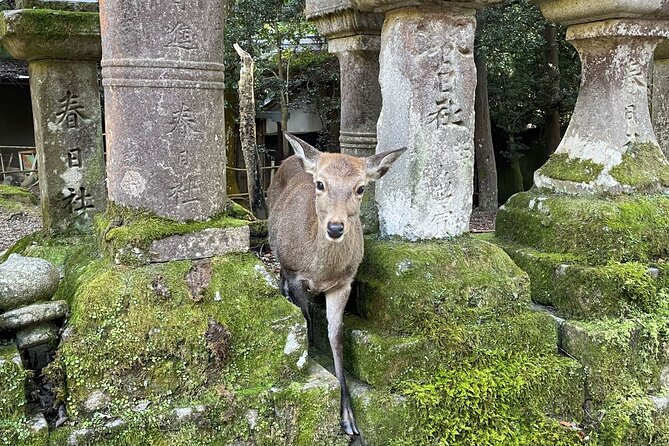
The meetup is at Kyoto Station, Hachijo Entrance Square Sunken Garden, with departures starting at 7:45am. You’ll want to arrive about 15 minutes early, because the bus leaves on schedule and there’s no waiting for late arrivals.
One helpful detail: the tour may use a bus, a train, or a combination. That matters because it affects how quickly you get moving once you’re away from Kyoto Station. Either way, the point is simple: the day is packaged as “ready to go,” not “figure it out as you go.”
Also, large luggage isn’t allowed during the tour. If you’re traveling light, you’ll feel much less stressed.
Kasuga Taisha Shrine: free entry and the worship-focused stop
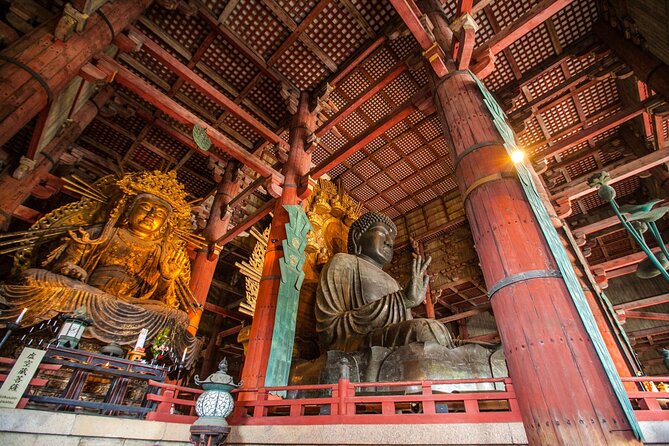
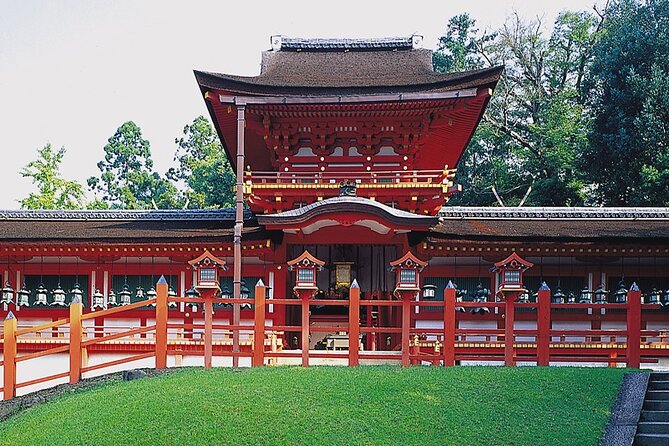
Kasuga Taisha is the first stop, and you’ll get about 45 minutes there. The emphasis is on the main sanctuary for general worship, and that’s it—no extra paid upgrades are included for things like the museum or the botanical garden.
That short, clear scope can be a plus. If you’re the type who wants the essentials, you won’t feel like you’re being herded into extra ticketed detours. You can spend your time looking at the approach and the sanctuary area that most visitors come for.
A potential downside is that 45 minutes can feel quick if you’re slow to move or stop for lots of photos. And if you’re sensitive to crowds, be prepared: this kind of famous shrine stop draws steady foot traffic.
Todaiji Temple: the Great Buddha, scaled up in your mind
Todaiji Temple is the anchor of the trip, with about 1 hour 15 minutes on site. The star is the Great Buddha, roughly 15 meters tall, and the temple is also known for having the world’s largest wooden structure.
What makes this stop valuable isn’t just the headline facts. It’s that you’re given the context to understand why this site matters, so you can look beyond the first “wow” moment and notice the bigger idea—how architecture, religion, and Nara’s significance connect.
One practical note: some buildings and Buddha statues may look different or be partially obscured due to construction. That’s not unusual in older temple complexes, but it’s worth keeping in mind so you don’t feel disappointed if a view isn’t exactly what you expected.
Nara Park deer time: fun energy, plus crowd math
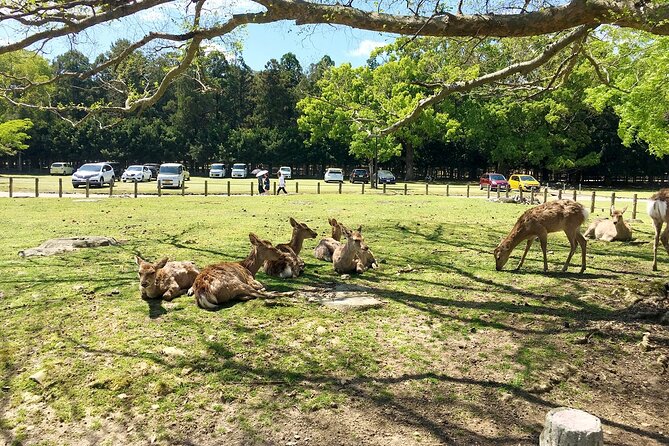
After Todaiji, you move to Nara Park. This is where the atmosphere shifts from temple solemnity to lively outdoors energy.
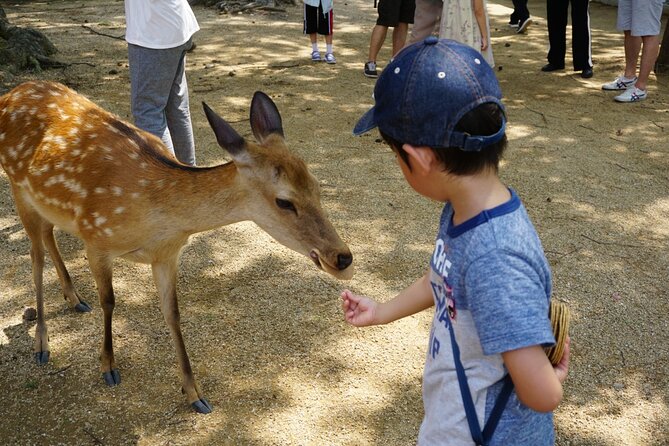
You’ll have time for the deer—those familiar, calm-looking creatures that make Nara Park feel like a real scene, not just a background photo set. In the feedback, people also mention enjoying the idea of interacting with the deer, which is part of why many visitors come.
Here’s the key consideration: deer time can mean crowd time. If you’re there during a festival, the park can get packed, and that can make the overall schedule feel a little tight. Some people even note that the day can feel rushed under heavy crowd conditions.
If you want a smoother experience, go with two strategies: wear comfortable shoes, and don’t expect to linger forever in one spot. Treat it like a short visit to a popular attraction, not a private stroll.
Lunch included: Japanese-style meal plus a souvenir add-on
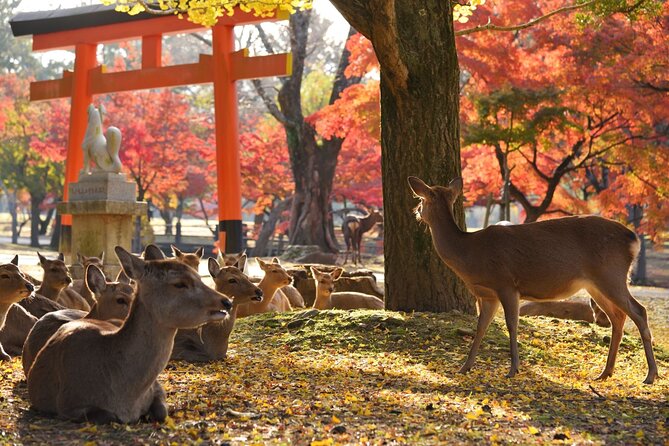
Lunch is part of the package, served at a local restaurant in the Nara area. The itinerary gives you about 45 minutes for lunch.
Two things make lunch feel like more than a checkbox here:
- You don’t have to hunt for a place on your own while keeping up with the tour pace.
- The restaurant also has a shop where you can buy local souvenirs.
Diet issues are something you should handle early. The tour asks you to inform them of allergies or dietary restrictions when you book, and it also states that menu changes on the day of the tour aren’t accommodated. If food matters to you, send your requirements clearly during booking.
Shopping time after lunch: small mementos, low stress

After lunch, there’s a little shopping time included, designed for bringing home reminders from Nara. This isn’t framed as a full market crawl, and it doesn’t need to be. The value is that you’re given a chunk of time with the tour group, rather than having to squeeze shopping into your last hour in town.
If you’re the type who likes to browse, keep it practical. Look for items you can carry easily, and don’t over-plan what you’ll find. The day is built around the main sites first.
English-only guide: why the human factor matters here
This tour is conducted by an English-speaking guide only, not bilingual narration for mixed language groups. In practice, that often means you get clearer explanations and easier Q&A.
The strongest recurring theme is the guide’s friendliness and helpfulness. Names like Tammie, Mana, and Shelley come up in the feedback, with people praising the guidance style—giving lots of information and keeping the route understandable.
For you, that translates into less guessing. Temple and shrine layouts can be confusing if you’re just reading signs. A good guide helps you know what you’re looking at and why it’s placed there.
Price and value: does it make sense for you?
At $78.83 per person, you’re paying for a packaged half-day structure: transport from Kyoto Station, an English-speaking guide, timed stops, and included admission coverage where it counts (notably Todaiji). You’re also getting lunch, plus a bit of shopping time.
Whether that value feels “right” depends on how you travel.
- If you want to see Nara without coordinating trains/buses and ticket timing yourself, the package can save time and mental energy.
- If you already love independent day trips and don’t mind planning, you may find you can do it cheaper on your own.
The balanced way to think of it: you pay for smoother logistics and a guided flow through three major sites, all in about 5.5 hours.
Group tour logistics: how to have a calmer day
This is not a private tour, and it has a maximum of 40 travelers. That size is big enough to keep costs reasonable, but small enough to still feel like a guided day rather than a school bus herd.
The day is also subject to change if traffic affects timing or if construction affects what you can see. Visit durations may be shortened if needed, and arrival times can shift.
Two small tips that matter:
- Keep your bag manageable since large luggage isn’t allowed.
- Bring patience for crowds. If you’re visiting during a festival, the experience can feel more pressured.
Should you book this Nara half-day tour?
Book it if you want:
- a structured Kyoto to Nara day with the major icons covered
- an English-only guide who helps you understand what you’re seeing
- lunch included without having to plan food on the fly
- a trip that’s around 5 hours 30 minutes, not a full-day commitment
Skip it (or reconsider) if:
- you dislike group pacing and want lots of unhurried time
- you’re very photo- or detail-driven and need long stays at each site
- you’re arriving at Kyoto late or traveling with big luggage
If your goal is to see the classics—Kasuga Taisha, Todaiji’s Great Buddha, and the Nara Park deer atmosphere—this tour is a practical way to do it without turning your day into a logistics project.
FAQ
What’s the duration of the Kyoto to Nara tour?
It runs for about 5 hours 30 minutes.
Is the tour guided, and what language is it in?
Yes. The tour is conducted by an English-speaking guide only.
Where do I meet the group in Kyoto?
Meet at Kyoto Station Hachijo Entrance Square Sunken Garden.
What time does the tour start?
The start time listed is 7:45am.
What stops are included on the tour?
You’ll visit Kasuga Taisha Shrine, Todaiji Temple, and you’ll have time in Nara Park.
Is lunch included?
Yes. The tour includes a Japanese-style lunch at a local restaurant.
Are temple or shrine admission tickets included?
Todaiji Temple admission is included. Kasuga Taisha main sanctuary admission is listed as free.
Is the Kasuga Taisha Museum included?
No. The tour notes that special worship, the Kasugataisha Museum, and the botanical garden are not included.
How big is the group?
The tour has a maximum of 40 travelers.
What’s the cancellation policy?
You can cancel for a full refund up to 24 hours before the experience’s start time. If canceled less than 24 hours before, the amount paid isn’t refunded.