Glasgow changes fast when you view it from upstairs. This hop-on hop-off City Sightseeing bus gives you an easy way to stitch together the top sights with panoramic views, plus commentary that explains what you’re seeing as you pass. I like that it hits major anchors like Glasgow Cathedral and the Riverside Museum without you having to plan every transfer. One thing to consider: it’s an open-top experience, so wind and rain can make audio harder to hear and the ride less comfy.
The Red Route is built for short stays, with a full loop that lasts about 90 minutes and buses running every 30 minutes. You can do the tour in one day or stretch it to two, hopping off for art, museums, parks, and theatres at your own pace. If you’re hoping for a quick intro to Glasgow that doesn’t depend on perfect weather or perfect timing, this is a practical way to get your bearings.
In This Review
- Key points worth knowing before you ride
- Why a City Sightseeing bus tour works in Glasgow
- Red Route timing: 90 minutes, every 30 minutes, and the day window
- George Square and Glasgow Cathedral: where the day feels historic fast
- Barras Market to Glasgow Green: neighbourhood energy and big open spaces
- St. Vincent Place to Clydeside Distillery: city centre to the river story
- Riverside Museum and Old Schoolhouse: transport history in full view
- University of Glasgow, Byres Road, and Kelvingrove: where culture meets walking streets
- Charing Cross to Theatre Royal and Buchanan Bus Station: end with theatre and easy return
- Live guides, headphones, and the people energy on the bus
- Practical tips so you don’t waste time hopping
- Price and value: is around $26 a fair deal for two days?
- Should you book the Glasgow City Sightseeing hop-on hop-off bus?
- FAQ
- FAQ
- How long is the Red Route tour and how often do buses run?
- What are the first and last departures from the main starting point?
- Is the tour guided?
- Which sights does the Red Route stop near?
- Are attraction tickets included?
- Are pets and large bags allowed on board?
Key points worth knowing before you ride
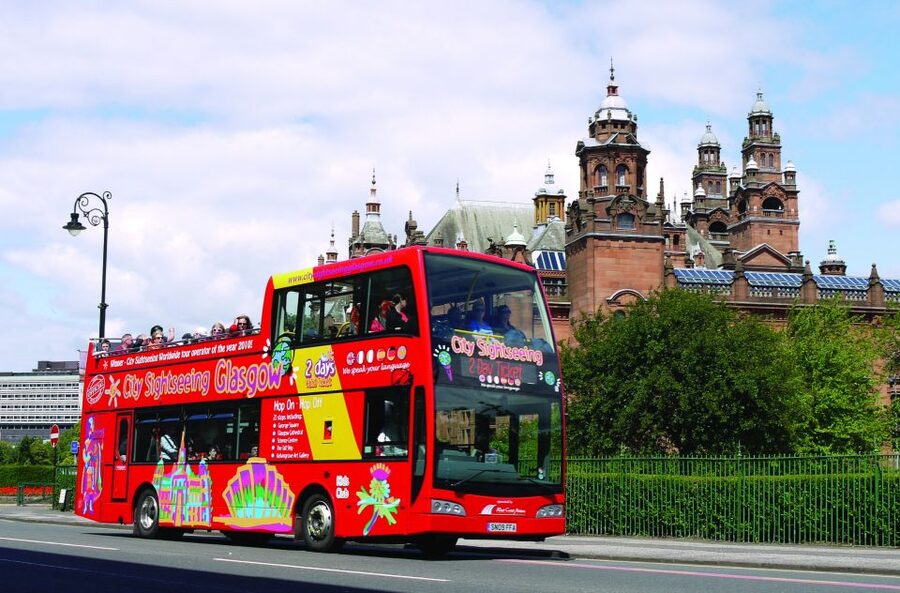
- Stops you’ll actually use: You can hop off near big names like Glasgow Cathedral, Riverside Museum, Kelvingrove Art Gallery, and Theatre Royal.
- Summer live guide plus multilingual audio: Live guiding runs April to September, with audio in 7 languages and headphones available.
- Frequent buses make a plan optional: The bus loop is about 90 minutes, and buses come about every 30 minutes.
- Open-top means dress for the elements: Bad weather won’t cancel the day, but it may affect comfort and how well you catch the narration.
- Right stop locations matter right now: Stop 7 is the main start/end point, and a few stops have temporary relocations or pauses.
Why a City Sightseeing bus tour works in Glasgow
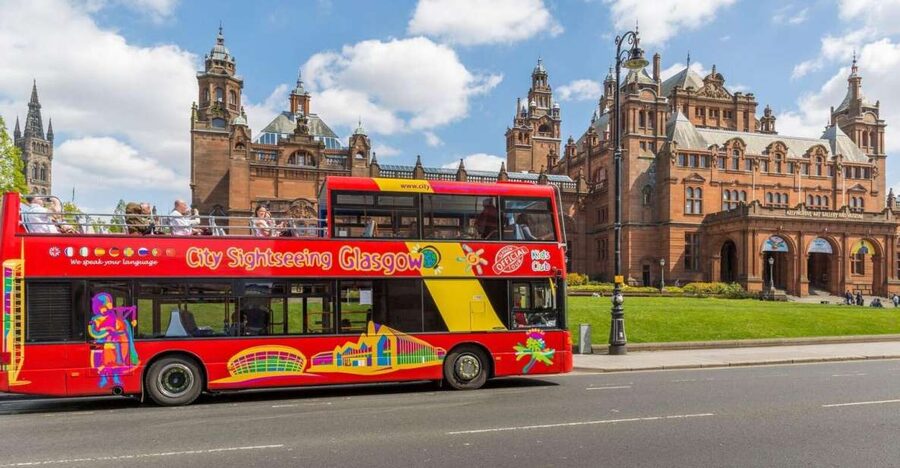
Glasgow is one of those cities where the highlights are spread out. You can walk between a few, sure, but if you try to connect everything on foot in one day, you’ll spend more energy on transit than on sights. This bus tour solves that by doing the heavy lifting for you. You sit up top, ride between neighbourhoods, and jump off when something looks worth your time.
What I like most is the mix of big-statement sights and everyday places. You pass through central squares and grand institutions, but you’re also offered access to markets and riverside areas that help the city feel lived-in. It’s a good fit for first-timers, but it’s also useful if you’ve been to Glasgow before and want a structured route to refresh your memory.
The bus route is also set up for flexibility. One day ticket is enough to see a lot, and a two-day ticket helps you come back for the stops you care about most (or revisit a museum when the weather improves).
Red Route timing: 90 minutes, every 30 minutes, and the day window
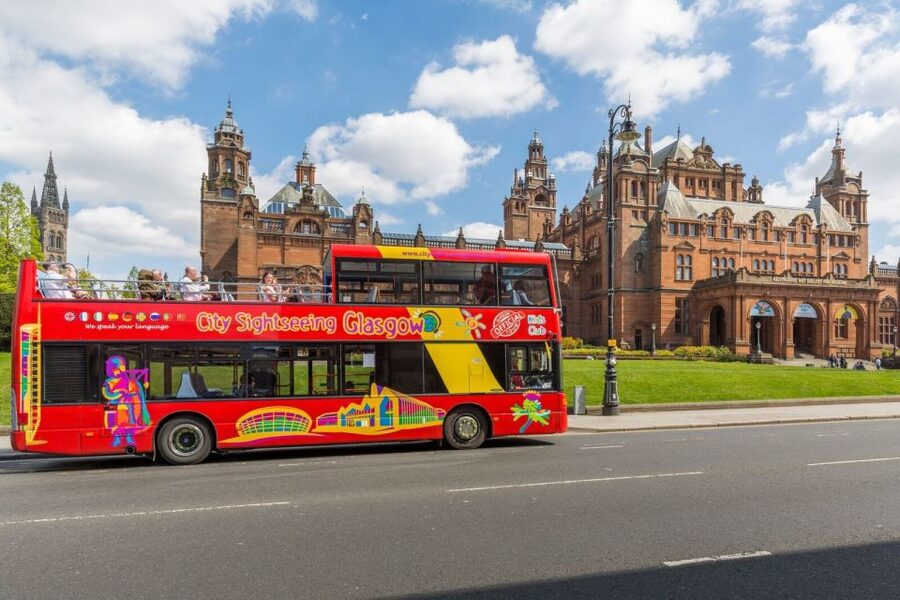
Here’s the pacing that matters for planning. The Red Route tour runs about 90 minutes, with buses departing about every 30 minutes. On the timetable window you’re working with, the first tour leaves Stop 1 at 10:00am and the last tour leaves Stop 1 at 4:00pm.
The practical twist is that the first stop isn’t always the best one to use right now. Updates in place mean:
- Stop 1 operates as pick-up and drop-off only, and it’s currently on Cathedral Street in front of the Charles Oakley Building.
- Stop 7 is the main starting and ending point of the tour, now on St. Vincent Street past West Nile Street.
- Stop 9 is temporarily out of use.
- Stop 8 stays on Jamaica Street outside Lidl.
- Some late-afternoon departures from Stop 7 terminate on Cathedral Street, so your end point may differ depending on which bus you take.
If you hate surprises, I’d base your plan around Stop 7 and treat Stop 1 as the backup starting point.
George Square and Glasgow Cathedral: where the day feels historic fast
Your ride often begins near the city center core, with George Square as a key early stop. From there, it’s an easy hop toward the Gothic heart of Glasgow: Glasgow Cathedral.
This is the part of the route that works even if you only have a short stop. Glasgow Cathedral is one of those buildings you can appreciate from the street before you even step inside. If you get off here, I’d use the time to look closely at the medieval structure and then decide whether you want a deeper visit.
A couple stops later, you’re positioned for the Merchant City area via High Street for Merchant City. This is useful because it connects sightseeing with good wandering potential. You’re also close enough to pop back on the bus if you don’t want to commit to a long detour.
One small consideration: the area around major landmarks can get busy. If you can, start early in the day so you’re not negotiating foot traffic while also trying to find the correct bus.
Barras Market to Glasgow Green: neighbourhood energy and big open spaces
Continuing through the city, the bus brings you toward The Barras, a stop designed for people who want to experience Glasgow beyond the postcard shots. It’s a handy drop point if you want to browse and snack your way through your day.
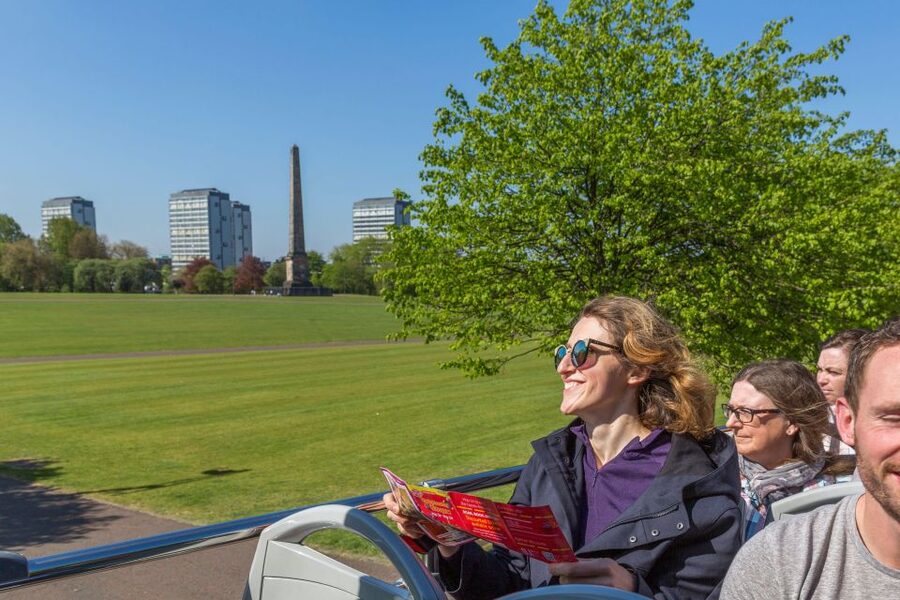
Next comes Glasgow Green, a stop that’s ideal for a breather. Parks help you pace a hop-on hop-off day because they create space between indoor visits. Even if you don’t do a formal walk, you can step off, stretch your legs, and get that skyline-and-sky feeling you lose when you spend too long inside museums.
After that, St. Enoch Centre and St. Vincent Place give you access to central amenities. These stops are useful for practical reasons: bathrooms, quick coffee, and the general ability to refresh without burning time.
St. Vincent Place to Clydeside Distillery: city centre to the river story
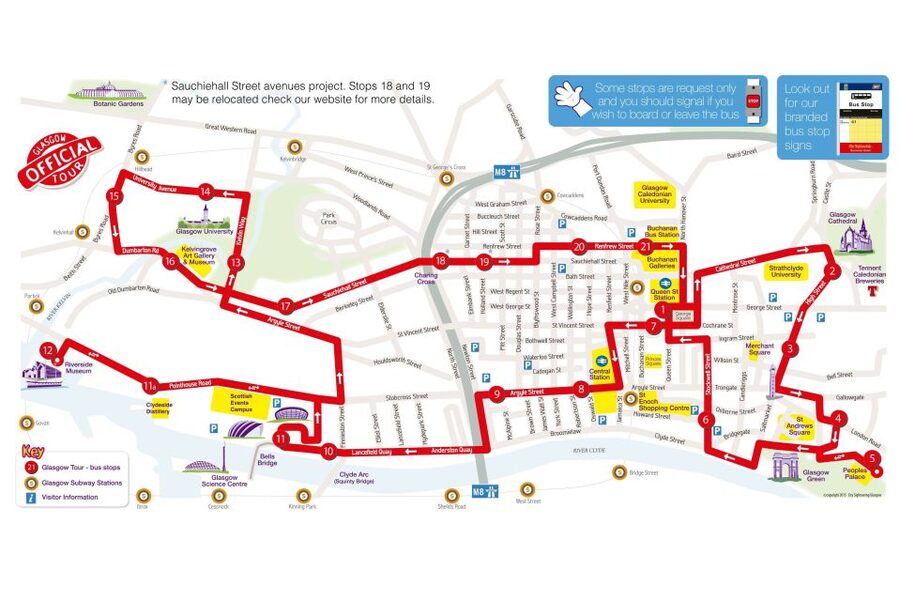
After St. Vincent Place, you’ll pass through central streets with a series of stops that are easy to reference in real life: Radisson Blu Hotel (nearby), Argyle Street, and Hilton Garden Inn Glasgow City Centre. These aren’t just convenient names on paper. They’re the sort of landmarks you can actually navigate toward when you’re getting back on the bus.
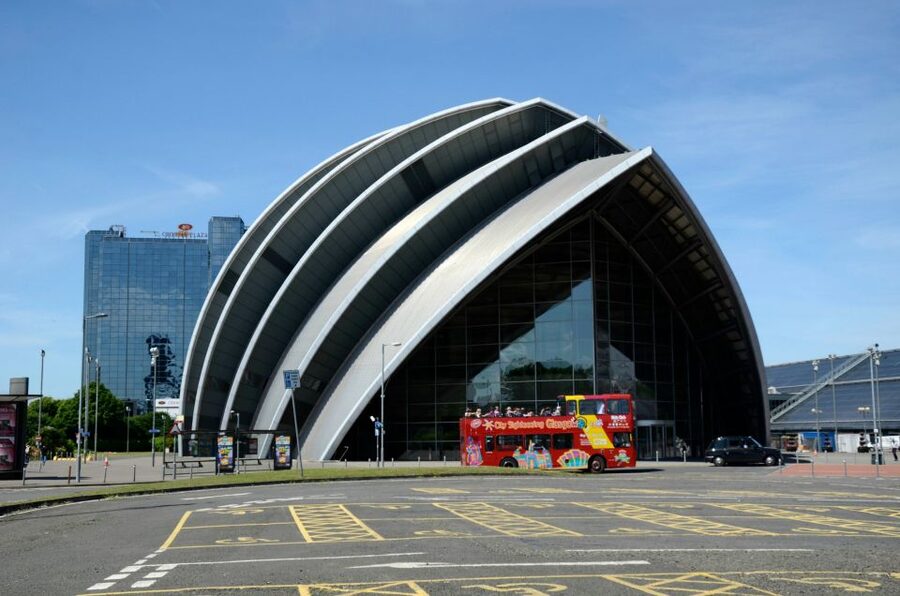
You’ll also reach the SEC Centre stop, which positions you for the modern side of Glasgow. If you’re the type who likes seeing how the city has evolved, these stops create that sense of contrast.
Then comes Clydeside Distillery, one of the route’s standout later stops. Even if you don’t do a formal tour, it’s a good place to get off and explore the riverside area vibe. It also gives you a natural rhythm: you’ve covered the core sights, then you shift toward something more experiential.
A quick timing note: if you plan to hop off for a longer stop at Clydeside Distillery, try to calculate your return window. With buses every 30 minutes, you’re not stuck for long, but you can still miss your ideal “next ride” if you linger too long.
Riverside Museum and Old Schoolhouse: transport history in full view
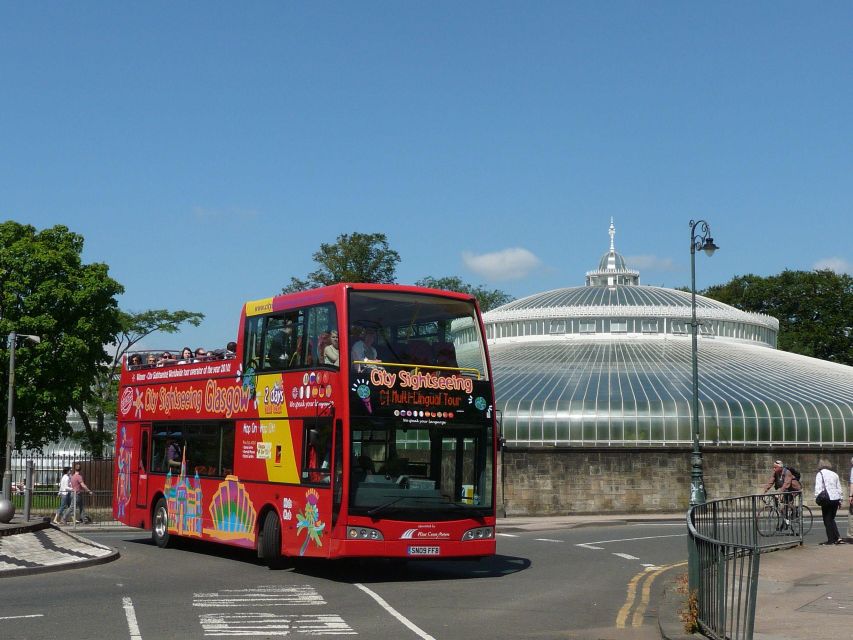
One of the best reasons to take the Red Route is the stop at Riverside Museum. This museum is a huge win for a hop-on hop-off tour because it isn’t just a short photo stop. It’s the kind of place you might want to spend real time inside.
The Riverside Museum is also frequently described as a highlight because it connects with Glasgow’s identity as a transport and engineering city. If you get off here, you’re not just ticking a box—you’re getting a museum experience that feels built for curious minds, families, and rainy-day pacing.
Near this area you’ll also see the Old Schoolhouse stop. Even if you don’t set a specific plan for it, it’s useful as a waypoint. It makes it easier to build a route around the museum without having to guess where you are in relation to the river.
From here, the tour starts turning toward west-end areas, where you can pair museum time with streetside wandering.
University of Glasgow, Byres Road, and Kelvingrove: where culture meets walking streets
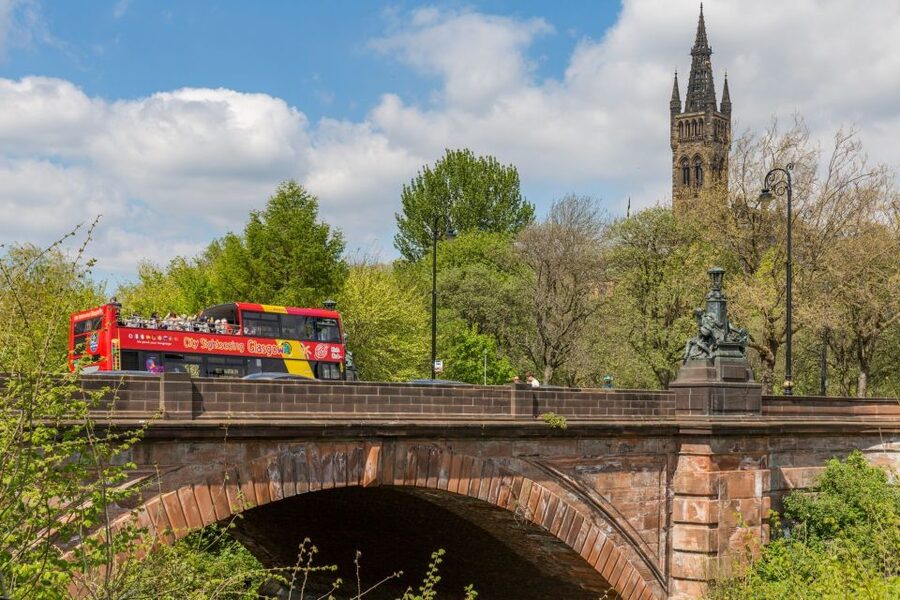
As you move along, you’ll reach University of Glasgow and Kelvin Way, then Byres Road. This is a shift you can feel. The city becomes more about streets, students, cafés, and everyday life. If you want to take a break from major monuments and get a slice of Glasgow as a place where people actually live, this section delivers.
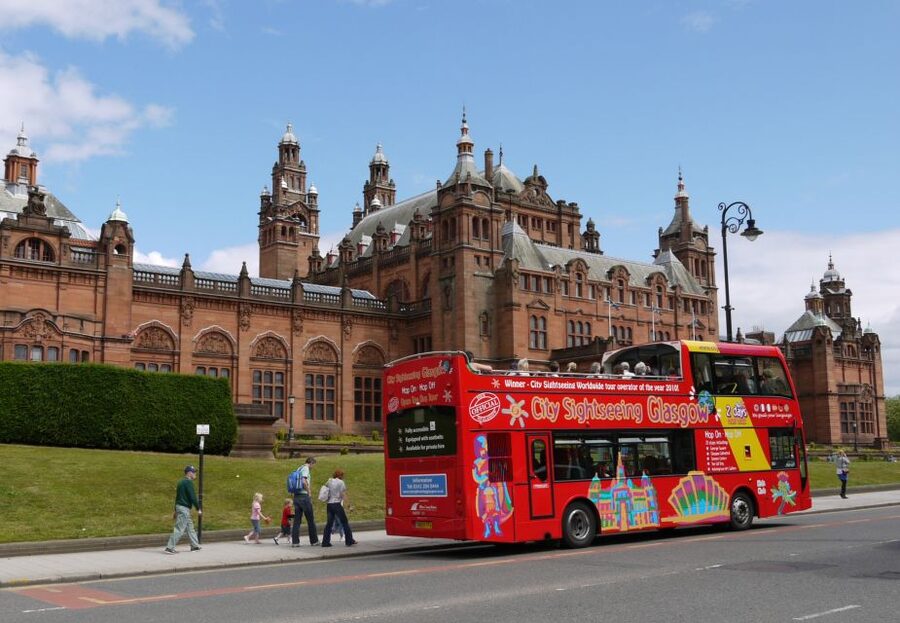
Then the route lands in the art-and-museum cluster with Kelvingrove Art Gallery and Museum and Kelvingrove Park. This pairing is why I like this bus so much: it supports a full couple-hour block of sightseeing without you having to “decide” between art and outdoor time. You can do the indoor museum first, then step out into the park when you want a reset.
Two more art angles to watch for. The tour’s selling points include the Kelvingrove area, and they also reference the Gallery of Modern Art as a place you can connect to via the route. I’d treat Kelvingrove as the sure bet and double-check where you want to get off if your goal is specifically modern art.
A detail that makes this stop work: one museum stop described the building itself as part of the experience, with a café and an easy time planning your visit. If you want a free hour to recover between hop-ons, this is where you’re likely to find it.
Charing Cross to Theatre Royal and Buchanan Bus Station: end with theatre and easy return
Towards the end of the Red Route, the bus reaches Charing Cross, along with School of Art and RSAMD stops. Even if you’re not planning a formal education visit, these stops help you understand Glasgow’s creative side. It’s one of those quieter clues that this city doesn’t only do monuments—it also does craft and design.
Next, you’ll come to Theatre Royal Glasgow. This stop is a great “finisher” because it pairs well with evenings, even if you’re just sightseeing and not buying tickets. Theatre Royal is a major institution, and seeing it from the outside gives you a reason to come back when your schedule lines up.
Finally, the route ends at Buchanan Bus Station. That’s a practical stop if you’re using buses to move around on your non-tour hours. It’s also a good place to tie the day off with food, shopping, or transport connections.
If your plan is to take photos on the way back, consider using the upper deck on this final run. You’ll often get cleaner views without having to navigate the densest crowd near the earlier landmark stops.
Live guides, headphones, and the people energy on the bus
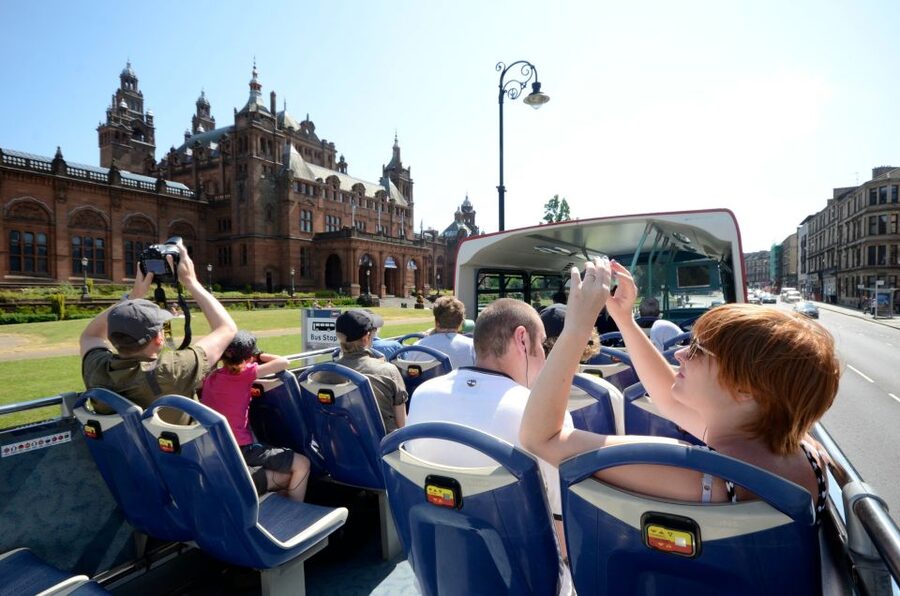
The Red Route is designed so you never feel totally “outside the story.” There’s audio commentary included in Spanish, English, French, German, Italian, Chinese, and Polish, and it comes with headphones.
During April to September, the Red Route includes a live guide. That live component is where the tour often becomes more than just transportation. I heard examples of live-guiding that mixed humour and real detail, including guides such as Liz, Craig and Mackenzie (with drivers and guides praised for friendly, energetic delivery), Keith, and Jim, plus one group singling out Kat for strong on-the-spot storytelling. The tone matters. When guides treat the ride like they’re talking to a friend, the 90 minutes pass faster.
One note that matters for your comfort: open-top buses can turn audio into a “sometimes” experience in wind. One rider pointed out that on a windy day the headphones were harder to hear. If you’re sensitive to noise, bring a hat or jacket that reduces the wind problem, and try to sit where you can hear clearly.
Practical tips so you don’t waste time hopping
Hop-on hop-off tours succeed or fail based on how you spend your gaps. Here’s how to keep it smooth.
First, start early. One practical strategy shared was getting on around 9:00am to avoid later crowds and to give yourself more flexibility for museum time. You’ll also get better chances of seating upstairs and a clearer sound mix for the narration.
Second, use the tools you have. One rider emphasized that maps are available on the buses, and there’s also a list of stops at the route points. If you don’t know Glasgow, don’t rely only on your phone data plan. Look up at the map on the bus and decide your next hop while you’re still in motion.
Third, dress for Glasgow weather. Even when the day looks mild at the start, rain can show up. One review noted enjoying the tour despite awful weather, but that’s still a reminder to bring a jacket. For the open-top experience, comfort wins.
Finally, pay attention to what each stop is best for. Cathedral and Theatre Royal work well for quick sightseeing. Riverside Museum and Kelvingrove are better for longer breaks. If you treat every hop like it’s equally timed, you’ll either rush or miss your best part.
On the rules side, keep it simple: no pets, no smoking, and no luggage or large bags. The buses are wheelchair accessible, which is a major plus if you need smoother boarding.
Price and value: is around $26 a fair deal for two days?
At about $26 per person for a 1–2 day ticket, the value comes down to one question: will you use it to reduce transport friction between sights? In Glasgow, the stops are spread out enough that buses can save time and energy compared with cobbling together trains and buses plus walking between them.
This tour also adds value by bundling narration. You’re not paying just for the bus ride—you’re paying for guided context, with audio in 7 languages and live guidance during the summer months.
Where the price feels strongest:
- You’re visiting for a short break and want the highlights in the least stressful way.
- You want to choose your own pacing instead of committing to a fixed walking route.
- You care about museums and major institutions, not just photo stops.
Where you might rethink it:
- If you already know the city well and plan a tight schedule with minimal between-stop movement.
- If you hate open-air riding in wind or rain (even though it’s still workable, it changes how pleasant the ride feels).
For most first-timers and city-breakers, the combination of frequent buses, major stops, and included commentary makes the price feel reasonable.
Should you book the Glasgow City Sightseeing hop-on hop-off bus?
I’d book this tour if you’re in Glasgow for one to two days and want a smart way to cover the top sights without burning time. It’s especially useful if you want a gentle introduction to Glasgow Cathedral, the Riverside Museum area, and Kelvingrove, with Theatre Royal as a strong finishing point.
I’d also book it if you’re travelling with someone who moves a bit slower, because wheelchair access is included and the hop-on format prevents you from being forced into a long continuous walk.
If you’re the type who hates weather surprises, bring a jacket and plan for audio to be a bit harder on very windy days. But in general, it’s a practical, flexible way to see Glasgow, get context as you ride, and decide what you want to return to once you’ve seen the city from the top deck.
FAQ
FAQ
How long is the Red Route tour and how often do buses run?
The Red Route tour takes about 90 minutes, and buses run every 30 minutes.
What are the first and last departures from the main starting point?
From Stop 1, the first tour departs at 10am and the last tour departs at 4pm.
Is the tour guided?
The Red Route includes a live guide from April to September. You’ll also get an audio guide with headphones in 7 languages.
Which sights does the Red Route stop near?
You can hop off near major sights such as Glasgow Cathedral, Theatre Royal, Riverside Museum, and Kelvingrove Art Gallery and Museum, plus stops around areas like George Square, Glasgow Green, and the city center.
Are attraction tickets included?
No. Attraction tickets are not included, and you’ll pay separately for anything you want to enter.
Are pets and large bags allowed on board?
No pets are allowed, and luggage or large bags are not permitted on the tour.