Nairobi tells its story best on the street. This half-to-full-day tour mixes small-group pacing with matatu rides, then anchors the day in the National Archives and the Railway Museum. One thing to watch: the main museum/rooftop admissions aren’t included, so you’ll budget extra on the spot.
I like that the route gives you more than skyline snapshots. You spend time in areas most visitors skip and you get a guide who keeps things practical—how the city works, what to notice, and how the past connects to today. The only real drawback is simple: the day involves walking and moving between stops, so plan for moderate fitness.
In This Review
- Key things to know before you go
- Why this Nairobi city tour works: matatus plus real institutions
- Price and what you actually pay for in Nairobi downtown
- Meeting at Moi Avenue and how the day flows (5 to 7 hours)
- Stop 1: National Archives on Moi Avenue—art, photos, and the independence story
- Riding Matatus to Kasarani—how local transport becomes part of the lesson
- Nairobi Railway Museum—seeing how rail shaped the country
- Kenyatta International Conference Centre rooftop—360-degree views of power
- What to wear, bring, and expect on a moderate-walking day
- Who this tour suits best (and who might want something else)
- Should you book this tour or not?
- FAQ
- How long is the Nairobi city walking/bus tour?
- What does the $61 price include?
- What are the entrance fees for each paid stop?
- What group size should I expect?
- Where and when does the tour start?
- Is the tour physically demanding?
Key things to know before you go
- Max 7 people means you’ll get more back-and-forth with your guide and less waiting around.
- Matatu (minibus) rides are built into the tour, not added as a last-minute add-on.
- National Archives is the cultural anchor, with paintings, tribal photography, and independence-era exhibits.
- Railway Museum focuses on Kenya Railways and how rail helped shape the country.
- KICC rooftop delivers a true 360-degree view of Nairobi’s core and major government buildings.
- Admission tickets are separate, so carry cash or be ready to pay what’s required at each site.
Why this Nairobi city tour works: matatus plus real institutions
A lot of Nairobi tours try to do everything in a rush: quick stops, fast photos, then back out to traffic. This one is different because it pairs two kinds of learning. First, you get the human side of the city—moving by matatu/shared minibuses like locals do. Then you get the official side—archives, museums, and a rooftop view that shows how the capital is laid out.
I especially like the balance. You’re not just standing in front of things; you’re seeing how people travel, how neighborhoods feel, and how institutions preserve the country’s story. It also helps that the group is capped at 7 travelers, so you’re not stuck watching your guide disappear into a bigger crowd.
Price and what you actually pay for in Nairobi downtown
At $61 per person, this tour is priced like a city-orientation outing with a local guide and guided logistics. The guiding fee is included, and the core experience is the route: museum visits, transit time, and the rooftop viewpoint.
What’s not included matters for value. You’ll pay separately for:
- National Archives (about $3)
- Nairobi Railway Museum (about $3)
- Kenyatta International Conference Centre rooftop (about $5)
So you’re really buying an organized half-to-full-day plan plus transportation by local minibuses and a guide who connects the stops. If you’d rather pay one lump sum, this setup won’t feel perfect. But if you like to know exactly where your money goes and you’re comfortable paying site admissions directly, the overall value still holds up—especially with the small-group cap.
Meeting at Moi Avenue and how the day flows (5 to 7 hours)
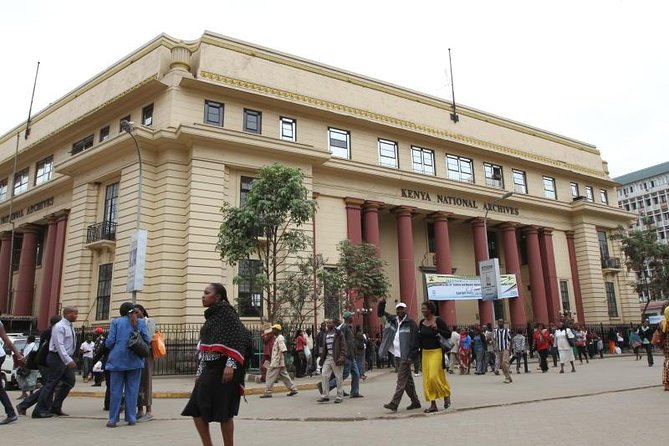
You start at 8:30 AM at Nairobi National Achieves, Moi Avenue 30, Nairobi, Kenya. The tour runs about 5 to 7 hours, returning back to the meeting point by the end.
Timing is built around a sensible rhythm:
- A solid first stop indoors (the archives)
- A longer transit segment using matatus
- A focused museum block
- A rooftop finale where the views help you connect the city’s geography to the earlier history
Because you’re mixing short museum windows (like 45 minutes at the Railway Museum and 30 minutes on the KICC rooftop) with travel time, you’ll want to keep your expectations realistic. This is not a slow, linger-all-day museum crawl. It’s an efficient way to get bearings fast and still walk out with context.
Stop 1: National Archives on Moi Avenue—art, photos, and the independence story
The day begins at the National Archives—a place you can easily miss if you’re only chasing the usual tourist circuit. Expect it to feel more like a local reference room for the past than a flashy museum.
Plan on about 1 hour here. The exhibits include:
- Paintings and tribal photographs from across Africa
- An enormous collection of tribal weapons, instruments, masks, and other paraphernalia
- Displays that give insight into the struggle for independence and the history of Nairobi
Here’s what I think makes this stop especially useful for visitors: it sets a baseline for everything else you’ll see later. Nairobi’s modern center can look like glass-and-street-level hustle. The archives remind you that this capital has a deeper timeline—cultural identity, political change, and how communities understand their own history.
Practical note: this is the part of the tour where you’ll get the most “information density” per minute. If you want to take notes, bring a pen. If you’re the type who reads quickly, you’ll still get enough to anchor your understanding of Nairobi.
Riding Matatus to Kasarani—how local transport becomes part of the lesson
After the archives, the tour switches gears into the street-level Nairobi you came for. You’ll take a two-way matatu ride toward Kasarani.
Total time here is about 2 hours, and entry is free since this is transport and not a paid attraction. The big point is how the ride works as a cultural snapshot. Matatus are known for eye-catching designs—everything from pop culture references to political icons—and the experience is often loud, lively, and very much part of daily life. The tour frames them as rolling, moving social spaces.
What I love about including this segment is that it stops you from treating Nairobi like a series of sealed-off indoor stops. You get to notice how people organize their day, how the city moves, and how neighborhoods connect. You also learn quickly that Nairobi isn’t one single “look”—it’s a network of lived-in areas.
A consideration: matatus are public transport. That means you’re dealing with the realities of traffic and shared seating. It’s usually part of the charm, but if you’re sensitive to cramped spaces or noise, you may feel it more than you expect.
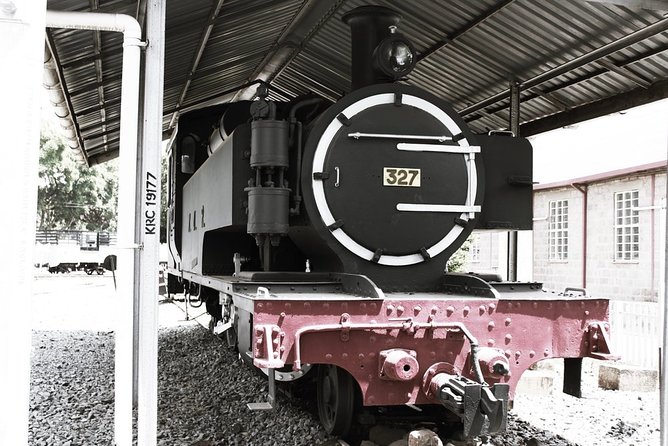
Nairobi Railway Museum—seeing how rail shaped the country
Next up: the Nairobi Railway Museum. You’ll spend about 45 minutes here, and you’ll pay admission separately (about $3).
This museum is tied to Kenya Railways, and the story it tells is bigger than trains. The core theme is how rail helped the country develop into what it became. It’s one of those museums where you can connect infrastructure to everyday life: movement of goods, movement of people, and the way a transport network can reshape growth.
For me, this stop works best if you walk in with one question: how did a rail system change the balance between Nairobi and the rest of the country? Even if you’re not a train-history expert, the museum’s focus makes it easy to follow, and it complements what you saw at the archives. One place deals with identity and political change; this one deals with connections and expansion.
Kenyatta International Conference Centre rooftop—360-degree views of power
The tour ends with the Kenyatta International Conference Centre (KICC) rooftop, about 30 minutes. Admission is separate (about $5). The rooftop also functions as a helipad, which adds a slightly unusual detail to the skyline experience.
What you’re really paying for here is the 360-degree view of the central business district. From up here, you can see major buildings that signal how the capital is organized politically and administratively, including:
- The office of the president
- Kenya’s parliament
- Other monumental buildings in the downtown core
I like the rooftop moment because it turns information into geography. Earlier, you learned about history and development. Now you can look around and make the city more readable. Even if you don’t know all the names of the structures, you’ll start to understand where government sits relative to commercial Nairobi.
One practical consideration: rooftop time is short. If you want photos, plan quick angles—front, side, and an overview—then move on before you run out of time.
What to wear, bring, and expect on a moderate-walking day
Even though the tour is called a walking/bus tour, you’ll still do real movement across downtown. The tour calls for moderate physical fitness, which usually means:
- You should be comfortable walking at street pace
- You may be on your feet more than you expect for a “museum day”
- You’ll need to handle transitions between sites (and short waits)
What I’d bring:
- A light layer for indoor air-conditioning (museums/archives can be cooler)
- Comfortable walking shoes with grip
- A small day bag with water
- Cash or payment method ready for the separate admissions
Photography-wise, you’ll want to be ready at the rooftop. Indoors, follow whatever rules are in place on site for photos.
Who this tour suits best (and who might want something else)
This is a great choice if you want:
- A guided Nairobi orientation without feeling trapped in one bubble
- Cultural context that connects the past (archives) and development (rail)
- Local transport experience, not just a private vehicle ride
It’s also a strong fit for first-timers who feel overwhelmed by Nairobi’s size. Downtown can look confusing. This tour helps you map it through guided stops and views.
It may be less ideal if you:
- Want a full-day museum immersion with long stays at each site
- Hate any form of crowd noise or cramped shared transport
- Prefer all-in pricing with no separate admissions
Should you book this tour or not?
I’d book it if you’re looking for the smart “Nairobi starter pack”: matatu riding, downtown context, two major institutions (archives + rail), and a rooftop view that makes the city click. The small-group size is a real quality lever here, and the mix of transport plus museums usually gives better memories than a straight checklist.
I’d hesitate only if separate admissions would frustrate you, or if you know you won’t handle walking plus shared minibuses comfortably. If you can manage that, this tour is a practical way to understand Nairobi fast—without turning your day into a string of forgettable photo stops.
FAQ
How long is the Nairobi city walking/bus tour?
The tour runs about 5 to 7 hours.
What does the $61 price include?
The guiding fee is included. Museum and rooftop admission tickets are purchased separately.
What are the entrance fees for each paid stop?
National Archives is about $3, Nairobi Railway Museum is about $3, and the Kenyatta International Conference Centre rooftop is about $5.
What group size should I expect?
The maximum group size is 7 travelers.
Where and when does the tour start?
It starts at 8:30 AM at Nairobi National Achieves, Moi Avenue 30, Nairobi, Kenya and ends back at the meeting point.
Is the tour physically demanding?
The tour lists moderate physical fitness as a requirement, so you should be comfortable with walking and moving between stops.