Hiroshima hits hard, and this day tour helps. You get a smart, guided route through the Atomic Bomb Dome and Peace Memorial area, then you shift gears to the postcard-famous Itsukushima Shrine on Miyajima Island. It’s built for people who don’t want to juggle trains, tickets, and timing on their own.
What I like most is the way the tour blends meaning and convenience without rushing you into boredom. I also love that lunch is not just an add-on, it’s an authentic Hiroshima-style okonomiyaki experience with set menu choices.
One consideration: the Peace Memorial Museum (and the whole subject) is emotionally heavy, and the day runs long, with walking for long periods involved—so plan for that mindset and your energy level.
In This Review
- Key things to know before you ride
- Starting the day: Hiroshima Station, a real bus plan, and what you’ll do with luggage
- Atomic Bomb Dome stop: why the first hour matters
- Peace Memorial Park and Peace Memorial Museum: the meaning you can’t get from postcards
- Okonomiyaki lunch in Hiroshima: a local break that actually tastes like the city
- Ferry to Miyajima and Itsukushima Shrine torii: the afternoon shift you’ll remember
- How the guide experience shapes the whole day (and why names matter)
- The schedule math: how much time you get where, and what to prioritize
- Value and cost: what your $118.92 is really buying
- Who this tour fits best (and who should consider alternatives)
- Should you book Hiroshima and Miyajima by bus?
- FAQ
- What’s included in this Hiroshima and Miyajima day tour?
- Is the tour guided in English?
- Do you get options for the okonomiyaki lunch?
- Can the tour accommodate dietary changes on the day?
- How long is spent at each major stop?
- What if I need to cancel?
Key things to know before you ride
- Peace Memorial first, Miyajima second: the pacing makes the morning feel serious, then the afternoon turns scenic
- Tickets and lunch are bundled: ferry to Miyajima and museum entry come included, plus okonomiyaki lunch
- English-only guidance with earphones: you’ll get guided context at each stop, using provided audio devices
- Tight time slots: about 1 hour at each Hiroshima memorial stop and around 3 hours on Miyajima
- Group stays manageable: the tour caps at 40 travelers, so logistics feel controlled
Starting the day: Hiroshima Station, a real bus plan, and what you’ll do with luggage
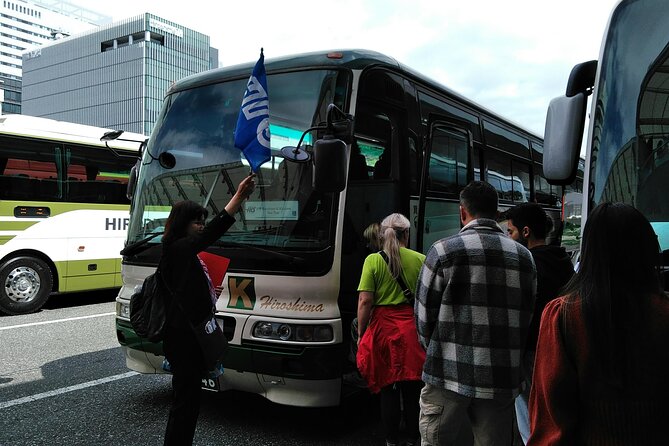
This tour starts at Hiroshima Station (you’ll meet at the station address listed as 1-2-37 Matsubarachō, Minami Ward). The start time is 10:00 am, and the tour runs about 7 hours 40 minutes, ending back at the meeting point. If your Hiroshima base is the station area, you’ll feel the biggest payoff: easy start, easy finish, no extra transfers to worry about.
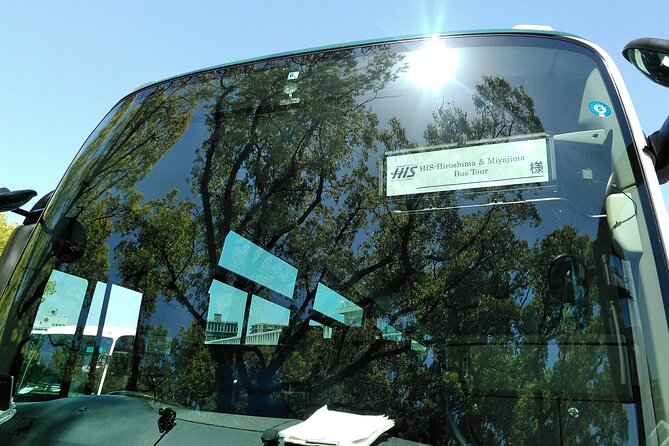
You’ll travel in an air-conditioned vehicle with an English-speaking guide. It also helps that they provide earphone guides so you can hear directions and explanations without craning your neck or relying on a group shuffle. If you’re bringing a backpack or day bag, you can store your luggage in the bus luggage compartment while you’re out walking.
One small practical thing: you’ll be moving from stop to stop on a schedule, not wandering freely all day. That’s exactly why this format works for a first visit—your time in the big places is protected, not left to luck.
Atomic Bomb Dome stop: why the first hour matters
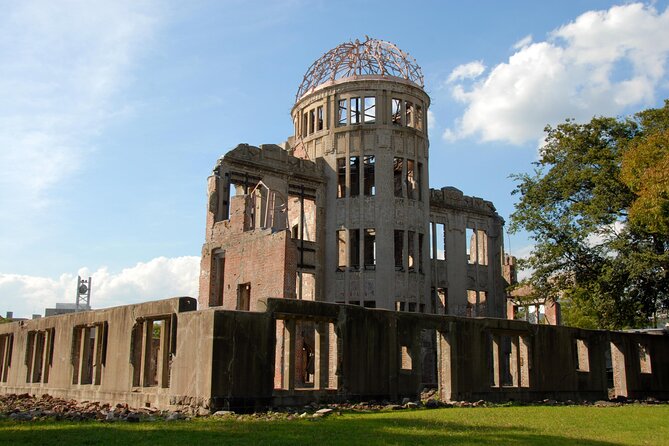
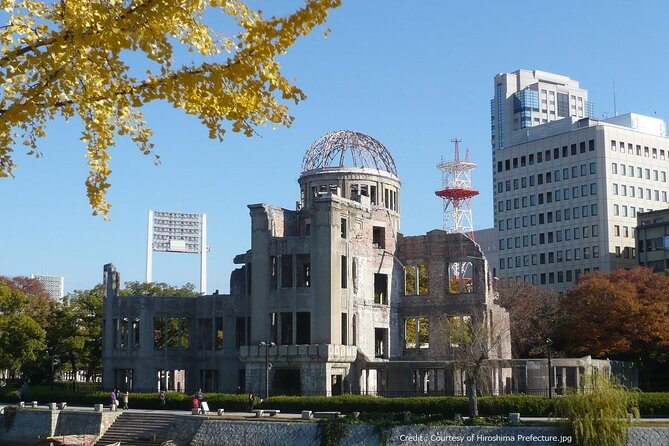
Your first Hiroshima stop is the Atomic Bomb Dome, and it’s timed at about 1 hour with admission free. This isn’t just a photo stop. Even before you step into the area, the guide framing matters: the Dome became a symbol largely because survivors and supporters raised their voices to protect it as a UNESCO World Heritage Site.
What you’ll get in that hour is a guided way to understand what you’re looking at, before you go into your own pace of looking and reflecting. You’ll be close enough to absorb how the structure reads in real life, not just in book illustrations. It sets the emotional tone for the rest of the day—use this time to slow down, not rush for angles.
If you’re the type who needs to read every sign, 60 minutes may feel tight. But if you want the Dome to be a grounding point for understanding what comes next, this timing works well.
Peace Memorial Park and Peace Memorial Museum: the meaning you can’t get from postcards
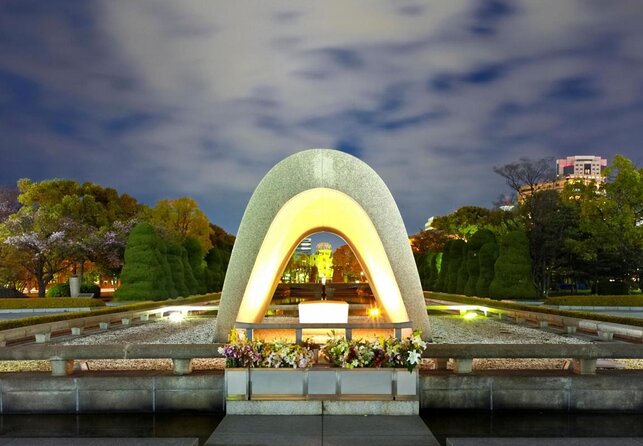
After the Dome, you move to Hiroshima Peace Memorial Park for about 1 hour (also free admission). This is the outer stage of remembrance—space, monuments, and the layout of a memorial district designed for reflection. Walking through here with a guide helps you connect the dots so you don’t just see names and dates; you understand what the city built and why.
Then comes Hiroshima Peace Memorial Museum, again about 1 hour, with admission included. The museum is described as two buildings covering Hiroshima’s history and the nuclear bomb’s arrival, with a strong focus on events around August 6. Expect the museum to be direct about the tragedy. It’s not a casual stop, and the tone can be hard.
I like that the tour doesn’t try to soften the message with extra detours. You get a focused chunk of time where you can let the information land. If you’re sensitive to graphic or harrowing content, come prepared for a serious experience and give yourself room to step outside for air if you need it.
A practical tip: in a 60-minute museum visit, don’t try to read everything. Follow the guide’s highlights first, then go back for details if something pulls you in.
Okonomiyaki lunch in Hiroshima: a local break that actually tastes like the city
Lunch is included, and it’s not the generic quick meal some day tours slip in. You’ll get Hiroshima-style okonomiyaki at a local restaurant, with toppings that include pork, cabbage, bean sprouts, fish powder, noodles, and eggs (that’s the standard version).
You also have menu options you can pre-select:
- Regular okonomiyaki
- No pork with eggs
- No pork, no fish powder, no eggs
If you have allergies or dietary restrictions, you’re asked to inform the team when you book. They also note they can’t accommodate menu changes on the day of the tour, so this is one you should set correctly in advance. I appreciate that approach because it prevents last-minute confusion when the group is moving.
How good is it in real life? The lunch has strong marks for being tasty and different from what people expect. One downside to keep in mind: lunch timing can feel a little rushed for seating, so be ready to take your seat and start early rather than waiting to be seated perfectly.
Also, you’re asked to avoid bringing outside food and drinks into the restaurant. Not a problem if you treat lunch as part of the scheduled flow.
Ferry to Miyajima and Itsukushima Shrine torii: the afternoon shift you’ll remember
Then you’ll head to Miyajima Island. A ferry ticket is included, and that matters because Miyajima’s charm is tied to the water approach—you feel like you left the city, even before you see the shrine itself.
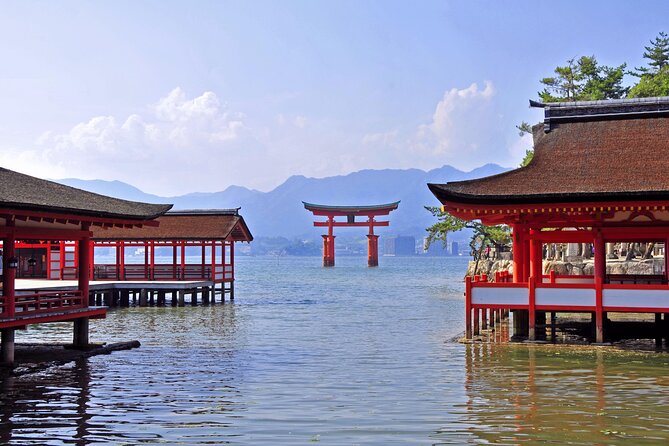
Your main Miyajima stop is the Itsukushima Shrine torii, with about 3 hours for this segment. Here’s the key detail that makes it special: the shrine sits in a small inlet, while the torii gate is set out in the Seto Inland Sea. That layout is what produces the iconic sea-and-shrine view people travel for.
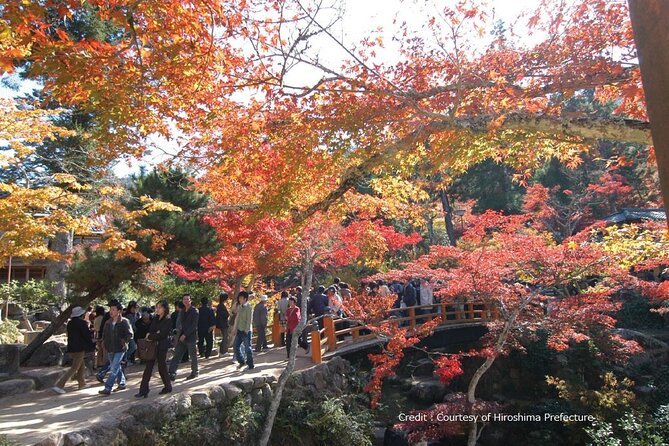
What you’ll do with those three hours is a mix of guided context and self-paced wandering. You can walk paths around the inlet and look out at the sea from different angles. It’s the kind of place where the guide helps you interpret what you’re seeing, but you should also give yourself time to just absorb it.
If you love photos, Miyajima can tempt you into over-scheduling your stops. My advice is to pick a couple of vantage points and then slow down. The island shopping areas and street life around the approach can be fun, but don’t lose track of your return timing.
How the guide experience shapes the whole day (and why names matter)
This is an English-speaking guide tour only, and the guide quality seems to be a major part of why people rate it so highly. Many guides are praised for speaking clear English, managing the group smoothly, and keeping people informed without turning the ride into a lecture.
You’ll also hear personal stories tied to Hiroshima and the places you visit. In the feedback, guides named Tom, Takane, Hiro, Kane, Yuka, Kaori, Toe, and assistant Yuki show up repeatedly alongside comments about good pacing and respectful explanation. Even if you don’t get one of those specific people, it’s a useful signal that the operator invests in guide skills, not just transportation.
One operational detail: the tour provides earphone audio, and some people found hearing quality could vary. If you notice it’s muffled or quiet, don’t just suffer silently—ask right away. The faster you fix your audio, the easier it is to enjoy the explanations.
The schedule math: how much time you get where, and what to prioritize
Let’s translate the day into real decision-making. Your time windows are roughly:
- Atomic Bomb Dome: 1 hour
- Peace Memorial Park: 1 hour
- Peace Memorial Museum: 1 hour
- Itsukushima Shrine torii on Miyajima: 3 hours
That totals about 6 hours at stops, plus travel time between them and ferry time. This format is designed for first-timers who want the major hits in one go.
If you want to read deeply at the museum, you may feel 1 hour is short. Some people come away wishing they could spend more time there. If that’s you, plan to focus on the museum sections your guide highlights first, then use any remaining minutes for the parts that call you back.
If your heart is set on Miyajima, the tour gives you a more generous window there. Three hours is enough to enjoy the sea views and do some wandering without panicking about time.
Value and cost: what your $118.92 is really buying
At $118.92 per person, this tour isn’t cheap in the way that a single-city walking tour might be. You’re paying for a full guided day that bundles several big-value items: air-conditioned bus transport, an English-speaking guide, lunch, the ferry to Miyajima, and admission coverage for the museum (and included stop admission at the shrine segment).
Here’s the value logic: if you tried to DIY this, you’d likely spend time coordinating transit, buying tickets, and piecing together lunch that matches the vibe. This tour removes that friction. Instead of spending your day managing logistics, you’re spending your day where you want to be.
Also, the tour caps at 40 travelers, which helps keep the group from feeling like a moving crowd of strangers. It’s not a private car experience, but it’s not a huge bus chaos situation either.
For many visitors, the best bargain isn’t just the price—it’s the mental relief of knowing the day is handled.
Who this tour fits best (and who should consider alternatives)
This one-day Hiroshima and Miyajima bus tour is ideal if you:
- want to see the major Hiroshima memorial sites and Miyajima in the same day
- prefer guided explanations in English
- like having lunch handled for you
- don’t want to plan ferry + admissions + transport on your own
It may be less ideal if:
- you have difficulty with long walking stretches
- you want extra museum time for very deep reading
- you’re traveling with very young kids or need a gentler emotional pace (this day covers heavy material)
If your goal is a high-impact first day with guided structure, this tour makes sense.
Should you book Hiroshima and Miyajima by bus?
I think you should book it if you want a well-paced day that hits the essential Hiroshima memorial sites and still gives you time to enjoy Miyajima’s sea views. The biggest strengths are the respectful, guided flow and the fact that the day isn’t built around you doing logistics all afternoon.
Book with extra care if you know the museum content will be tough for you. But if you’re ready for that and want the experience to be explained clearly, this is a strong way to do it without wasting time.
FAQ
What’s included in this Hiroshima and Miyajima day tour?
The tour includes an authentic Hiroshima-style okonomiyaki lunch, travel by air-conditioned vehicle with an English-speaking guide, a ferry ticket to Miyajima, and admission for the Hiroshima Peace Memorial Museum and the Itsukushima Shrine torii stop. The Atomic Bomb Dome and Peace Memorial Park admissions are free.
Is the tour guided in English?
Yes. This tour is conducted by an English-speaking guide only.
Do you get options for the okonomiyaki lunch?
Yes. You can choose from regular okonomiyaki, no pork with eggs, or no pork/no fish powder/no eggs. You need to inform the company about allergies or dietary restrictions when booking.
Can the tour accommodate dietary changes on the day?
No. The tour notes that it is unable to accommodate menu changes on the day of the tour.
How long is spent at each major stop?
The Atomic Bomb Dome and Hiroshima Peace Memorial Park are each about 1 hour. The Hiroshima Peace Memorial Museum is about 1 hour. The Itsukushima Shrine torii stop on Miyajima is about 3 hours.
What if I need to cancel?
Free cancellation is available up to 24 hours in advance for a full refund. If it’s canceled due to poor weather, you’ll be offered a different date or a full refund.