
Ho Chi Minh City can feel like a lot on day one, but this short hop-on hop-off bus pass helps you sort it fast. I like the 1-hour format because it’s realistic when it’s hot and you still want a plan for the rest of your trip. You get an audio guide device plus city maps, so you can learn while you’re on the move.
Two things I really like: the stop selection hits major landmarks (not random roadside stops), and the ride is set up so you can adjust your day without buying a full guided tour. One drawback to keep in mind is that the timing is tight—some stops work best for quick looks, and you shouldn’t count on long museum-style visits during the bus window.
In This Review
- Key Things to Know Before You Go
- A Quick Loop to Get Your Bearings in Ho Chi Minh City
- Price Check: What $25 Buys (and Where Value Can Feel Tight)
- Starting Point: Saigon Central Post Office (Don’t Show Up Late)
- How the Hop-On Hop-Off Works With a 1-Hour Time Slot
- Stop by Stop: What You’ll Notice Around the City’s Big Landmarks
- Saigon Zoo and the History Museum area
- War Remnants Museum
- Western Town / Bui Vien Walking Street area
- Ben Thanh Market
- Bitexco Financial Tower
- Bach Dang Pier
- Majestic Hotel area
- City Hall on Nguyễn Huệ Street
- Independence Palace
- Notre Dame Cathedral / Central Post Office area
- Seat, Audio, and Wi‑Fi Details That Affect Your Comfort
- Routes, Timing, and the 30-Minute Bus Rhythm
- Who This Works Best For (and Who Might Be Happier Elsewhere)
- Should You Book This Ho Chi Minh City Bus Tour?
- FAQ
- How long is the Ho Chi Minh City hop-on hop-off bus tour?
- Where does the tour start, and where does it end?
- What’s included in the ticket price?
- Do I need to redeem a voucher on the bus?
- How often does the bus arrive?
- Will the bus stop at all the listed stops?
- What happens if the weather is bad?
Key Things to Know Before You Go

- Major sights in a compact loop including War Remnants Museum, Ben Thanh Market, Independence Palace, and the Notre Dame area/Central Post Office
- Audio guide + maps onboard to help you connect what you’re seeing to the bigger story
- Small group size (a maximum of 6 travelers), which usually means less crowding
- Two-route confusion is real—make sure you’re on the right bus for where you want to end up
- Heads-up on seat audio—some reported headphone plug issues, so bring a spare set if you’re picky
A Quick Loop to Get Your Bearings in Ho Chi Minh City

This is the kind of tour I recommend for travelers who want direction. Not just photos. Real orientation. Ho Chi Minh City has a lot going on—busy streets, big boulevards, and clusters of sights that don’t always feel connected until you’ve seen them in sequence. A short bus pass like this helps you understand where key places sit relative to each other.
The format is also practical. Your whole experience is listed as about 45 minutes to 1 hour, and the stop list is built around central, walkable areas. That makes it a good opener on a first day—or a reset day if you’re feeling travel-fatigued and need something easy.
I’ll be honest: with an hour on the clock, this isn’t a slow-travel, museum-by-museum day. It’s a “get your bearings fast” ride. You’ll likely do longer stops later, after you’ve decided what’s worth your time.
Price Check: What $25 Buys (and Where Value Can Feel Tight)
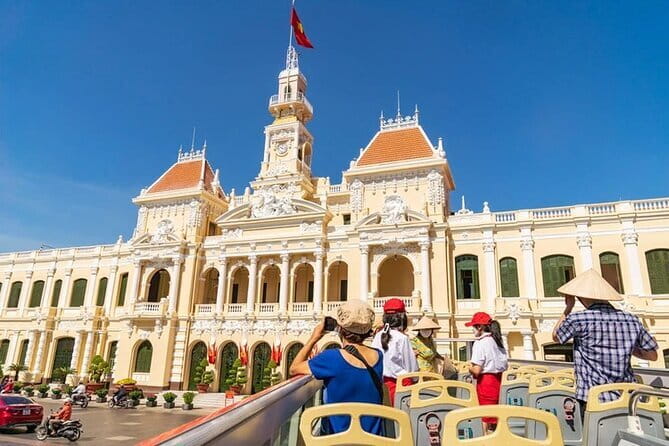
At $25 per person, the value depends on how you use the pass. The ticket includes more than just the bus ride: you get an audio guide device, city maps, and free high-speed Wi‑Fi onboard, plus taxes and insurance on the bus. That’s useful if you’re trying to keep your day organized without paying for extra apps or printed directions.
For this price, the biggest value is time. You’re getting a structured way to pass by major landmarks in a short window, so you can spend your energy afterward on the places you actually care about.
Now the catch: the name hop-on hop-off implies flexibility, but the operational notes say the bus will not stop at the 10 named stops and also does not pick up at those stop points. In plain terms, you shouldn’t build your schedule around stepping on and off at each specific address like you might in other cities with fully frequent stops.
So treat the ticket like a moving overview with audio and nearby-area context. If you want to linger in a museum for hours, plan that part outside the bus time.
Starting Point: Saigon Central Post Office (Don’t Show Up Late)

The meeting point is the Saigon Central Post Office, at 02 Công trường Công xã Paris, Quận 1. The tour ends back at the meeting point, which is helpful if you’re navigating the city for the first time and want a clear endpoint.
You also need to be there early. The instructions say to arrive 15–20 minutes before departure. That matters because these short, scheduled loops can leave quickly if people are missing or still redeeming vouchers.
One more practical note: confirmation is received at booking, and the time slot depends on availability. So once you book, lock in your plan around that slot. If you’re late, you’re the one who pays the price with lost time.
How the Hop-On Hop-Off Works With a 1-Hour Time Slot

Here’s the key thing to understand: the experience is marketed as flexible, but the operational details suggest you won’t be hopping at every listed stop address.
The bus is said to arrive every 30 minutes, with a break window from 12:30 pm to 12:59 pm. That means if you miss your moment, you may need to wait for the next arrival. Also, the schedule can shift with traffic and weather.
So how do you make this work for your day?
- Use the audio and views as your planning tool. While you’re on board, note what you want to revisit up close later.
- Think of the named locations as “areas to target,” not guarantees that the bus will stop at that exact curb for you to disembark.
- If you’re trying to hop off, keep your expectations realistic. One review specifically flagged that the 1-hour duration may not allow time to hop off and then do a full activity. That lines up with the schedule reality.
Also, there’s a useful detail from customer feedback: the system appears to involve two different routes. Make sure you’re on the right one, or you might end up back where you didn’t plan.
Stop by Stop: What You’ll Notice Around the City’s Big Landmarks

This pass is built around a central set of stops and landmarks. Even if you don’t get off exactly at every address, you’ll still get the layout of the city’s major “anchors.”
Saigon Zoo and the History Museum area
The first stop listed is at the Saigon Zoo – Museum of History (02 Lê Duẩn St). Even if you don’t spend time inside, this area helps you visualize how the city clusters cultural sites together rather than spreading them evenly.
Look around for the mix of older institutional buildings and the streets that feed into central districts. It’s a solid starting point because it signals you’re in the core, not out on the edges.
War Remnants Museum
Next up is the War Remnants Museum (28 Võ Văn Tần St). This is one of the most important stops on any Ho Chi Minh City route, and even a brief pass-by helps set the tone for the rest of your visit.
If you care about understanding Vietnam’s modern history, this stop is often the “must do.” Just remember: this bus time window is short, so you’ll likely want to visit it properly on another stretch of your day.
Western Town / Bui Vien Walking Street area
Then you’re in the Western Town and Bui Vien Walking Street area (187 Phạm Ngũ Lão St). This is where the city shifts into nightlife energy and pedestrian scenes.
Even if you’re not a late-night person, it’s useful to see this district so you can decide whether to return later. It also helps you understand why some parts of Ho Chi Minh City feel lively at night and chaotic in the daytime.
Ben Thanh Market
The list includes Ben Thanh Market (129–133 Hàm Nghi St). This is a classic “you’ll see it anyway” location. The real value here is orientation: you’ll learn where it sits in relation to major streets and other nearby landmarks.
If you’re shopping, this is a place to target after your bus loop. If you’re not, even walking its edges can help you understand local commerce and street flow.
Bitexco Financial Tower
Next is the Bitexco Financial Tower area (67 Hàm Nghi St). This stop is a useful contrast. You get the older heritage zones, then you immediately see the modern skyline statement.
If you’re photographing the city, this is one of the places that helps you capture “then and now” in one glance.
Bach Dang Pier
The tour also lists Bạch Đằng Pier (17 Tôn Đức Thắng St). A pier stop isn’t just scenic. It gives you a sense of how water shapes the city’s geography and where major roads lead.
If your feet are tired after bus time, this area can also work as a calm reset point—depending on your own pace and the time of day.
Majestic Hotel area
The next stop is the Majestic Hotel crossroads (Ton Đức Thắng and Đồng Khởi). This intersection area matters because it’s a hub. When you know it on a map, the rest of your day gets easier: it’s easier to route yourself for taxis, rideshares, or walking links.
It’s also a useful waypoint for planning museum visits, café breaks, or a longer wandering session later.
City Hall on Nguyễn Huệ Street
The list includes City Hall on Nguyễn Huệ Street (92–96 Nguyễn Huệ St). This is the “big boulevard” feeling of central Ho Chi Minh City. You’ll understand why Nguyễn Huệ gets a reputation as a main promenade area.
Even if you don’t spend time on the street itself, you’ll get the layout so you can find it quickly when you want a break from narrower lanes.
Independence Palace
Then it’s Independence Palace (35 Nam Kỳ Khởi Nghĩa St). This is another landmark that you’ll want to take seriously. Passing it from the bus helps you appreciate why it’s a focal point in the city’s identity.
If your priorities include Vietnam’s political history, this is a stop worth scheduling for proper time when your schedule allows.
Notre Dame Cathedral / Central Post Office area
The last stop listed is Notre Dame Cathedral – Central Post Office. The connection matters: the Central Post Office is your meeting point, and the nearby cathedral area is a classic photo and architecture moment.
If you’re using the bus as your first-day guide, ending near the Central Post Office is a practical win because it anchors you in a landmark area you can easily revisit.
Seat, Audio, and Wi‑Fi Details That Affect Your Comfort
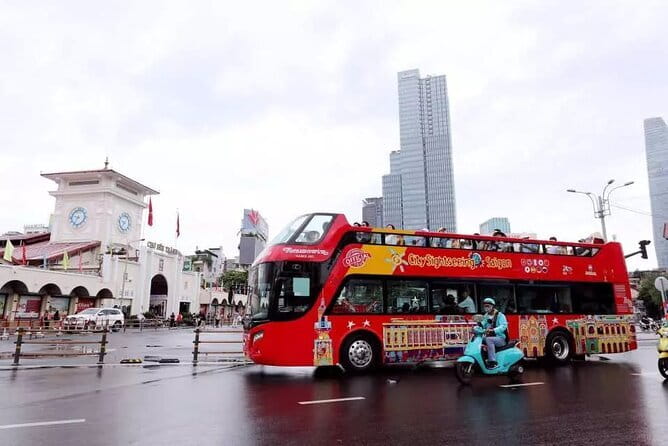
The bus includes an audio guide device plus maps and free high-speed Wi‑Fi. That combo is handy. Audio helps you connect street scenes to what they mean. Wi‑Fi helps you check directions for wherever you decide to go next.
One thing to watch: there were complaints that headphone ports didn’t work consistently for every seat. That doesn’t mean it’s guaranteed to happen to you, but it does mean you should be mentally prepared. If you rely on audio, consider bringing a small backup option (like your own earphones).
Also, remember that Ho Chi Minh City heat can be intense. One piece of practical feedback pointed out that it’s hot in summer, but once the bus is moving, it becomes manageable. Translation: plan for a warm ride, hydrate, and don’t expect total cool comfort.
Routes, Timing, and the 30-Minute Bus Rhythm

The schedule isn’t just “ride whenever.” The bus arrives about every 30 minutes, and there’s a break between 12:30 pm and 12:59 pm. Traffic can also change timing.
And yes, there’s also mention of two routes. That’s important. If you end up on the wrong route, you can lose your sense of direction fast, especially with a short time slot.
My advice: when you start, double-check the route details and where you’ll end up. Since the tour ends back at the meeting point, you can at least “reset” with confidence—but don’t waste your only hour on the wrong loop.
Who This Works Best For (and Who Might Be Happier Elsewhere)

This bus pass is best for:
- First-time visitors who want a city overview fast
- Travelers who like structure but don’t want a strict guided itinerary
- People who want to tag landmarks on a map, then explore later on their own schedule
It’s less ideal for:
- Anyone who wants a long stop at multiple sites during the bus window
- Travelers who expect the bus to reliably stop at each listed address for easy hop-on and hop-off at every single curb
- People who need consistent working seat audio without any chance of issues
If you’re trying to pack a lot into one day, you’ll do better pairing the bus loop with a couple of nearby walking blocks rather than treating it like a full-day sightseeing vehicle.
Should You Book This Ho Chi Minh City Bus Tour?
I’d book it if your goal is orientation and you want a low-effort way to see the city’s big anchors—War Remnants, Ben Thanh, Bitexco, Independence Palace, and the Central Post Office area—without committing to a long tour.
I wouldn’t book it if you want a classic hop-on hop-off that lets you pop off and do multiple major attractions during the ride window. With the short duration and the note that the bus won’t stop at the named stop points, you may end up feeling like the schedule is a little too tight for what you imagined.
Best move: treat this as your “map in motion.” Let the audio and passing sights show you what’s worth your time, then build the rest of your day around that.
FAQ
How long is the Ho Chi Minh City hop-on hop-off bus tour?
The tour duration is listed as approximately 45 minutes to 1 hour.
Where does the tour start, and where does it end?
It starts at Saigon Central Post Office (02 Công trường Công xã Paris, Quận 1) and ends back at the same meeting point.
What’s included in the ticket price?
The ticket includes an audio guide device, city maps, free high-speed Wi‑Fi, taxes, and insurance on the bus.
Do I need to redeem a voucher on the bus?
Yes. The voucher must be redeemed on the selected date and within operating hours. It’s invalid after its expiration.
How often does the bus arrive?
The bus is listed as arriving every 30 minutes, with a break time from 12:30 pm to 12:59 pm.
Will the bus stop at all the listed stops?
The information says the bus will not stop on the 10 stops, and it does not stop and does not pick up clients at the stop points.
What happens if the weather is bad?
The activity operates in most weather conditions. If there’s inclement weather like typhoons or snowstorms, the decision to cancel is made 1 day before departure at 09:00 (local time), and notifications are sent by email.