Rome clicks into place with two linked tickets. This 3-hour experience pairs a hop-on hop-off bus ticket with Colosseum, Roman Forum, and Palatine Hill access, so you can build a Rome day that fits your pace.
I especially like the freedom: you can ride the bus as many times as you want during your ticket window and use the stops to hop on and off when the view (or your feet) calls it. I also like that the ancient-site part can be either a guided English tour or a smartphone audio guide with multiple languages.
One thing to plan for: you’re required to print the bus ticket, and that can turn into a hassle if you’re stuck without a printer when you need to board.
In This Review
- Key takeaways before you go
- Hop-on Hop-off bus timing: building a Rome loop that works
- Colosseum entry: how the included tickets can save your time
- Guided Colosseum tour vs self audio: picking the right “pace”
- Guided tour option (English)
- Self audio option (smartphone, download required)
- Roman Forum & Palatine Hill: tickets, but also the right mindset
- Where the bus stops place you (and what to do with them)
- The multilingual audio and bus headset setup
- Value check: is $97 a good deal for this mix?
- Small logistics that can make or break your day
- Print requirement for the bus ticket
- Ticket is group-based for Colosseum entry
- Seats, stamina, and shoes
- Weather and closures
- Who this tour is best for (and who should think twice)
- Should you book this Rome hop-on hop-off + Colosseum combo?
- FAQ
- What are the bus operating hours?
- How long is the full bus loop?
- How long is my hop-on hop-off ticket valid?
- Does this include Colosseum entry?
- Do I get a guided tour or an audio guide?
- Which languages are available?
- Do I need to print anything?
- Is it wheelchair accessible?
Key takeaways before you go
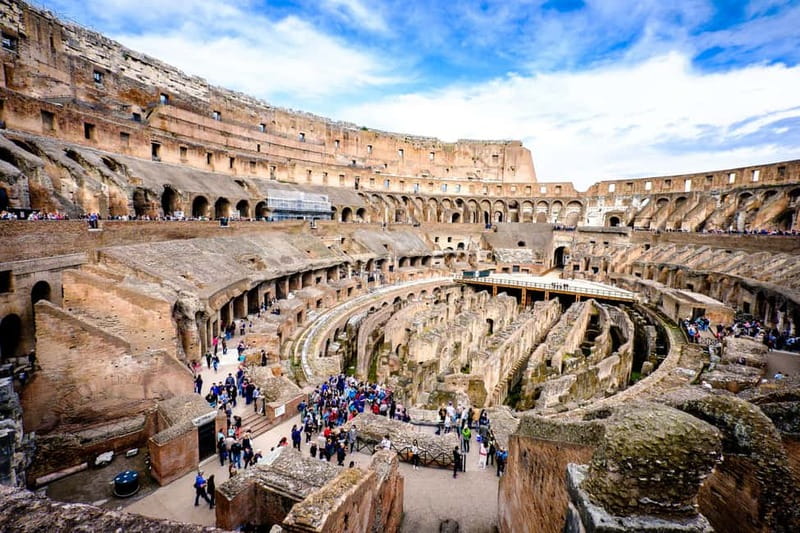
- Two modes for the Colosseum: guided English tour (with radio/headsets) or self-guided smartphone audio with 44 points of interest
- Multilingual bus commentary: 8 languages available on the bus audioguide system
- Flexible pacing: hop on and off across 10 central stops while your bus ticket is valid
- Time-saving entry: special entrance tickets are included for Colosseum and Roman Forum/Palatine options
- Plan for possible delays: the Colosseum can cap entry at once (up to 3,000), so pre-booking isn’t a magic wand
Hop-on Hop-off bus timing: building a Rome loop that works
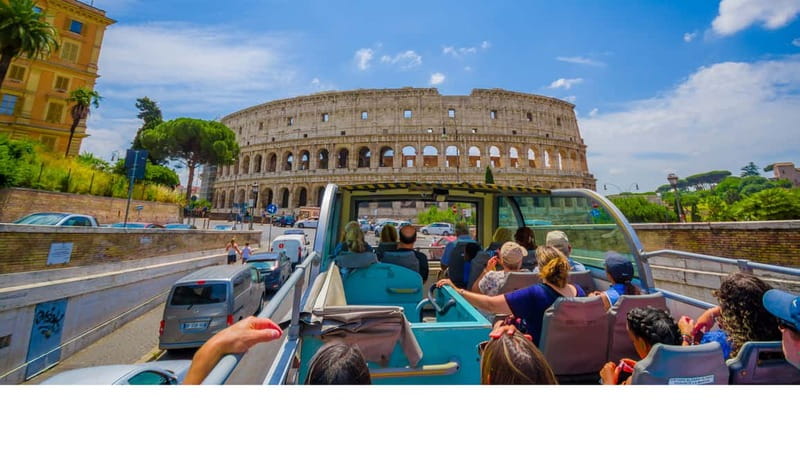
The bus runs from 9:00 AM to 5:45 PM, and the full loop takes about 2.5 hours. With this setup, you’re not “stuck” following a script. You’re just moving around the center of Rome, then walking the short gaps that matter most to you.
Your ticket validity is 24, 48, or 72 hours, depending on the option you pick. The key word is starts when you validate the ticket, not when you buy it. So if you want a smooth first day, try to validate early in the morning and then plan your main sights around that.
Practical tip: I like using the bus as a “view finder.” You ride for a few stops, decide what you want to walk to, and hop off. If you’ve got limited time, focus on the stops that place you near ancient Rome first, then fill in the rest (like Circus Maximus views or the area near Barberini).
Colosseum entry: how the included tickets can save your time

This is where the value really lives. You get special entry tickets to the Colosseum, and for the Rome ancient sites options you also get Roman Forum and Palatine Hill entry. That matters because the Colosseum is still a place where time can melt away in lines and ticket checks.
There’s an important reality check, though. Even with pre-booked access, the Colosseum may still slow down entry because of crowd limits (up to 3,000 people at once). You might still face delays, especially in busy periods, and there can be a 20–30 minute variation in timing.
What I find reassuring is that you also get a guide option (or a structured audio option), which helps you spend your time inside the site rather than trying to guess where to go next. Rome is big, and the Colosseum area is easy to wander into the wrong direction if you don’t have a plan.
Guided Colosseum tour vs self audio: picking the right “pace”
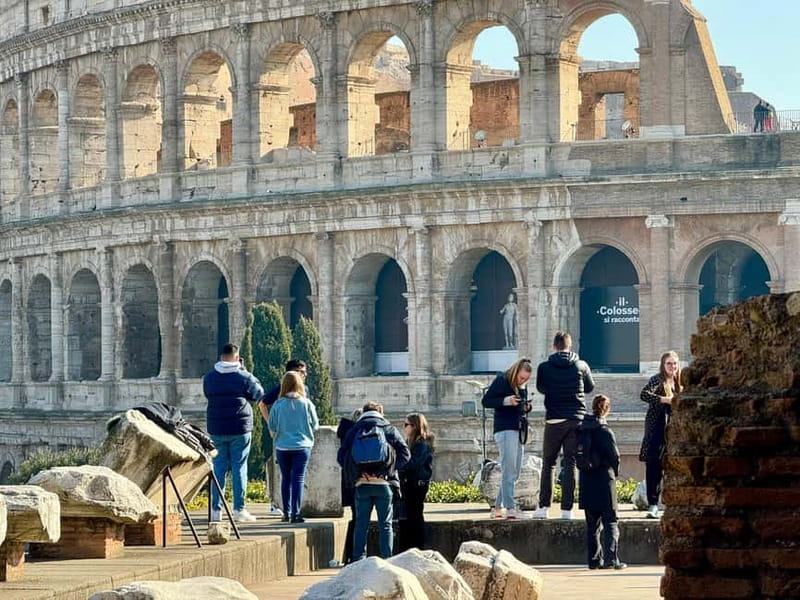
You basically get two ways to handle the ancient-site part:
Guided tour option (English)
If you choose the guided option, you meet a guide near the Colosseum and go through the Colosseum with an English live guide, using an audio headset and radio system. This is great when you want clear storytelling and you’d rather not manage your phone while standing in crowds.
There’s also a real signal in the name coming from one guide: a guide called Simona is specifically mentioned as excellent. That gives you extra confidence that the guide experience can be strong.
Self audio option (smartphone, download required)
If you choose the self-guided audio option, you download the multilingual audio guide to your smartphone after booking. It includes 44 points of interest, and the listed languages include English, Chinese, German, French, Italian, and Spanish.
This option is best if you like to stop and start based on your interests—family groups, architecture nerd moments, gladiator stories, or just wandering to take photos. One practical downside: this kind of audio experience depends on you having a working device. The listing notes you need a mobile device, and headphones aren’t included for the self-guided option, so plan to bring your own.
Roman Forum & Palatine Hill: tickets, but also the right mindset

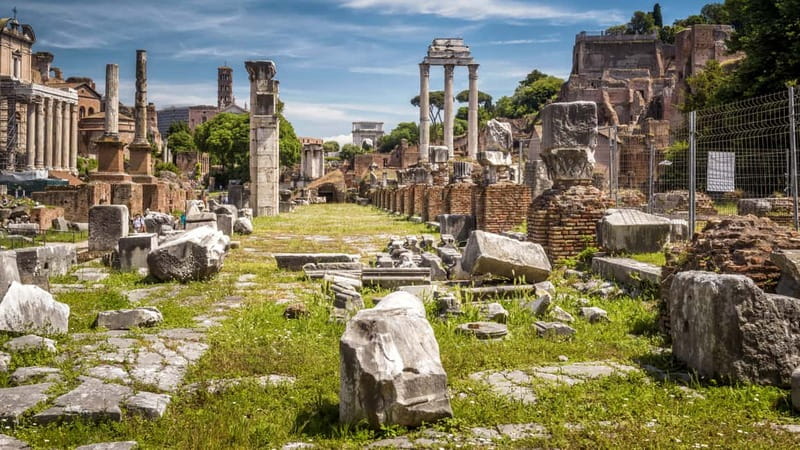
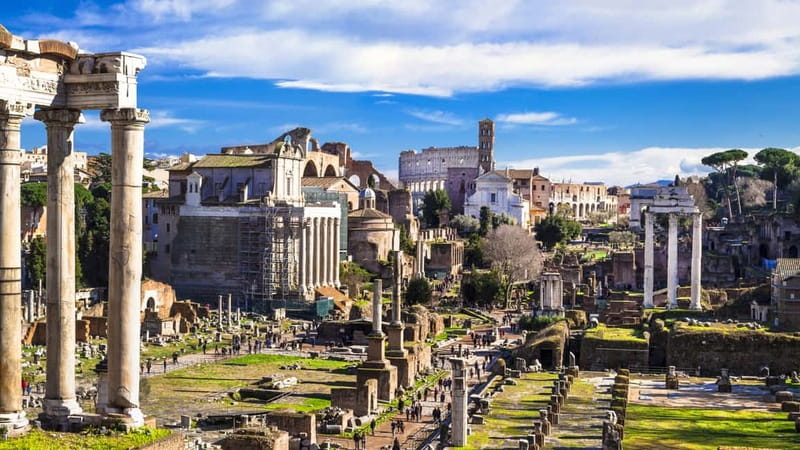
Even if you don’t spend hours here, Roman Forum and Palatine Hill are the places where Rome stops being “pretty ruins” and starts feeling like a real machine of daily life. The Forum and Palatine Hill tickets are included with the Colosseum/ancient-sites options, so you can keep going after your Colosseum time.
What matters most is the timing. The Colosseum is one big focal point, but the Forum/Palatine area is where you should expect more walking and more uneven surfaces. You’ll want comfortable shoes (this is one of those “don’t be brave” Rome rules).
Here’s how I’d plan it:
- If you go guided in the Colosseum, use that momentum to step straight into the Forum zone right after.
- If you go self-guided, give yourself a clear route before you enter—otherwise you can lose time finding where you are on your audio timeline.
Also, note that the Colosseum complex involves security screening. Your bags and visitors go through screening, and forbidden objects include bottles, glasses containers, alcoholic beverages, and aerosols. It’s not the place to carry “convenience items” you forgot you weren’t allowed to bring.
Where the bus stops place you (and what to do with them)
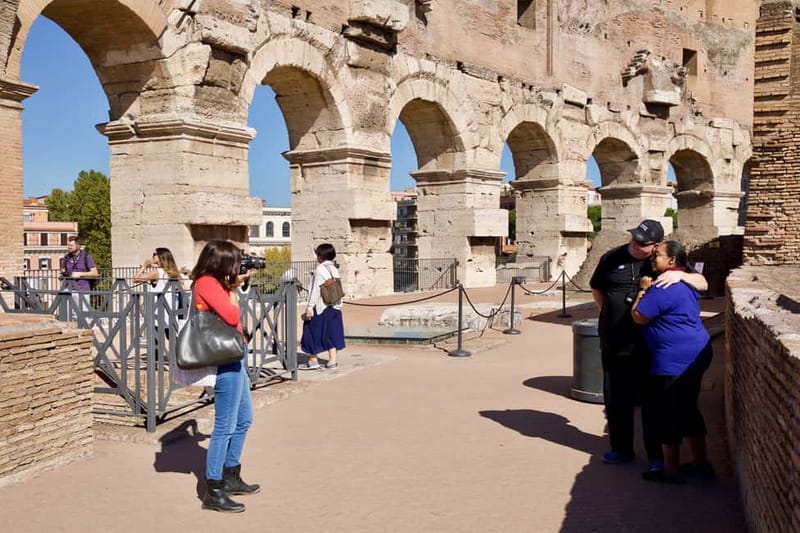
This bus route is designed around central Rome, using 10 stops. You can use the stops like anchors, then walk to nearby sights.
Here are the specific stops listed, with the practical “why it matters” angle:
- Terminal: Piazza dei Cinquecento (corner Via Cavour)
Good start point if you’re staying around Termini or you want a central launch pad.
- Santa Maria Maggiore: Piazza dell’Esquilino, 123
A handy area to access multiple central streets on foot.
- Colosseum: Via di San Gregorio
This is the obvious one for your ancient Rome day. You can stage your visit around this stop.
- Circus Maximus: Via del Circo Massimo, Belvedere di Romolo e Remo
This stop helps you catch the wider views around the ancient stadium area without committing to a long walk.
- Piazza Venezia: Via del Teatro Marcello (in front of civic numbers 32–34)
Useful for connecting to major central sightseeing zones. The stop puts you where the city center energy is high.
- Vatican City: Lungotevere Tor di Nona, n. 77
Good if you plan to add Vatican-side sights later. You can ride over without trying to coordinate separate transport.
- Villa Borghese: Via Ludovisi, n. 488
Useful if you want greenery breaks or want to connect toward the park side of the city.
- Barberini Square: Via Barberini, n. 14
A strong central stop for shopping, cafés, and getting around Rome on foot.
In short: the bus stops are your “map.” Use them to keep your plans flexible instead of locking in a tight itinerary and then paying for it with tired feet.
The multilingual audio and bus headset setup
Rome rewards you for paying attention. This experience tries to do that with on-the-bus and on-the-site language options.
On the bus, you get commentary in multiple languages (listed as English, Italian, Spanish, French, German, Mandarin, Russian, Portuguese). That’s an 8-language set. On buses, you also get the headset, and there are notes about single-use earphones and an included headset system.
For the Colosseum itself, languages depend on the option. The audio guide option lists English, Chinese, German, French, Italian, and Spanish. Guided tours are described as English live guidance, with the radio/headset system for clear listening.
My advice: if you’re the type who usually tunes out commentary, use the bus audioguide for orientation anyway. Even if you only catch a few key facts, it helps you understand what you’re seeing when you hop off.
Value check: is $97 a good deal for this mix?
At $97 per person, you’re paying for a combination that’s often sold separately in Rome:
1) a multi-day hop-on hop-off bus option, and
2) Colosseum entry plus Roman Forum and Palatine Hill entry, and
3) either a guided Colosseum experience or a structured audio guide.
The value is strongest when you’ll actually use the bus beyond a one-time ride. If your plan is only to get from A to B once, then hop-on hop-off can feel like overpaying. But if you want to do two or three zones in the same day (or spread it across 2–3 days), the bus validity is what justifies the ticket.
Also, that included entry portion matters. You’re trying to reduce time spent figuring out ticket lines and entry procedures, and you’re getting an official Colosseum/Forum/Palatine access package.
The mixed rating (3.1 from 9 reviews) is a reminder to be realistic. In particular, there’s one practical complaint that can affect your experience: the ticket printing requirement. If that rule causes delays for you, it can undercut the whole “save time” promise.
Small logistics that can make or break your day
Rome runs on good planning, not on hope. A few points are worth treating as “do this early” tasks.
Print requirement for the bus ticket
You are required to print your bus tickets. One traveler described major trouble getting the bus ticket accepted on several buses because it was not easy to use without a printed copy when they didn’t have access to a printer. So I’d treat printing as non-negotiable: do it right after your email arrives the day before.
Ticket is group-based for Colosseum entry
A group ticket is required for the Colosseum. Individual tickets can’t be issued. You’ll also need valid photo ID to enter the Colosseum.
Seats, stamina, and shoes
This is not designed for wheelchair users. And even if you can walk, expect lots of standing and walking around uneven ancient surfaces.
Weather and closures
The tour is subject to favorable weather. If it gets canceled because of weather, you’re offered an alternative date or a full refund. The Colosseum or parts of it can also close with notice or without it, and then you’d get an alternative itinerary or partial refund.
Who this tour is best for (and who should think twice)
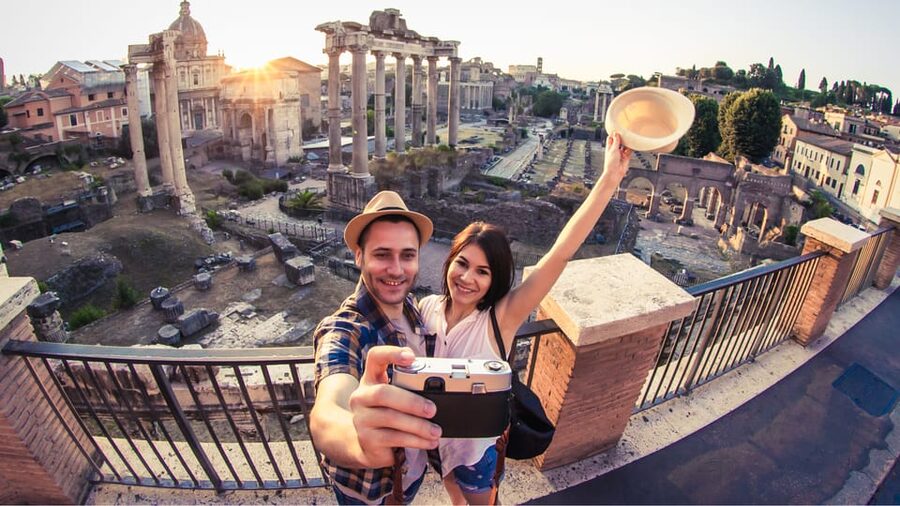
This is a good fit if:
- You want flexibility and plan to hop between zones rather than follow a single rigid route
- You like learning at your own pace, either with guided storytelling or smartphone audio
- You’re comfortable managing your time around crowds and security checks
It’s a weaker fit if:
- Printing tickets is a problem for you (no printer access, last-minute chaos, phone-only setup)
- You need wheelchair-friendly routing (explicitly not suitable)
- You only want a quick one-off Colosseum stop and nothing else (then bus value may feel wasted)
Should you book this Rome hop-on hop-off + Colosseum combo?
I’d book it if you want the best of both worlds: flexible Rome cruising plus Colosseum/Forum/Palatine access, with audio or an English guided option that keeps you from wandering cluelessly inside the ancient complex. It’s a smart choice when you’ll use the bus more than once, because that’s where the price starts to make sense.
But I’d also be honest with your planning. Print the ticket. Bring your photo ID. Wear shoes you won’t regret. If you do those things, you’re giving yourself the smoothest shot at a day that feels like Rome instead of just a checklist.
FAQ
What are the bus operating hours?
The hop-on hop-off service runs from 9:00 AM to 5:45 PM.
How long is the full bus loop?
The full loop is approximately 2.5 hours.
How long is my hop-on hop-off ticket valid?
Depending on the option you choose, your bus ticket is valid for 24, 48, or 72 hours. Validity begins after you validate the ticket.
Does this include Colosseum entry?
Yes. Special entrance tickets to the Colosseum are included, along with Roman Forum and Palatine Hill entry for the relevant options.
Do I get a guided tour or an audio guide?
You can choose a guided Colosseum tour option (English) or a self audio-guided option with a downloadable multilingual audio guide.
Which languages are available?
On the bus, the audioguide supports 8 languages. For the Colosseum audio guide option, languages listed include English, Chinese, German, French, Italian, and Spanish.
Do I need to print anything?
Yes. You are required to print your bus tickets.
Is it wheelchair accessible?
No. It is not suitable for wheelchair users.