
Big-city chaos, minus the guesswork. This Mexico City hop-on hop-off night tour helps you line up the top sights fast, with open-top double-decker views and English audio that keeps you oriented.
I really like the way you can use the 24-hour ticket like a flexible plan, from a quick circuit to a full day of hopping off and exploring at your own pace. I also like that the route hits major “where am I?” points, so you’re not guessing your way between Zócalo, Chapultepec, Polanco, and Reforma.
One consideration: Mexico City traffic can slow buses, so don’t treat ride time like a metered taxi ride. If you have a hard deadline, build in extra buffer.
In This Review
- Key things to know before you ride
- A practical way to get your bearings in Mexico City
- Getting on near Zócalo, with set hours and a fixed return
- Zócalo and Reforma: the big-picture introduction you actually need
- El Ángel at night: independence in the middle of the traffic circle
- Chapultepec Park and the Anthropology Museum zone without the stress
- Plaza Carso in Nuevo Polanco: art museums and a modern city vibe
- Polanco’s calmer edges: Lincoln Park and Avenida Moliere
- Auditorio Nacional: a major performance venue you’ll recognize fast
- Paseo de la Reforma fountains: Diana and Cibeles with clear street context
- Santa Fe and shopping breaks: where the day turns from sightseeing to living
- English audio: how to use it so it actually helps
- How long should you ride: 1 hour, or the full loop?
- Value check: when this bus is a smart purchase
- Who this tour suits best
- Should you book this Mexico City hop-on hop-off bus?
- FAQ
- Is the hop-on hop-off bus tour offered in English?
- How long does the tour last?
- Is the ticket valid for more than one day?
- Where do I meet the bus?
- What are the operating hours?
- Which major stops can I expect?
- How many people are on the tour?
- What is the cancellation policy?
Key things to know before you ride

- 24-hour ticket = true flexibility: hop on, off, and back on when it suits your day
- Open-top, double-decker perspective: big sight views without craning your neck
- English onboard audio: listen as the bus moves through the city’s main corridors
- Short stop windows on purpose: quick photo and orientation moments, then you choose what to expand
- Route spans multiple neighborhoods: Centro Histórico to Chapultepec to Polanco and beyond
A practical way to get your bearings in Mexico City
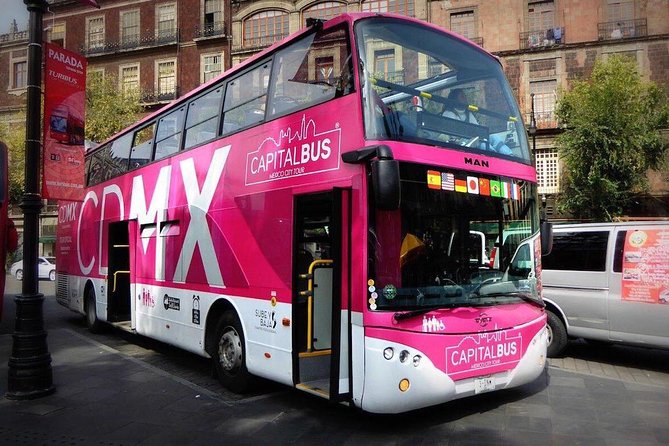
Mexico City is huge, and the streets can feel like a puzzle until you see a few landmarks in context. This hop-on hop-off bus tour is built for that first-day feeling: you get a high-level map of the city, then you decide what’s worth your walking time. The best part is that you’re not locked into one rigid schedule.
You’ll ride an open-top, double-decker bus with English audio commentary. That matters because Mexico City’s big sights can be hard to place in your head when you arrive cold. Hearing what you’re looking at while the city slides by makes it easier to connect neighborhoods, streets, and names.
Getting on near Zócalo, with set hours and a fixed return
The formal meeting point is Parada Capital Bus Zócalo (C. de Monte de Piedad, Centro Histórico). The activity ends back at the meeting point, so you’re not left figuring out a one-way return.
Operating hours run daily from 9:15 AM to 8:00 PM. That’s useful when you’re planning an evening window, since the “night tour” concept here is more about getting you onto the city loop into the evening than running late into the night.
This is a small-group format, with a maximum of 45 travelers, which usually feels easier than larger party-bus crowds. You’ll also find the meeting point is described as near public transportation, which is helpful if you want to connect this with something else you already planned.
Zócalo and Reforma: the big-picture introduction you actually need

A good first stop mindset is simple: let the bus show you what you’re aiming for later. In the central area around Zócalo, the commentary points you toward major anchors like the massive Mexican flag and the National Palace. Even if you don’t jump off for long, seeing these landmarks from the top deck helps you understand why people talk about this area as the city’s core.
The route also supports a Reforma-style plan. Paseo de la Reforma is one of the best “corridor” streets for first-time orientation because it threads through a lot of famous sights. From the bus you get unobstructed viewing angles, which makes it easier to spot where fountains, monuments, and bigger institutions sit along the avenue.
If you’re museum-inclined, this is also where you start connecting the city’s cultural weight. The tour information highlights the National Museum of Anthropology area as a major draw, and it also points you toward institutions like the Tamayo Museum and the Museum of Modern Art. Use the audio to decide which one feels most you, then hop off later when you can give it your full attention.
El Ángel at night: independence in the middle of the traffic circle
One of the first landmark moments is Monumento a la Independencia, often called El Ángel. It’s an honorary column inaugurated in 1910 to commemorate the Centennial of the beginning of Mexico’s War of Independence.
Seeing El Ángel from the bus is surprisingly useful, because the monument sits in a traffic circle where context matters. From the top deck, you can take in how it relates to the surrounding streets—especially where it meets Paseo de la Reforma and Río Tíber and also intersects near Florencia Street. That gives you a clearer mental map for returning on foot later.
Don’t worry about racing for a perfect photo moment. The bus route is meant to help you check off the big icons. If you want a more detailed look, the hop-on model lets you plan that after you’ve seen the whole loop.
Chapultepec Park and the Anthropology Museum zone without the stress

Chapultepec is where the tour earns serious points for practical sightseeing. Bosque de Chapultepec is described as the largest urban park in the Western Hemisphere. It’s also packed with major sites, including the National Museum of Anthropology, which helps explain why it’s one of the most visited spots by both residents and tourists.
The tour also frames Chapultepec as an archaeological zone, saying that nearly 4 thousand archaeological objects have been found there. That kind of detail matters, because it turns the park from a green break into a place with deep layers. Even if you don’t go inside every museum, knowing you’re in an area with archaeological significance adds weight to the whole stop.
The stop window is 15 minutes, and the info states admission ticket free for this stop. In that short time, treat it like orientation: grab a few photos, walk enough to understand the scale, and then decide whether the Anthropology Museum area needs more time from you on a separate visit.
Possible drawback: with only 15 minutes, you can’t realistically do a major museum properly during this stop. This bus works best when you use the Chapultepec stop to set your priorities, then plan a longer visit if you care about museums.
Plaza Carso in Nuevo Polanco: art museums and a modern city vibe
Next, the route moves into the Nuevo Polanco area and brings you to Plaza Carso. This is described as a sprawling mixed-use development and claims to be the largest mixed-use complex in Latin America.
Plaza Carso is where the tour becomes more about choosing your vibe. The information specifically lists Museo Soumaya, Museo Jumex, and Teatro Telcel as major anchors here. If you’re the type who likes your museum stops to happen near each other, this is a smart location to get your bearings.
What I like about placing this on the bus route is that you’re not limited to sightseeing-only. You also get a built-in pause for food and planning your next move in Polanco’s broader area. The tour’s hop-on model shines here: you can step off for a quick look at the complex, then decide whether to return later when you have more time.
Polanco’s calmer edges: Lincoln Park and Avenida Moliere
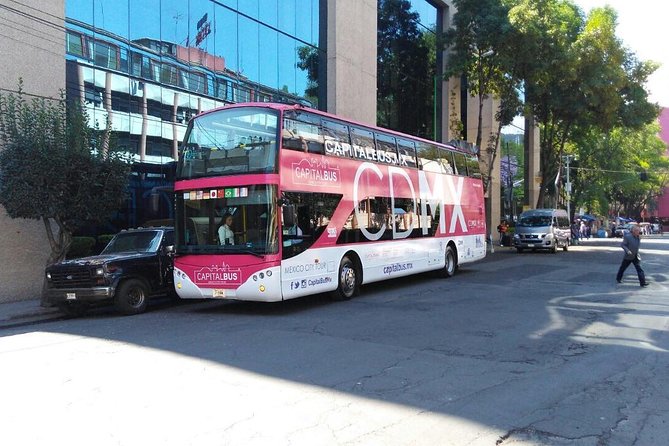
Not every stop is an enormous headline monument. Some stops help you understand neighborhood texture, and that’s where this route gets interesting.
You’ll go across Avenida Moliere to discover important sites it hosts. The details given don’t list each specific building, so I’d use this moment like a street-level skim—listen to the audio, note what you recognize, and then switch to exploring on your own if something catches your eye.
You also stop near Lincoln Park in southern Polanco. The tour describes it as the first park designed for the colony, with a second one mentioned on Horacio Avenue in front of San Agustín Parish. The area around the park includes some of the first mansions and apartments built in the neighborhood, alongside modern office and apartment buildings.
Why this is a good bus stop: it breaks the pattern of “big museum, big monument.” It shows you how Polanco blends older development with newer growth, which makes the whole city feel less like a checklist and more like a real lived-in place.
Auditorio Nacional: a major performance venue you’ll recognize fast

Another key stop is Auditorio Nacional, described as Mexico’s main presentation venue and one of the most important in the world. The tour info connects its importance to the quality of artistic manifestations, the number of attendees, the number of performances, tickets sold, and its audiovisual infrastructure.
This stop also comes with a 15-minute window and is listed as admission free. That’s a good match for this kind of landmark: you don’t need a long visit to understand why it’s famous. You can look at the exterior, get oriented, and then use your time where you want deeper access.
One practical note: if you’re hoping to attend a performance, this bus ride can help you time your day, but you still need to check the event schedule. The stop window itself is short by design.
Paseo de la Reforma fountains: Diana and Cibeles with clear street context
Reforma is also where the tour gives you iconic public art moments.
The Fountain of the Diana the Huntress is located on Paseo de la Reforma Avenue. The sculpture is described as representing Artemis (the Greek goddess) or her Roman equivalent Diana. The fountain’s name links to the idea of arrowing the stars.
Another fountain stop is the Cibeles fountain, described as a replica of the one in Plaza de Cibeles in Madrid, Spain. It sits at the intersection of Oaxaca, Durango, Medellín, and El Oro streets, about two blocks from the Insurgentes roundabout. The tour info says it was placed in 1980 as a symbol of brotherhood between Spanish and Mexican communities, and remodeled in 2011 as part of a capital government maintenance and remodeling program.
Why I like these stops: they’re the kind of sights you can appreciate from the bus, but you can also step off if you want to linger. And because they’re located in obvious street settings, you’ll find it easier to connect them to your own walking route later.
Santa Fe and shopping breaks: where the day turns from sightseeing to living
At some point, you’ll want food, a rest, or a souvenir moment that isn’t tied to a museum ticket. The tour suggests hopping off at Santa Fe shopping mall or along Paseo de la Reforma Avenue for plenty of options.
This is more than a convenience stop. It changes the rhythm of the day. Instead of forcing yourself to keep walking through every “top site,” you can reset, refuel, and then come back with clearer energy for whatever you didn’t fully do the first time.
If you’re traveling with different interests in your group (one person wants museums, another wants shopping or a long sit-down meal), this is a smart part of the route to use.
English audio: how to use it so it actually helps
The audio commentary is offered in English, which is a big advantage for first-timers. On a hop-on hop-off bus, the audio is basically your safety net: it tells you what the landmark is, why it matters, and where you are in the city.
Here’s how to get the most out of it:
- Listen while you’re riding between stops, not only when you’re standing on the curb.
- When you hear a landmark you care about, make a mental note of what area it’s in so you can plan your next hop-off.
- If you’re not sure whether you’ll revisit a stop, treat it as orientation and move on without guilt.
The open-top views also help you see what the audio is describing. When you can match the story to the skyline or street layout, Mexico City starts to feel much more navigable.
How long should you ride: 1 hour, or the full loop?
The experience duration is listed as 1 to 11 hours (approx.), and the ticket is valid for 24 hours. That combination is the heart of why this tour works.
If you’re short on time, do a fast “greatest hits” ride: stay on, listen, snap photos from the top deck, and hop off only when you want to stretch your legs near something important. If you have more time, use the hop-on flexibility to build a day: bus for orientation, hop off for a focused chunk of exploring, then return for another area.
Traffic may slow things, so think of the bus as your moving map, not a strict clock. It’s easiest when you plan activities that tolerate a little flexibility.
Value check: when this bus is a smart purchase
I can’t give you a price without that number, but I can tell you where the value usually comes from.
This is good value when you want:
- Maximum coverage of major landmarks without paying for multiple separate tours
- A clear way to connect big neighborhoods like Centro Histórico, Chapultepec, Polanco, and Reforma
- A flexible schedule with a 24-hour ticket, so you’re not forced into one single time slot
It’s less of a good fit if you want deep, inside-the-building museum time during the bus stops. Many of the stops are short (like the 15-minute windows listed for places such as Bosque de Chapultepec and Auditorio Nacional). Treat this tour as the way to choose what to go deeper on later.
Who this tour suits best
This hop-on hop-off bus fits best if you:
- Are in Mexico City for a limited time and want an organized orientation
- Prefer planning your own walks, meals, and museum time
- Want English audio support without hiring a private guide
- Like the idea of open-air views from a double-decker while you move between neighborhoods
Should you book this Mexico City hop-on hop-off bus?
If you’re trying to get your bearings and see the headline landmarks without overthinking logistics, I’d book it. The 24-hour ticket plus English onboard audio makes it a practical first-day tool, and the route gives you a realistic sense of how the city connects.
Skip it or use it as a light add-on if you already know you want only a couple of specific museums and you’re comfortable building a tight walking plan on your own. In that case, you might spend less time riding and more time going directly where you want to be.
Either way, this bus is one of the easiest ways to start your Mexico City story—seeing enough to orient you, but leaving you free to choose what becomes your real focus.
FAQ
Is the hop-on hop-off bus tour offered in English?
Yes. The tour is offered in English.
How long does the tour last?
The duration is listed as approximately 1 to 11 hours, depending on how long you spend hopping off and on.
Is the ticket valid for more than one day?
Yes. Your ticket is valid for 24 hours, and you can hop on and off as many times as you like during that window.
Where do I meet the bus?
The meeting point is Parada Capital Bus Zócalo (C. de Monte de Piedad, Centro Histórico de la Cdad. de México, Centro, Cuauhtémoc, 06000 Ciudad de México, CDMX, Mexico).
What are the operating hours?
Operating hours are listed as Monday through Sunday from 9:15 AM to 8:00 PM.
Which major stops can I expect?
The route includes major landmarks such as El Ángel (Monumento a la Independencia), Bosque de Chapultepec, Plaza Carso, Lincoln Park, Auditorio Nacional, the Fountain of Diana the Huntress, and the Cibeles fountain, plus additional city-area stops along the way.
How many people are on the tour?
This activity lists a maximum of 45 travelers.
What is the cancellation policy?
Free cancellation is available. You can cancel up to 24 hours in advance for a full refund; cancellations within 24 hours are not refunded.