Rugged roads take you where ferries don’t. I like how this Magnetic Island remote west coast ride gets you onto dirt tracks, mangroves, and quiet creeks, and I like the mid-morning local morning tea with snacks served in a natural setting.
The one catch is that routes can shift due to seasonal weather and tides, especially in the wet months.
Key Things I’d Prioritize
- All-terrain transport from Nelly Bay that’s built for remote dirt tracks, not just paved roads
- Wildlife in quieter spots, with chances to see koalas and rock wallabies away from the main crowd areas
- Eco Australia certified guidance focused on ecosystems, conservation, and cultural heritage
- Bolger Bay Conservation Park for a photo stop plus a short walk
- Morning tea included with coffee or juice, seasonal fruit platter, and sweet treats
- Binoculars and field guides so you can look closely instead of just driving past
In This Review
- Magnetic Island West Coast: the smart way to start your day
- Getting on board at Nelly Bay: simple logistics that save stress
- The all-terrain bus ride: comfort for the remote parts
- Picnic Bay and Cockle Bay: guided stops with real context
- Bolger Bay Conservation Park: the short walk that actually teaches
- Magnetic Island’s west coast wildlife chances: koalas and rock wallabies
- The mid-morning break: morning tea in the bush
- How the guide turns a ride into an eco story
- Price and value: what $88 buys you in real terms
- When weather and tides change the plan
- Who should book this West Coast Eco Adventure?
- What to bring (and the rules that keep things respectful)
- Should you book this tour?
- FAQ
- Where does the tour start and finish?
- What time does the tour run?
- How long is the tour?
- What’s included with the price?
- Is morning tea provided?
- What should I bring?
- Are there rules about what I can do during the tour?
Magnetic Island West Coast: the smart way to start your day
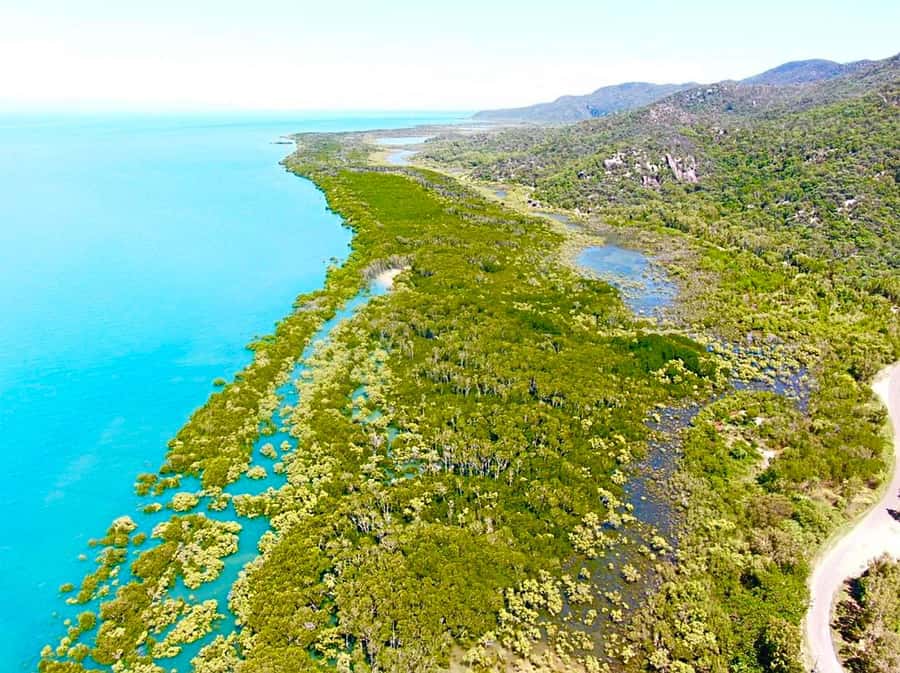
This is a morning-focused Magnetic Island tour that slots neatly between ferry times. You meet at the Nelly Bay Ferry Terminal, and the departure is set up so you can catch the morning ex-Townsville ferry and still be back in time for the next sailing off the island.
If your time on Magnetic Island is short, this tour does something valuable: it compresses a lot of west coast ground into a tight 3.5-hour window. You’re not just ticking bays off a map. You’re riding through the island’s more rugged side, where ecosystems change fast and wildlife has a better shot at being seen.
The tour also has a clear rhythm. It starts with a short safety briefing, settles into scenic drives, adds guided stops for walking and looking, then finishes back at Nelly Bay. That structure matters because it keeps the morning moving without rushing you through every moment.
Getting on board at Nelly Bay: simple logistics that save stress
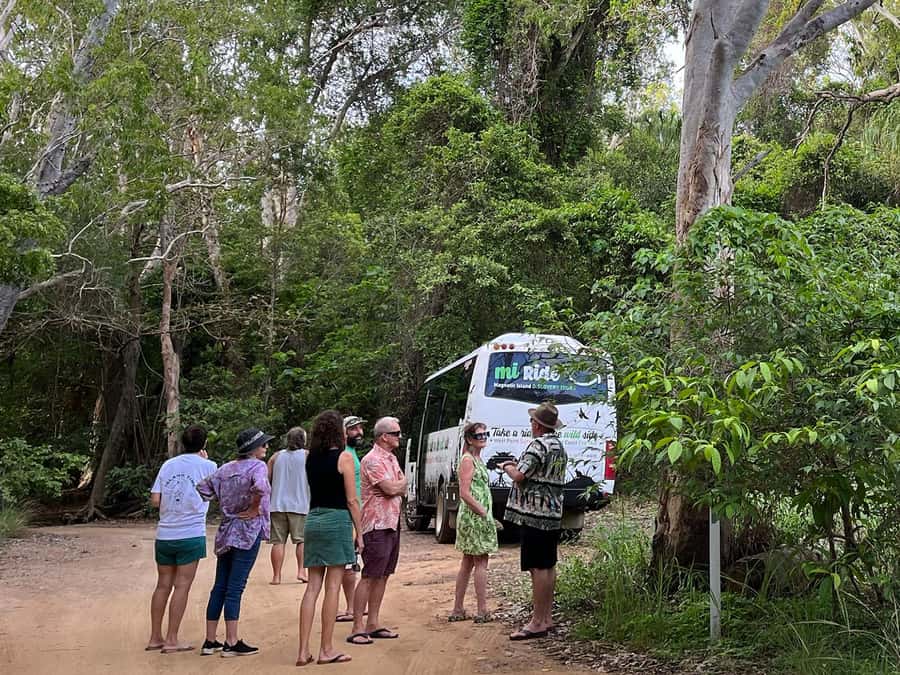
Meeting point is outside the front of the Magnetic Island ferry terminal, near the taxi rank. You’ll see a small white and black bus with MI Ride graphics. If you’re coming from Townsville, the plan works best when you time your ferry so you’re there for the 8.15am tour start.
Even if you’re staying elsewhere on the island, there’s no hotel pickup. The tour is designed for people who are already in Nelly Bay for the ferry. That sounds obvious, but it’s a key value piece: you’re paying for the west coast experience, not a long collection route.
You’ll also want to be ready with a few basics. The morning is outdoors and you’ll be on and off the vehicle for stops. Comfortable shoes make a noticeable difference, because at least one segment includes walking time at a conservation area.
The all-terrain bus ride: comfort for the remote parts

This is an all-terrain bus tour, and you can feel the difference once you’re moving beyond the easy roads. The vehicle is described as comfortable and air-conditioned, which matters in Queensland heat. The goal isn’t luxury padding. It’s getting you to places that normal buses can’t reach.
The tour also notes low-step access and easy walking. That means you’re not committing to a long hike, but you still need to be comfortable stepping on and off. The tour is not listed as suitable for wheelchair users, so plan accordingly if mobility is a factor.
The best part of the vehicle setup is that it buys you time. Instead of spending your morning figuring out how to get to scattered bays, you can sit back, look out, and listen. The guide’s commentary is part of the engine of the tour, not a side feature.
Picnic Bay and Cockle Bay: guided stops with real context
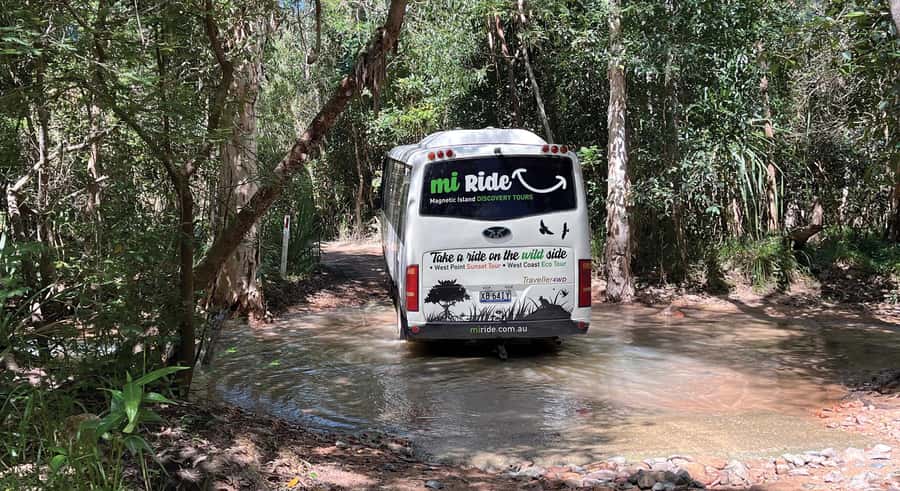
You’ll make early stops at Picnic Bay and Cockle Bay, both with a mix of guided commentary and scenic driving between them. These aren’t just postcard pull-offs. The way the tour handles these bays is practical: you get a short visit, then you move on while the guide connects what you’re seeing to how the island works.
At Picnic Bay, you’re looking for signs of how coastal life is shaped by shelter, tides, and vegetation. The guide’s storytelling helps you notice the small things: how different plants handle salt exposure, where birds and other wildlife tend to hang out, and why certain areas are protected.
Cockle Bay follows a similar rhythm, so you don’t end up feeling like the stops repeat each other. Each one is a different look at the island’s edges, and those edges are where Magnetic Island’s wildlife and ecosystems show up most clearly.
Bolger Bay Conservation Park: the short walk that actually teaches
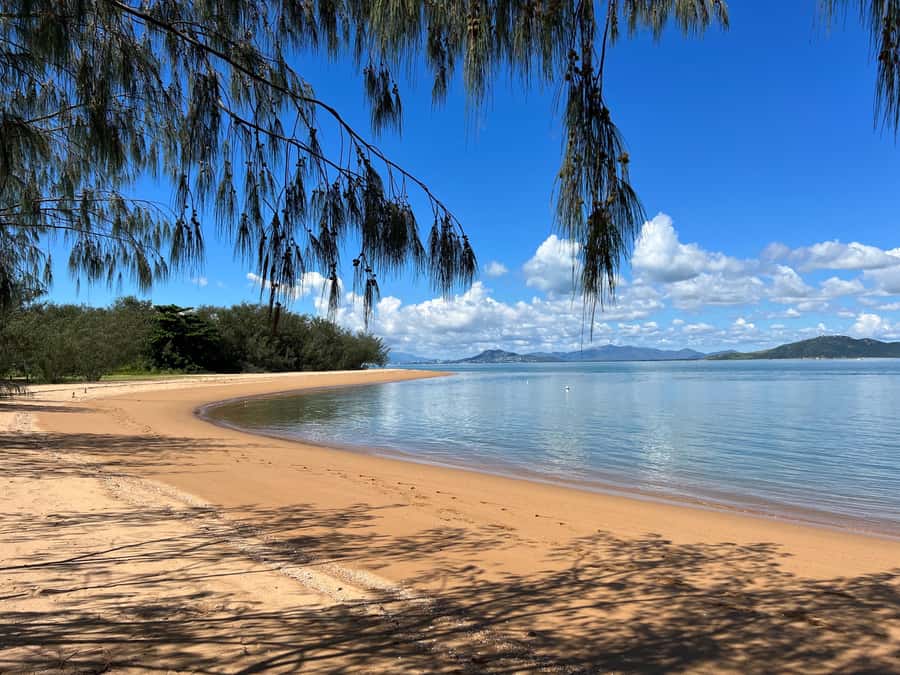
One of the most meaningful parts of the morning is Bolger Bay Conservation Park. You’ll have a photo stop, plus guided time and a walk segment. Even though it’s not a long trek, this is the part of the tour where the guide can turn your attention into something more than scenery.
Conservation areas are where you learn the “why,” not just the “what.” In this case, the guide focuses on ecosystems and conservation efforts, and you’ll likely use provided field guides and binoculars to look more carefully. That tool kit turns the walk into a mini field session.
This stop is also a good reason to bring a hat and sunscreen. You’ll be outside enough that protection matters, and you’ll want to stay comfortable so you can take your time looking, not just rushing through.
Magnetic Island’s west coast wildlife chances: koalas and rock wallabies
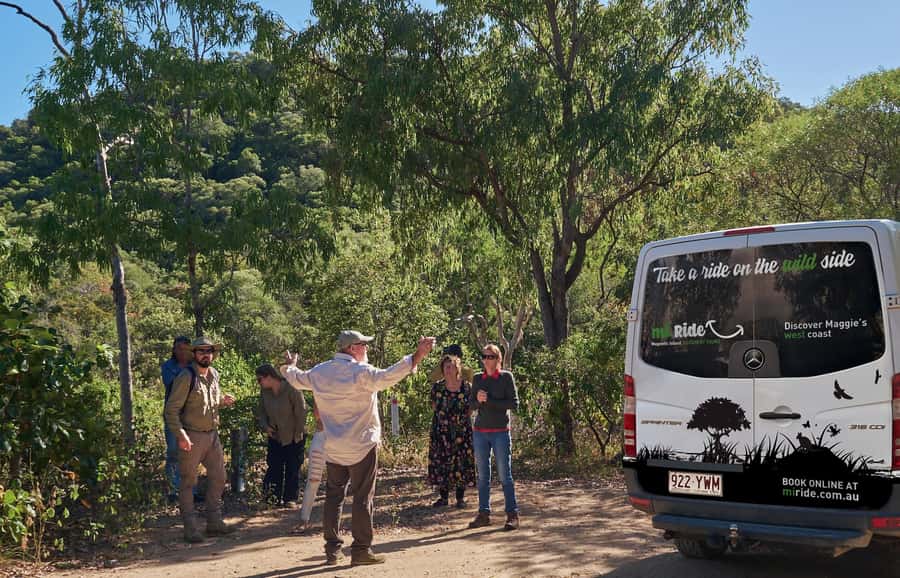
The tour’s wildlife promise is specific: you have a chance to spot koalas and rock wallabies in quieter locations. The point of the eco-focused route is simple. Wildlife isn’t everywhere at once, and the west coast has areas that are less crowded, which often means better odds of seeing animals without constant disturbances.
You’re not promised a guaranteed sighting every time. What’s actually solid is the method. The guide uses the environment—timing, vantage points, and knowledge of where certain animals tend to be—to improve your chances. The tour also includes field guides and binoculars, which helps you keep your attention sharp when you’re scanning tree lines or rock edges.
In past departures, the guides have leaned into small details—plants, insects, and vegetation you might otherwise overlook. One example mentioned in guest feedback is attention to the plants of the west coast and even insects like green ants. That kind of specificity helps because it teaches you what to watch for, not just what to hope to see.
The mid-morning break: morning tea in the bush
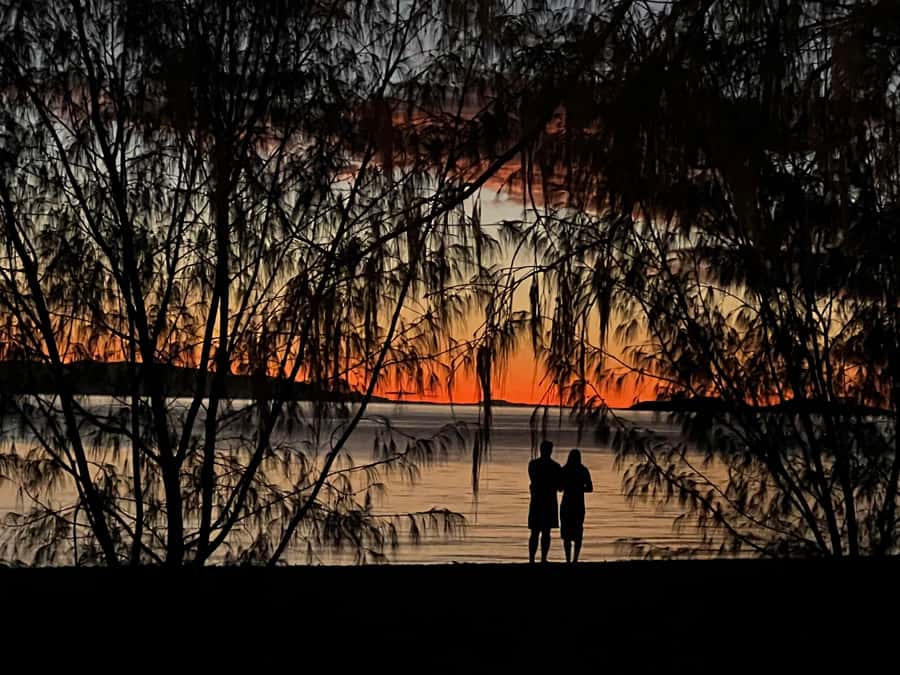
About halfway through, you slow down for coffee, tea, and local snacks with table and chairs provided. This is more than a food stop. It’s a reset button. You’ve been scanning cliffs, mangroves, and creeks, and your brain is better at noticing details after a pause.
The included spread is described as a shared seasonal fruit platter plus sweet treats, with coffee or juice available along with tea. If you’re visiting the island for the first time, this is also a nice way to experience a simple local break rather than eating in a rush or hunting down a café with limited choices.
You’ll also get fresh water top up. That’s underrated on warm mornings. Even if you think you’ve packed enough, the extra water and the simple seating make the break feel genuinely useful.
How the guide turns a ride into an eco story
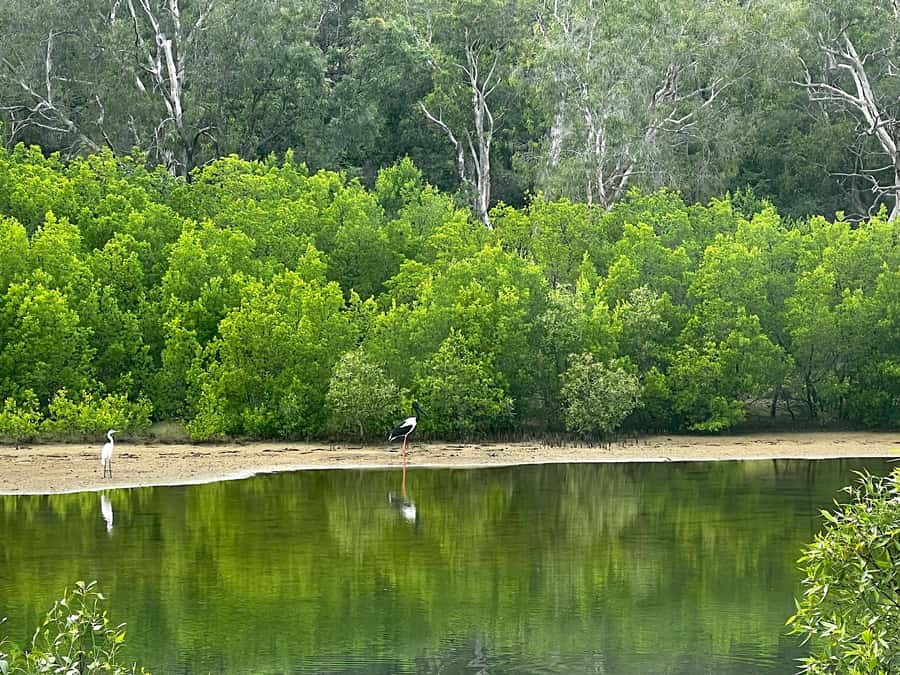
The tour is led by a live English-speaking guide who is Eco Australia certified. That matters, because the commentary is centered on ecosystems, conservation efforts, and cultural heritage—not just general facts.
I like that the guide connects the dots. When you stop at bays, photo points, and conservation areas, you’re not just looking at coastlines. You’re learning how the west coast functions as a system: water flow, vegetation types, habitat boundaries, and how conservation work helps protect the island’s living layers.
You might also meet a guide named Tim, who has been singled out in guest feedback for storytelling with real passion and for explaining vegetation details in a hands-on way. Another staff member named Kenneth has also been mentioned fondly. Of course, staff can vary by departure, but it’s a good sign that the team tends to bring energy to the day.
Price and value: what $88 buys you in real terms
At $88 per person for 210 minutes, this tour is priced like a focused experience rather than a casual sightseeing loop. The value case gets stronger when you look at what’s included.
You’re getting:
- All-terrain transport to remote west coast areas
- Eco Australia certified guiding and structured commentary
- Morning tea (coffee or juice, tea, seasonal fruit platter, sweet treats)
- Field guides and binoculars for closer wildlife viewing
- Fresh water top up
If you tried to replicate this on your own, you’d face transport costs and the biggest issue: finding the right route and timing without the guide’s local expertise. Even if you rented a vehicle, you’d still be missing the conservation-focused context and the wildlife scanning support.
So yes, it’s not the cheapest tour on the island. But it’s also not just a drive. It’s a guided, tool-assisted morning designed to get you out of the most crowded zones and into the west coast’s more intact habitats.
When weather and tides change the plan
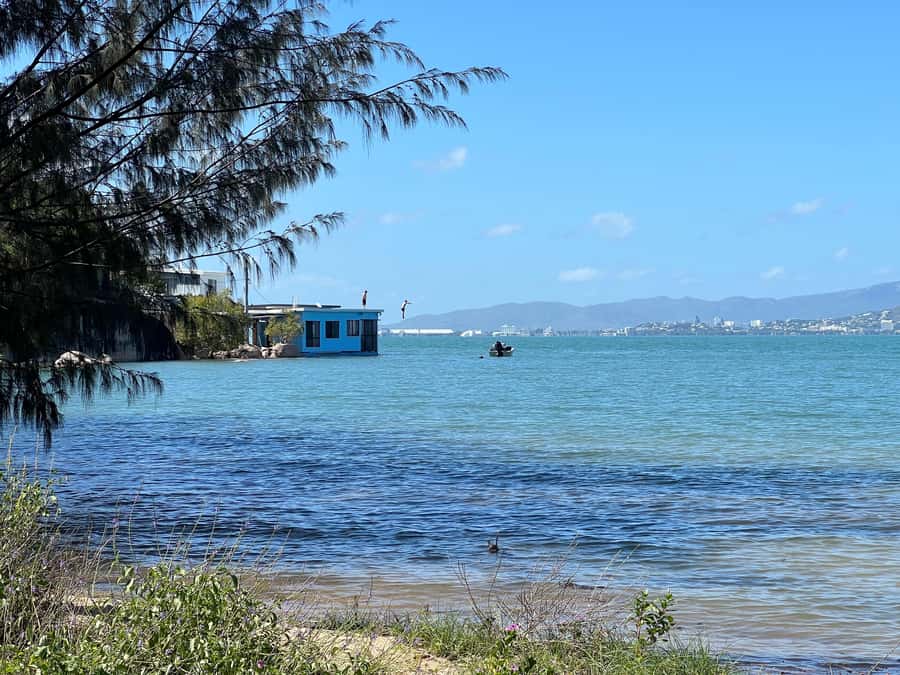
This tour is subject to seasonal conditions, especially between December and March. Wet weather can affect road access, and tides can influence which spots make sense to visit safely and effectively.
What I appreciate about this setup is that the tour is designed for flexibility. When access changes, the guide can still connect you to the island’s ecosystems and history within the revised route. The result is usually better than you’d expect from a tour that has to shorten itself.
Still, if you’re traveling in the wet season, go in with the right mindset: this is an outdoors morning, and the island will set the pace.
Who should book this West Coast Eco Adventure?
This is a great fit for you if:
- you want a short, high-impact west coast outing without needing a car
- you enjoy wildlife watching, especially when it’s done responsibly
- you care about conservation and want explanations that connect to what you’re seeing
- you like guided stops with small walks and photo opportunities
It’s less ideal if you need full wheelchair accessibility, since the tour is not listed as suitable for wheelchair users. It’s also not the best choice if you want a long, self-paced beach day. This tour is about movement and meaning, not hanging out for hours in one spot.
What to bring (and the rules that keep things respectful)
Bring the basics for an outdoor morning on Magnetic Island: comfortable shoes, a hat, sunscreen, a camera, and water. Even with water top ups, you’ll want your own bottle habits sorted.
And follow the rules of the trip. Smoking isn’t allowed in the vehicle, and littering is a no. You also won’t be able to feed animals, touch animals, or bring alcoholic drinks into the vehicle. These restrictions help keep wildlife safe and keep the experience enjoyable for everyone.
Should you book this tour?
If you want to see Magnetic Island’s west coast in a way that feels guided and purposeful, I’d book it. The combination of remote-access transport, Eco Australia certified storytelling, and included morning tea makes it a strong value for a half-day.
Book it especially if you’re the type of traveler who likes learning while you move. You’ll spend the morning looking, listening, and getting a better grasp of why conservation matters here.
If you’re arriving during the wet season, don’t expect every track segment to be available. But go anyway with flexible expectations, and you’ll still come away with a more complete picture than you’d get from a simple coastal drive.
FAQ
Where does the tour start and finish?
The tour starts and finishes at the Nelly Bay Ferry Terminal. It also notes that you can be collected off the island ferry to Townsville and returned in time for the next ferry departure.
What time does the tour run?
Tours start at 8.15am and end at 12 noon, fitting in with the ferry schedule. The tour duration is 210 minutes.
How long is the tour?
The tour duration is 210 minutes, which is about 3.5 hours.
What’s included with the price?
The tour includes guided commentary, an Eco Australia certified guide, all-terrain transport, low-step access, field guides and binoculars, mid-morning tea and eats, table and chairs for the tea stop, and fresh water top up.
Is morning tea provided?
Yes. Morning tea includes coffee or juice, tea options, a shared seasonal fruit platter, and sweet treats.
What should I bring?
Bring comfortable shoes, a hat, a camera, sunscreen, and water.
Are there rules about what I can do during the tour?
Yes. Smoking in the vehicle isn’t allowed, and you must not litter. The tour also says you can’t feed animals, can’t touch animals, and alcoholic drinks aren’t allowed in the vehicle.