Rome clicks into place fast. This hop-on hop-off panoramic bus ticket is all about choice and context, with unlimited rides across 3 routes plus audio commentary in 16 languages. You can start where you want and hop off for the big sights and the smaller streets between them, without locking your day to one long guided walk.
What I really like is how the narration helps you connect the dots, from Ancient Rome monuments to the Baroque and Renaissance cityscape you see along the way. I also love the convenience extras: live bus tracking, free onboard Wi-Fi, and single-use earphones so you can plug in and keep moving.
One drawback to plan around: finding the right stop can be confusing at first, especially if you do not have a full digital map showing every stop. On rainy days it’s still comfortable, but you may see less up close since you’ll likely stay on the bus more than you intended.
In This Review
- Key things to know before you ride
- The Rome bus that lets you set your own pace
- Price and value: what you’re really paying for
- Where to start: Piazza dei Cinquecento and the first stop check
- Audio guide in 16 languages: how to use it so it actually helps
- Riding the Green Route: from Santa Maria Maggiore to the Colosseum area
- Santa Maria Maggiore (Basilica Papale di Santa Maria Maggiore)
- Colosseum zone: stop near the Palatine entrance area
- Circus Maximus and Piazza Venezia: Ancient Rome’s wide-open feeling
- Circus Maximus
- Piazza Venezia (and the Teatro Marcello area)
- Vatican City by bus: timing, views, and realistic expectations
- St. Peter’s Square and Basilica area views
- Villa Borghese, Piazza Barberini, and the elegant in-between streets
- Villa Borghese
- Piazza Barberini
- Testaccio and the Pyramid area: Rome without the postcard polish
- Eataly Rome and Garbatella-area street culture
- Borghese Gallery, Bioparco, and Villa Giulia: add variety beyond the core sights
- Borghese Gallery area
- Bioparco di Roma / Zoo area
- Villa Giulia and the museum cluster
- Auditorium Parco della Musica and MAXXI: modern Rome on the same ticket
- Rainy-day riding: the comfort trade-off
- Small logistics that make or break the day
- Stops and maps
- Temporary stop closures
- What you can bring
- Wheelchair accessibility
- Who should book this Rome hop-on hop-off ticket
- Should you book it
- FAQ
- How long is the ticket valid for?
- How often do the buses run?
- Where does the Green Route start?
- Do I get multilingual audio on board?
- Are earphones included?
- Is Wi-Fi available on the bus?
- Can I hop on and off as many times as I want?
- What attractions or expenses are not included?
- Are pets allowed on the bus?
- Is this tour wheelchair accessible?
Key things to know before you ride
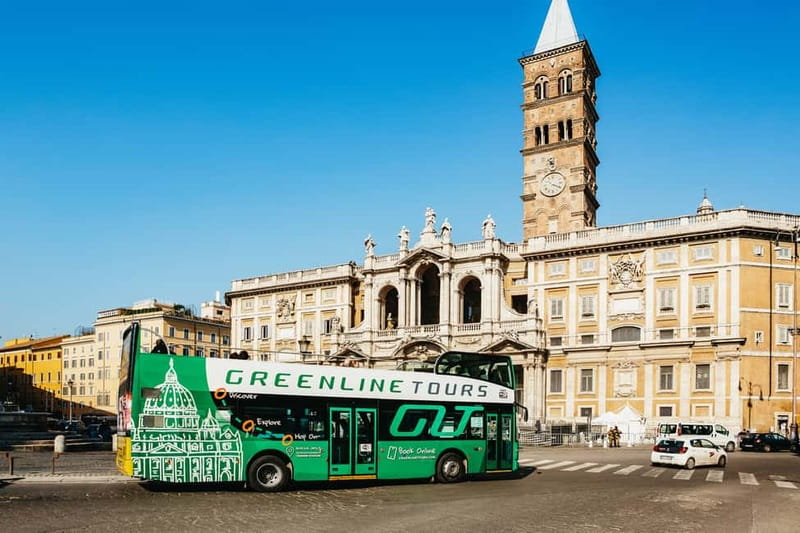
- 3 routes, one ticket: Unlimited hop-on hop-off access over your chosen 24-, 48-, or 72-hour plan
- 16-language audio guide: Clear commentary that gives you a story while you travel
- Frequent buses: About every 20 minutes, which keeps your timing flexible
- Panoramic, open-top viewpoints: Great for quick orientation and photo angles
- Comfort and small perks: Free Wi-Fi, live tracking, and onboard staff support
- Your feet still matter: Some stops are close, not perfect, so you’ll want walking shoes
The Rome bus that lets you set your own pace

Rome rewards good wandering. This ticket is built for it. You validate once, then ride whenever you want during your 9-hour to 3-day window, hopping off as many times as you like. That means you can treat the bus as your moving home base: a fast way to cover distance, then a reason to get out and stare at the real thing.
I also like that this is not just a list of landmarks. The onboard audio gives you the names, the eras, and the why behind what you’re seeing. If you have ever looked at a famous facade and felt you were missing the point, you’ll get something better here: context you can actually use while you’re standing near it. One guide moment that stuck with me was hearing about Rome like it was built in layers, the kind of explanation that makes even history feel friendly rather than lecturing.
And because this is open-top, you get that Rome feeling quickly—sun, skyline, and the slow reveal of neighborhood-by-neighborhood architecture. When you time it right, you’ll get views that are hard to recreate from inside a normal coach.
Price and value: what you’re really paying for
At $19 per person, this is priced like transport with bonus narration. That’s not a bad deal in Rome, where getting from one major area to another can be slow, confusing, or expensive if you keep relying on taxis.
What you get is more than just a seat:
- Unlimited hop-on hop-off access within your 24-, 48-, or 72-hour choice
- 3 routes under one ticket, so you can build a day around Ancient Rome, the Vatican area, or the off-the-beaten stretches
- Multilingual audio commentary and single-use earphones
- Live bus tracking and free Wi-Fi onboard
You still pay for entries separately. That matters. But for many people, the bus becomes the plan for everything that does not require a timed ticket—orientation walks, photo stops, and short wandering sessions before committing to museums and churches.
If you’re on a first trip or you want to maximize your “see a lot, decide later” time, this ticket can stretch your budget. If you already know Rome well and want deep museum time with minimal transit, you might find you only use part of what the ticket offers.
Where to start: Piazza dei Cinquecento and the first stop check
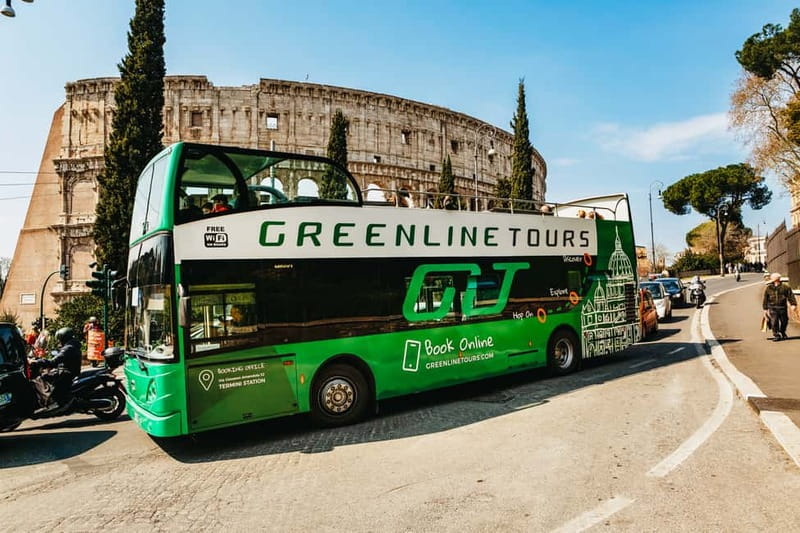
The main starting point is Piazza dei Cinquecento corner Via Cavour, Terminal 1/A. Rome has a way of making even simple directions feel dramatic, so I recommend arriving with a little buffer the first time you use hop-on hop-off buses.
Here’s a practical way to reduce stress:
- Take a photo of the terminal entrance area when you arrive.
- Confirm you’re looking for the right route color and bus company area.
- If you booked online, make sure you have the original booking to show the staff (not just a screenshot).
Once you’re on your first ride, things usually click. The buses run about every 20 minutes, which is frequent enough that you won’t feel like you’re waiting all day for one departure.
Audio guide in 16 languages: how to use it so it actually helps
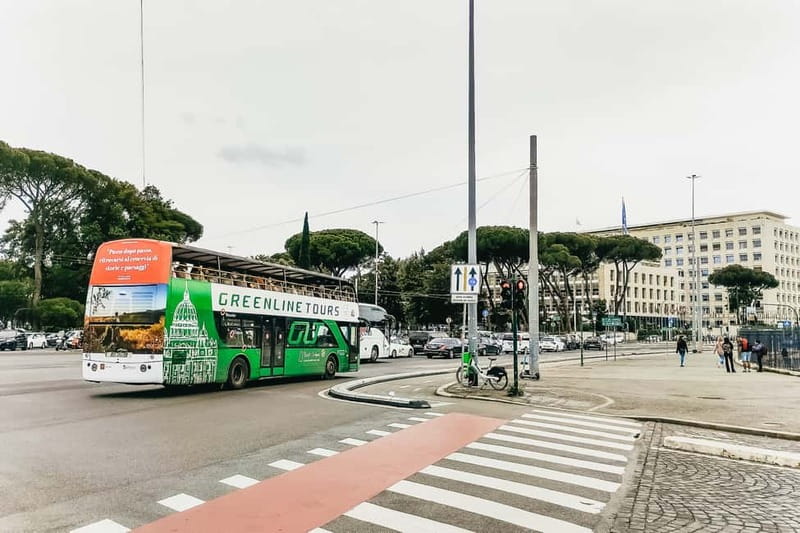
The onboard system gives city commentary in 16 languages, and the set up is straightforward: you plug in the included single-use earphones, then you’re set.
The big win is pacing. You don’t have to stop and search for answers on your phone. You also don’t need to memorize a guidebook beforehand. Instead, you learn while the bus is moving—then you hop off with enough context to make the walk meaningful.
If you’re traveling with someone who wants history and someone who just wants the photos, this style works well. You’re both “doing the tour,” even if you experience it differently.
A small tip: start the audio early—right from the first loop—so you build momentum. Hearing how Rome’s neighborhoods connect makes the next stop feel less random.
Riding the Green Route: from Santa Maria Maggiore to the Colosseum area
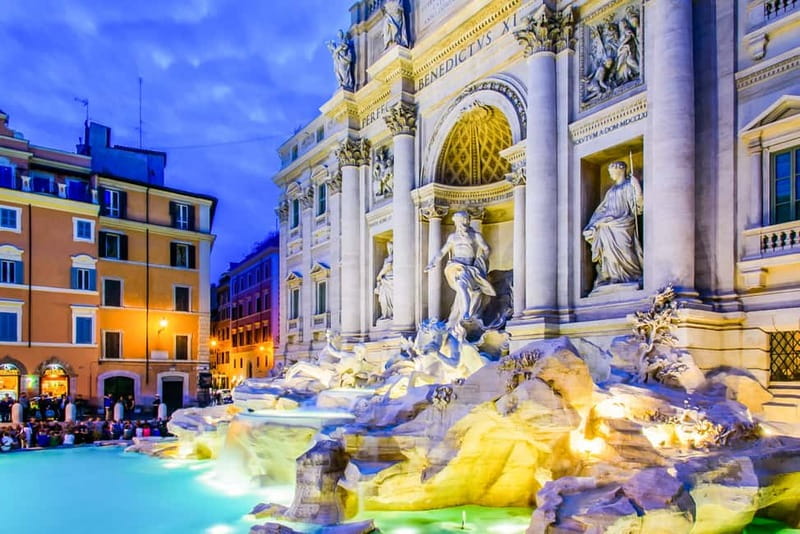
One of the route patterns starts near Santa Maria Maggiore, then heads toward the Colosseum zone. Even if you don’t hop off at every stop, just passing these places gives you that fast Rome overview: the church clusters, the ancient outlines, and the way modern streets frame older monuments.
Santa Maria Maggiore (Basilica Papale di Santa Maria Maggiore)
This stop gives you an early taste of Rome’s long timeline. You’ll be in the area where the city feels lived-in rather than postcard-only. If you love architecture, it’s a good warm-up before the heavier hitters.
What to watch for: as the bus moves, pay attention to how streets tighten and open. Rome often hides big views behind narrow turns.
Colosseum zone: stop near the Palatine entrance area
The Colosseum stop is set up so you can get close without fighting the maze alone. The bus stop is near Via di San Gregorio, by the entrance area of the Palatine.
Best way to use this stop: hop off and walk a bit. From the bus, the Colosseum reads like a landmark. From the ground, it becomes something else—scale, details, and the sense of the arena’s original purpose.
Watch-outs: there can be days when a specific stop is temporarily unavailable, and you may need to walk from another nearby stop. If the Colosseum stop is blocked when you arrive, do not panic; just take the next bus and be ready to trade a little comfort for a few extra minutes of walking.
Circus Maximus and Piazza Venezia: Ancient Rome’s wide-open feeling
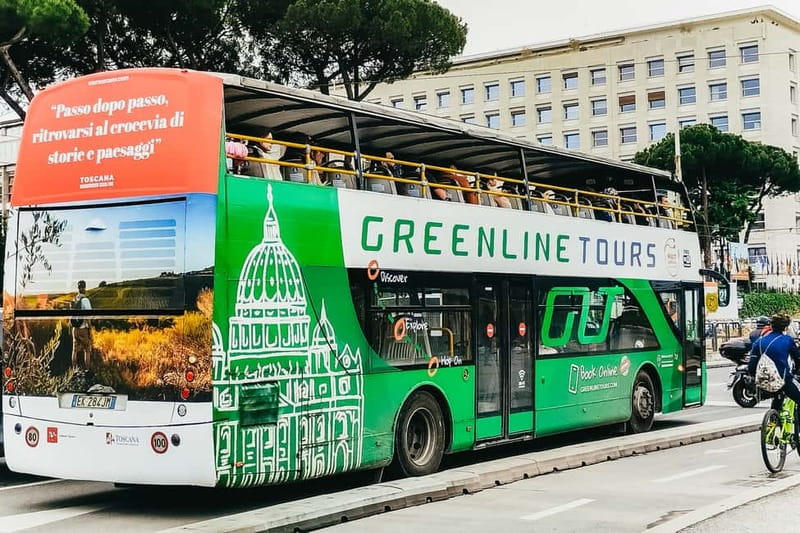
After the Colosseum area, you’ll head toward the stretch that makes Ancient Rome feel spacious again.
Circus Maximus
This route brings you past the Circus Maximus area, via del Circo Massimo and near the Belvedere Romolo e Remo viewpoints. If you like monuments that feel less boxed in than the Colosseum, this can be a nice change.
From the bus, it’s an instant “oh right, Rome had entertainment on a city scale.” If you hop off, you’ll have a better chance to understand the geography.
Piazza Venezia (and the Teatro Marcello area)
Next comes Piazza Venezia, with an easy connection toward Via del Teatro Marcello. This is one of those places where Rome feels like it’s built on top of itself. You’re looking at major squares, but you’re also close to older structures that sit lower and older.
Practical tip: if the lines for major sights feel too intense, this stop is a good alternative for an “I saw the vibe” moment.
Vatican City by bus: timing, views, and realistic expectations
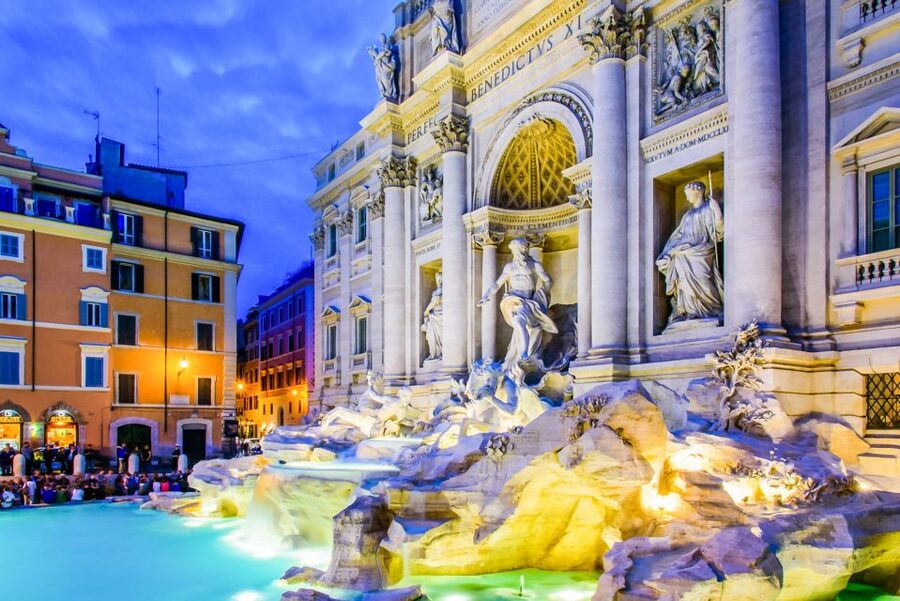
The Vatican area is one of the busiest zones in Rome. Using the bus helps you avoid burning time in traffic while still getting close enough for a walk.
St. Peter’s Square and Basilica area views
You’ll pass through Vatican City and the surrounding streets. The key value here is flexible drop-off. You can do a short hop for a square-facing moment, or you can stay longer if you’re aiming to combine the bus with your own walking plan.
Realistic expectation: the Vatican is crowded and visibility can change fast depending on the time of day. The bus gives you a way to arrive without stress, but you’ll still need patience once you’re out.
Villa Borghese, Piazza Barberini, and the elegant in-between streets
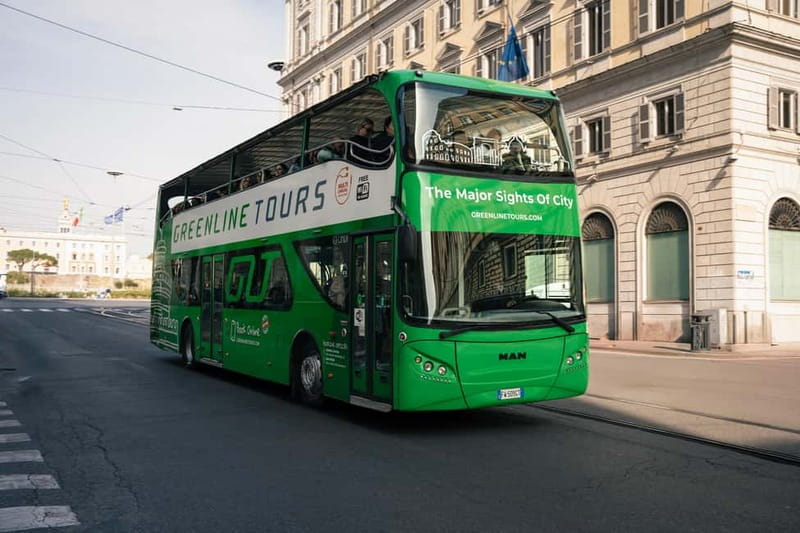
This stretch of Rome shifts from the big monument zones into more classic, walkable neighborhoods where you’ll see cafés, shopping streets, and the feel of everyday life.
Villa Borghese
The bus stops near Via Ludovisi for the Villa Borghese area. Even if you don’t go into the grounds or galleries right away, it’s a scenic pivot point—green space energy meets central Rome.
Piazza Barberini
Then you’re at Via Barberini near Barberini Square. This is the kind of place where Rome starts feeling like a city you could live in, not a checklist you have to conquer.
What to do here: If you want a break—coffee, shade, people-watching—this is a good stop because it supports downtime without feeling like you’re off in the dark.
Testaccio and the Pyramid area: Rome without the postcard polish
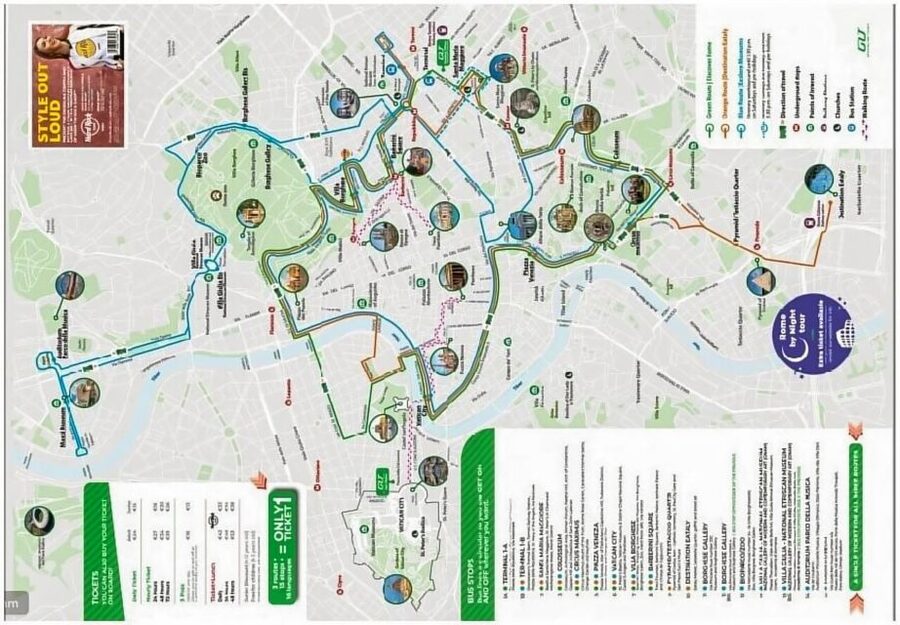
If you want Rome that feels less like a single famous photo spot, the stop around the Pyramid/Testaccio quarter is worth your time.
You’ll be near the Pyramid of Cestius, the Non Catholic Cemetery, and the St. Paul City gate area (and the St. Paul out of the Wall area). This is a quieter corner of the story.
Why this matters: the bus can become more than transport. It can steer you away from only the obvious monuments and into the urban texture that makes Rome feel real.
Walking note: This is the kind of area where you’ll benefit from comfortable shoes. The streets can be uneven, and it’s easy to turn a short hop into a longer wander.
Eataly Rome and Garbatella-area street culture
Rome is also food and noise and regular-life streets. The route includes a stop at Eataly Rome, plus connections toward the Garbatella Quarter and street art areas.
This is a smart option when you want a meal plan without turning the day into a research project. Even if you do not eat there, it’s useful as a landmark stop: easy to find, easy to reposition from.
Best use: go for a sit-down reset or as a meeting point if your group splits and reunites.
Borghese Gallery, Bioparco, and Villa Giulia: add variety beyond the core sights
After the center-heavy sights, the route keeps offering alternatives that change the mood of the day.
Borghese Gallery area
There’s a stop near Via Pinciana connected to the Borghese Gallery area. If you’re planning to visit, the bus helps you time it with less friction.
Bioparco di Roma / Zoo area
Another stop brings you toward Bioparco di Roma on Via Mercadante. If your group includes kids, or if you just like switching from monuments to something more relaxed, this is a good pivot.
Villa Giulia and the museum cluster
You also get access near Villa Giulia and the National Etruscan Museums, plus National Gallery of Modern and Contemporary Art. This is a big value point in the Rome planning puzzle: it gives you a structured way to reach major museum territory without struggling through directions.
Scheduling reality: museum visits depend on your tickets and opening times. The bus can get you there, but it won’t replace timed-entry planning where required.
Auditorium Parco della Musica and MAXXI: modern Rome on the same ticket
The route doesn’t stop at ancient and classic. It carries you toward the Auditorium Parco della Musica (Via de Coubertin) and MAXXI (Via Guido Reni 4/a).
This is a great reminder: Rome is not frozen. These stops give you a chance to swap out the classic columns for modern lines and contemporary cultural spaces.
If your day is starting to feel repetitive, these modern-leaning stops can break the cycle and keep your brain fresh.
Rainy-day riding: the comfort trade-off
On a rainy day, the bus is a comfort strategy. You stay warm, you stay dry, and you still see a lot of the city from the open-top ride portions when conditions allow.
The trade-off is visibility. If you cannot hop off as much, the experience becomes more about passing landmarks than experiencing them up close. I recommend using the bus in rain as a way to position yourself, then planning your quick walks for windows when the weather softens.
Small logistics that make or break the day
A few practical points can save time and frustration.
Stops and maps
One recurring issue is that it can be hard to find the correct stop the first time. If your ticket confirmation does not include a full map of every stop, bring a plan:
- Download offline directions if you use your phone.
- Take note of nearby landmarks when you first identify a stop.
Temporary stop closures
Sometimes a stop like the one near the Colosseum zone may be unavailable. If that happens, do not waste time waiting on a single point. Move to the next workable stop.
What you can bring
Keep your load light. Luggage or large bags are not allowed, and pets are not allowed (assistance dogs are allowed). Also, alcohol and drugs are prohibited on the vehicle.
This setup is meant to keep the bus smooth and fast. If you’re traveling with multiple large items, you may want to plan storage elsewhere.
Wheelchair accessibility
This is not suitable for wheelchair users based on the provided details. If accessibility is a priority, you’ll need a different plan.
Who should book this Rome hop-on hop-off ticket
This ticket is a strong match if:
- You want maximum flexibility over a 24-, 48-, or 72-hour window
- You are seeing multiple major sights and you want one simple transport backbone
- You appreciate historical context but don’t want a rigid walking tour schedule
- You want to control the pace—short hops for photos, longer stops for wandering
It may not be the best fit if:
- You prefer only one or two areas and you’re confident navigating them without bus help
- You hate stop-finding or want everything to feel effortless with zero walking
- Your group needs wheelchair-friendly access on the bus
Should you book it
Yes, I’d book it if you want an easy way to get your bearings and see a lot of Rome without committing to a single guided path. The audio in 16 languages, live tracking, and frequent 20-minute departures make it practical for real days, not just theory.
Book with a simple mindset: use the bus for position and context, then spend your best time on the ground where Rome becomes real. If you do that—comfortable shoes on, audio playing, and a willingness to hop off—you’ll get a day that feels like Rome, not just a bus route.
FAQ
How long is the ticket valid for?
Your ticket is valid for 9 hours to 3 days, with options based on a 24-hour, 48-hour, or 72-hour period after you first validate.
How often do the buses run?
Buses run approximately every 20 minutes.
Where does the Green Route start?
The Green Line Tours bus route starts from Piazza dei Cinquecento, corner Via Cavour, Terminal 1/A.
Do I get multilingual audio on board?
Yes. The onboard audio commentary is available in Spanish, Chinese, Dutch, English, French, German, Greek, Hebrew, Hindi, Italian, Japanese, Arabic, Korean, Polish, Portuguese, and Russian.
Are earphones included?
Yes. Single-use earphones are included.
Is Wi-Fi available on the bus?
Yes. Free Wi-Fi is provided onboard.
Can I hop on and off as many times as I want?
Yes. You can jump on and off as many times as you like during the daily 24-hour, 48-hour, or 72-hour period from when you first validate your ticket.
What attractions or expenses are not included?
Other entrance tickets and food and drinks are not included.
Are pets allowed on the bus?
No pets are allowed. Assistance dogs are allowed.
Is this tour wheelchair accessible?
No. It is not suitable for wheelchair users based on the information provided.