Marseille turns fast when you ride. A hop-on hop-off bus is one of the easiest ways to grasp the city, and Colorbüs keeps it simple with phone-based audio and lots of stops. You can ride the panoramic route for your first views, then hop off when something grabs you.
Two things I really like: the phone audio guide in 11 languages (via the Colorbüs app) and the way the route stitches together the big sights you keep hearing about—Old Port, MUCEM area, Corniche Kennedy, and the lookouts around Notre-Dame de la Garde. It’s a practical way to see more than you could on foot in a single day.
One possible drawback: you’re relying on your phone and headphones, and the connection can be spotty for some people. If you can, download what you need before you board and bring your own earphones.
In This Review
- Key points to know before you board Colorbüs in Marseille
- Why Marseille’s hop-on bus fits a one-day plan
- Meeting at Old Port: where you start and how to reach it from a cruise
- How the Colorbüs app delivers the audio guide and live tracking
- Route highlights: Old Port to the Corniche views
- MUCEM, Vallon des Auffes, and Cosquer Méditerranée: coast stops that reward a hop-off
- La Major Cathedral and Notre-Dame de la Garde: the skyline payoff
- On the bus: seating tips, Wi‑Fi, and real-world pacing
- Price and logistics: what $27 gets you (and what it doesn’t)
- Who should book this Colorbüs hop-on hop-off in Marseille
- Names you might hear: helpful staff and smooth moments
- Should you book the Marseille Hop-On Hop-Off Bus with Colorbüs?
- FAQ
- What time do the buses run?
- How long is the ticket valid?
- Can I hop on and off at different stops during the day?
- What’s included in the audio guide, and what languages are available?
- Where is the starting point, and does it stop at the cruise port?
- What do I need to bring?
- Is the tour wheelchair accessible?
Key points to know before you board Colorbüs in Marseille
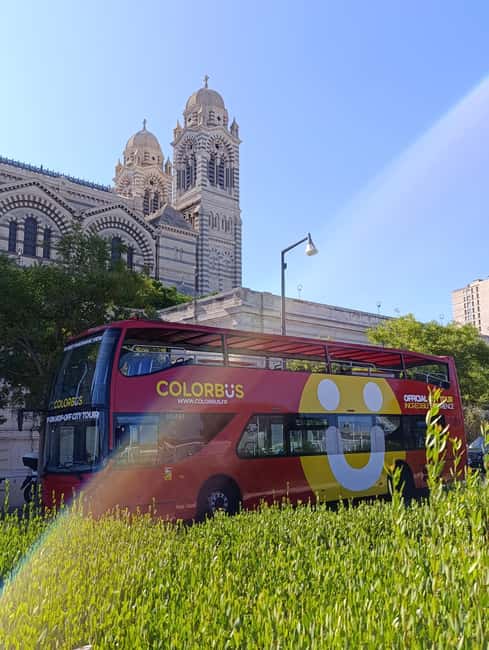
- Starts at the Old Port (86 Quai du Port), about 150 meters from the Town Hall
- Phone audio in 11 languages through the Colorbüs app, plus real-time bus tracking
- Hop on and off all day using your 1-day ticket and visit at your own pace
- Panoramic views are a big part of the fun, especially along the Corniche
- Free Wi‑Fi on board, but you still need your own headphones
- No stop at the cruise port, so plan your start point carefully
Why Marseille’s hop-on bus fits a one-day plan
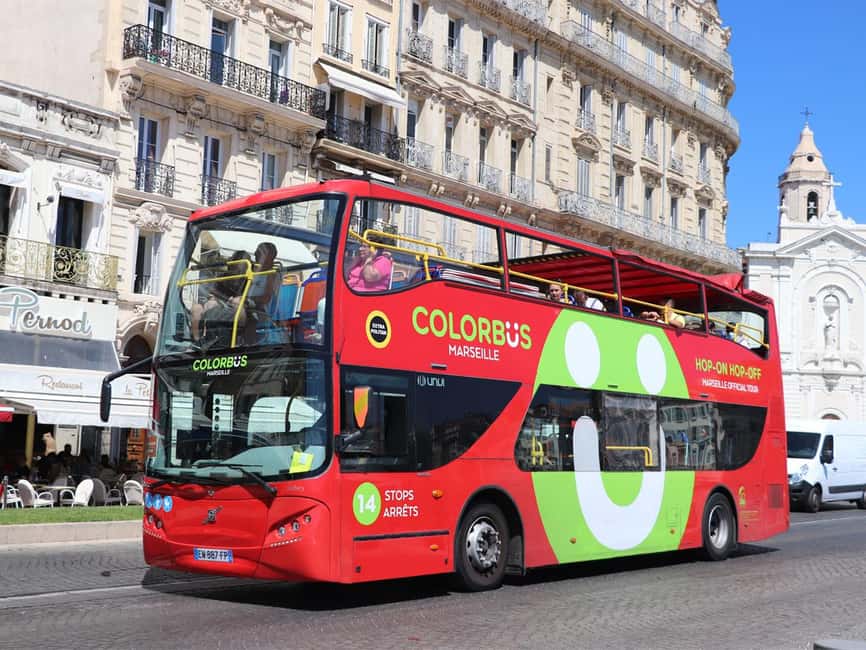
Marseille is spread out in a way that can feel slow if you’re walking from one “must-see” to the next. This is exactly what a hop-on hop-off bus is good at: you get transportation with commentary, plus the freedom to slow down when you want photos, shade, or just time to wander.
With Colorbüs, you’re paying for convenience. Your 1-day ticket covers the panoramic ride and more than 10 stops, so you can “sample” the city on your first circuit, then choose what deserves a second look. That matters because Marseille’s best moments aren’t always the ones you read about—they can be street corners, sea views, and neighborhoods that feel local.
The biggest win is control. You can hop off near the places you care about most—like the port area for atmosphere, or the viewpoints for that wide city picture—then hop back on when you’re ready to move.
Meeting at Old Port: where you start and how to reach it from a cruise
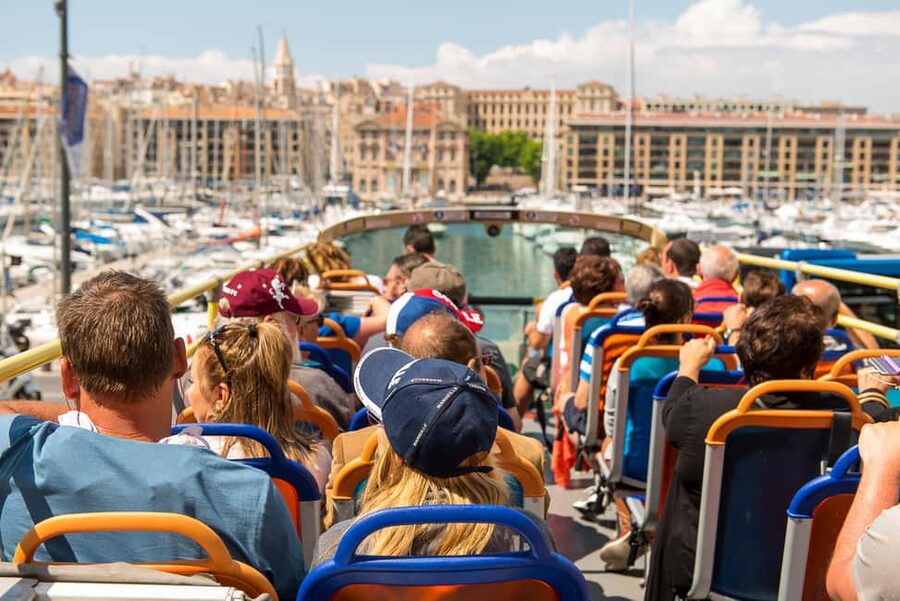
Your starting point is the Old Port: 86 Quai du Port (13002), about 150 meters from the Town Hall. Plan to exchange your GetYourGuide voucher here at the departure location.
If you’re arriving by cruise, there’s an important twist: the tour does not stop at the cruise port. You’ll need to get yourself to the Old Port starting area on your own. The data gives you three ways:
- Ask your cruise line about a shuttle into central Marseille
- Use the free shuttle 35T to Place de la Joliette
- Take a taxi from the exit of the cruise port to the Old Port meeting point
This is one of those details that can make or break a day. If you’re counting minutes tightly, pick the option that gets you to the Old Port area with the least waiting.
How the Colorbüs app delivers the audio guide and live tracking
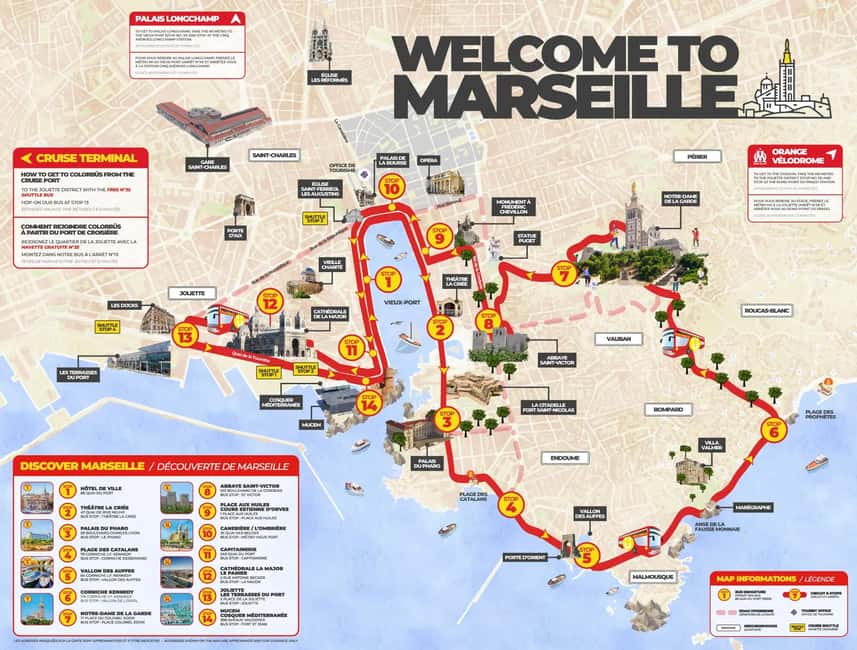
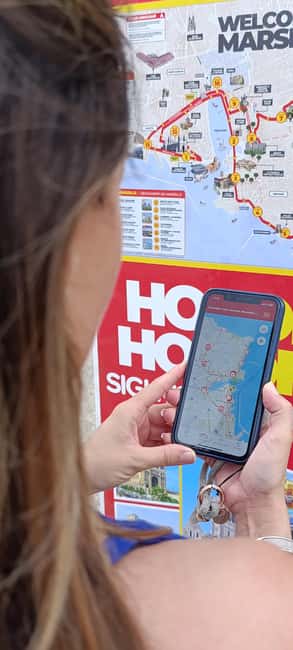
Colorbüs uses the Colorbüs app for your audio on your phone. The audio guide is available in 11 languages (including English, French, Spanish, Italian, German, Russian, Chinese, Japanese, Portuguese, Dutch, and Polish). You’ll also get real-time bus tracking in the app, which is handy in a city where traffic can slow things down.
One practical tip: bring headphones. The tour provides free Wi‑Fi on board buses, but the audio setup is still phone-based. Several experiences mention that connection and app behavior can be inconsistent, so don’t treat the app like a guaranteed plug-and-play. If you can, download or get ready early, before you rely on a signal.
Also, don’t expect wired audio in every seat. Some people reported issues with seat audio jacks, which is another reason to stick with your phone + headphones as your main plan.
Route highlights: Old Port to the Corniche views
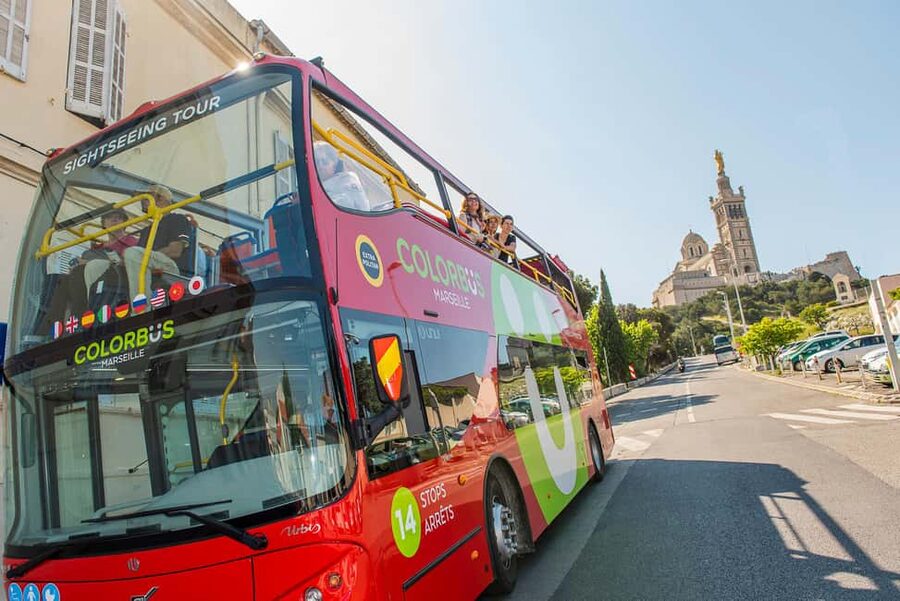
The day starts where the city’s energy gathers: the Old Port. Even if you don’t hop off right away, it’s a smart place to begin because it gives you context fast. You’re on the water, with ships and streets nearby—then the bus carries you into the neighborhoods and viewpoints that make Marseille look so dramatic.
From there, the route leans into sea-level and coastal views. A key stop area for photos is along the Corniche Kennedy, where you can step off for a stroll by the water. This is where the panoramic experience pays off: you get the wide look in one go, without having to plan a long walking route.
When you’re riding, keep an eye on where the bus turns and slows—Marseille has narrow streets and bends, and the driver’s job is part of the experience. Sit on the top deck if you can for the best sightlines; one solid tip from real experiences is that the top right side can offer great views.
If you want a simple rhythm for the day, do this: first pass on the bus for orientation, then choose a couple of stops where you’ll actually spend time on foot.
MUCEM, Vallon des Auffes, and Cosquer Méditerranée: coast stops that reward a hop-off
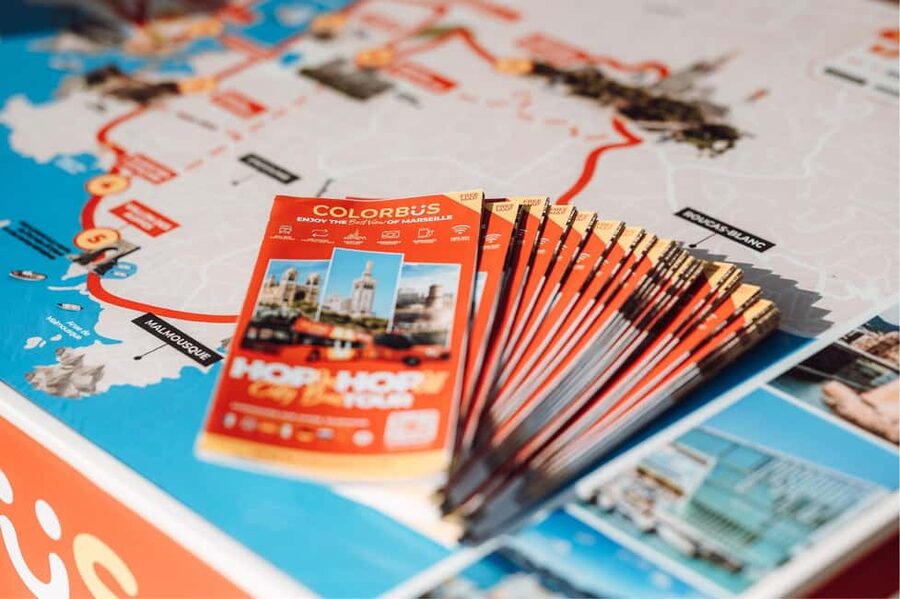
The bus route is built around the kind of stops that are easy to understand even when you’re only there for an hour. MUCEM is one of the big names on the itinerary, and people tend to remember it for the architecture and the feel of being right near the water.
Another stop area that’s repeatedly linked with a great experience is Vallon des Auffes. This is a place where the streets and coastline feel more “Marseille” than postcard. If you hop off here, treat it like a short walk break, not a checklist. The goal is to find the small views—boats, angles of stone, and the sea view that makes you stop without realizing it.
Cosquer Méditerranée is also mentioned as part of the discovery, which matters because it’s not just a sightseeing pause. If you’re curious about Marseille beyond the surface, this kind of stop helps you understand why locals care about the coast and what’s tied to the sea.
One practical drawback to plan around: hop-off timing affects how comfortable your boarding is later. If you’re boarding again at a crowded stop, you may need patience. A good rule is to start at the main departure area or ride during quieter parts of the day when possible.
La Major Cathedral and Notre-Dame de la Garde: the skyline payoff
Marseille has two kinds of big sights: sea sights and skyline sights. On the skyline side, La Major Cathedral is one of the anchors. If you hop off here, you’ll be in a spot that feels tied to the city’s energy, not just the view. Take a moment to look around the cathedral area, then decide whether you want to spend more time nearby or keep moving.
The real “wow” payoff for many people comes from the viewpoint around Notre-Dame de la Garde. It’s mentioned repeatedly as a highlight, and that makes sense: you’re going up to see the city laid out. This is where you’ll want your camera ready and a few minutes longer than you think you need.
Here’s a simple strategy: if you’re only spending limited time, don’t rush the viewpoint. Spend time just looking and orienting yourself. Once you know what neighborhoods sit where, the rest of your day feels easier.
You can also use this stop as a reset point. Get off, take the view, then hop back on when you’re ready for one more coast-side wander.
On the bus: seating tips, Wi‑Fi, and real-world pacing
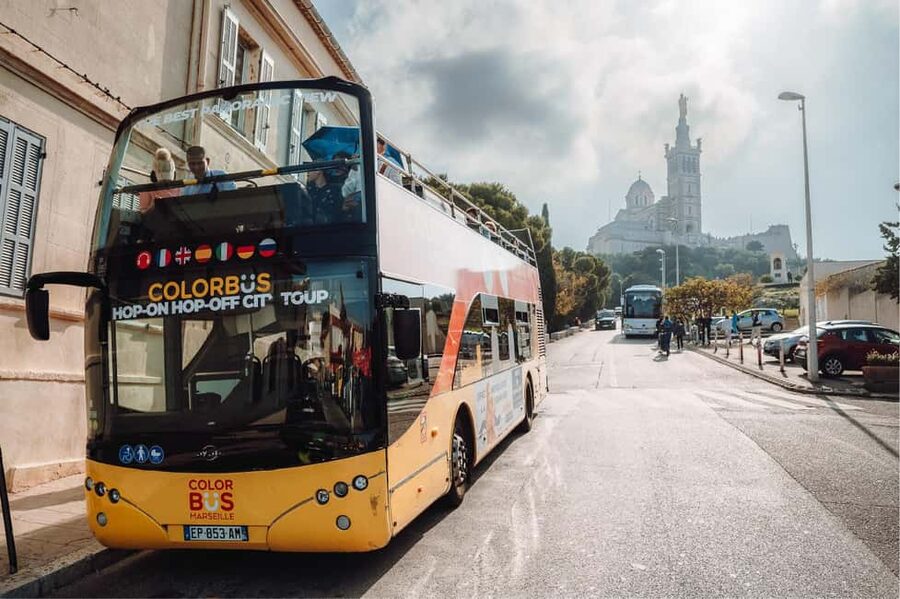
The tour runs every day starting at 10 a.m., with schedules that vary by season. During peak periods, buses run more frequently, but crowds can still build at certain stops. A key note from the tour info: some buses may arrive full at busy stops, especially in summer or on weekends. If that happens, you’ll wait for the next one—so plan your day with a little flexibility.
Wi‑Fi is included on board, which is useful if you need the app to behave. But the most important setup is still basic: bring headphones and have your phone ready before you step on.
Seat-wise, think about your goal:
- Want the best photos? Choose upper seating and position for wide angles.
- Want easier listening? Keep your phone volume and comfort settings ready before the audio track begins.
- Want a stress-free day? Don’t gamble everything on perfect signal. Download or prep whenever you can.
And if you’re sensitive to audio, remember: you’re depending on the app. Several experiences mentioned audio getting out of sync or dropping. It’s not a deal-breaker, but it can change how “guided” the day feels.
Price and logistics: what $27 gets you (and what it doesn’t)
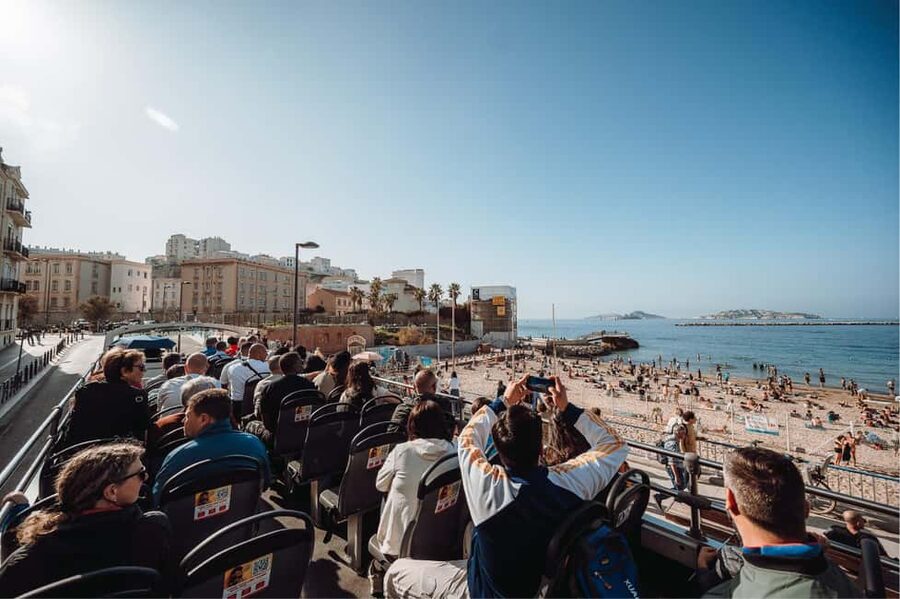
At about $27 per person for a 1-day ticket, the value comes from what’s bundled together. You’re not just buying a ride—you’re buying:
- Hop-on hop-off access across the city with 10+ stops
- A phone audio guide (11 languages)
- Real-time bus tracking in the app
- Free Wi‑Fi on board
What you still need to bring: headphones. Also, smoking, food, and drinks aren’t allowed on the vehicle, so plan your breaks around getting off the bus rather than snacking in transit.
Where the price can feel especially fair is when you compare the cost of taxis for viewpoints and coastal areas. The bus won’t replace every walking plan, but it can cut your transit cost dramatically while still giving you a guided feel.
A little budgeting advice: if you want the day to feel smooth, avoid “tight timing” expectations. If you hop off often for photos and sea views, you’ll be happier if you’re not racing to catch the next stop at peak crowd times.
Who should book this Colorbüs hop-on hop-off in Marseille

This tour fits best when you want a fast first look, a flexible day, or a lighter day on your feet. It’s especially good if you:
- Have only one day in Marseille
- Want orientation without committing to one long walking route
- Care about mixing port life, sea views, and viewpoints
- Prefer deciding on the fly—hop off for one site, then keep going
It may be less ideal if you strongly rely on a traditional audio system that plays automatically without a phone. Several people flagged that phone audio can be tricky with connection issues, and others noted you may need to work a bit to get everything sounding right.
If you’re traveling with reduced mobility, the buses are wheelchair accessible, subject to availability. Still, like any hop-on hop-off system, you’ll want to plan for possible waits at busy stops.
Names you might hear: helpful staff and smooth moments
One nice part of any public tour is how quickly staff can help you when something goes wrong. Names that came up in real experiences include Rahim, who was described as very helpful with cruise passengers, and staff members Enzo and Jat, who reportedly helped sort out a late-arrival issue during the day. People also mentioned guides like Lumi and Roman for being upbeat and full of useful context.
You probably won’t need help if everything goes right, but it’s reassuring to know the team is the kind that steps in.
Should you book the Marseille Hop-On Hop-Off Bus with Colorbüs?
Yes, if your goal is a low-stress Marseille highlights loop where you choose your own pace. The combination of Old Port start, 11-language phone audio, and live tracking makes it a strong “first day” move, especially when you’re trying to cover both coastal views and viewpoint moments like Notre-Dame de la Garde.
If you hate phone-based audio, or you don’t want to bring/handle headphones and deal with app behavior, then skip it. In that case, consider a walking-and-transit plan with a more traditional guide format.
My rule: book it when you want options. Use the first circuit for orientation, then spend time only where the view or vibe is pulling you in.
FAQ
What time do the buses run?
Buses run every day from 10 a.m., and schedules vary depending on the season.
How long is the ticket valid?
Your ticket is valid for 1 day.
Can I hop on and off at different stops during the day?
Yes. You can hop on and off at any stop on the route during the validity period of your ticket.
What’s included in the audio guide, and what languages are available?
The audio guide is on your phone through the Colorbüs app and is available in 11 languages.
Where is the starting point, and does it stop at the cruise port?
The starting point is 86 Quai du Port (13002) near the Old Port area. The tour does not stop at the cruise port, so you’ll need to make your own way to the meeting point.
What do I need to bring?
Bring headphones. Earphones are not provided.
Is the tour wheelchair accessible?
Yes, buses are wheelchair accessible, subject to availability.