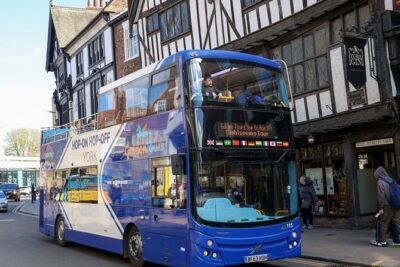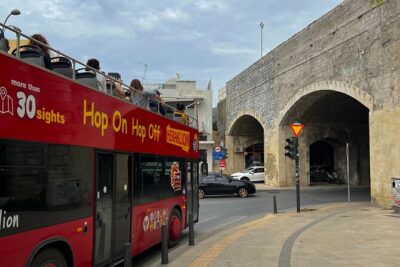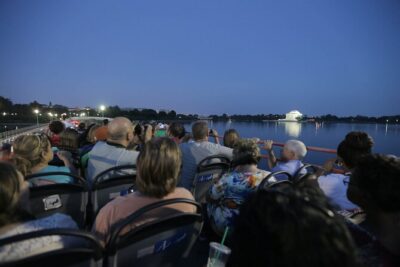
Dortmund moves fast when you see it from above. This open-top hop-on hop-off ride strings together the city’s major sights with 11-language audio commentary, so you can get your bearings quickly without committing to a fixed walking route.
I especially like how flexible it feels: you can hop off at 13 stops and build your own one-day mix of parks, industry sites, and city-center landmarks. My main caution is simple: seats are not guaranteed if demand is high, so pick your spot early if you want the best views.
You’ll also get a clear sense of how Dortmund shifted from a coal and steel powerhouse into a place known for culture, sports institutions, and universities. It’s an efficient way to understand the city, then spend the rest of the day roaming on your own.
In This Review
- Key things to know before you ride
- The 13-stop route and how you make it fit your day
- Central Station: your easiest place to start and restart
- Kreuzviertel: a neighborhood stop for getting a feel of daily Dortmund
- Harbour: a change of pace and another look at the city’s geography
- DASA and TU Dortmund: where the route hints at Dortmund beyond the classics
- Stadion: the sports anchor of the route
- Westfalenpark: one of the big green breaks in the loop
- Rombergpark: another park stop for pacing yourself
- Phoenix Hall and Phoenix See: the steelworks transformation you came for
- Town Hall: a central landmark for your self-guided time
- Reinoldi Church: the other downtown anchor
- Open-top ride comfort: where the views matter most
- Audio guide in 11 languages: how to use it without missing the street
- Stop-by-stop cheat sheet for a strong one-day plan
- Where to spend longer vs where to keep it short
- Price and value: does $28 buy enough?
- Who should book this hop-on hop-off bus?
- Booking decision: should you take the Dortmund hop-on hop-off bus?
- FAQ
- How long is the Dortmund hop-on hop-off ticket valid?
- How many stops are on the route?
- Where can I start the tour?
- What languages is the audio guide available in?
- What times does the bus depart from Central Station?
- Is there a guaranteed seat?
- Is the bus wheelchair accessible and are dogs allowed?
Key things to know before you ride
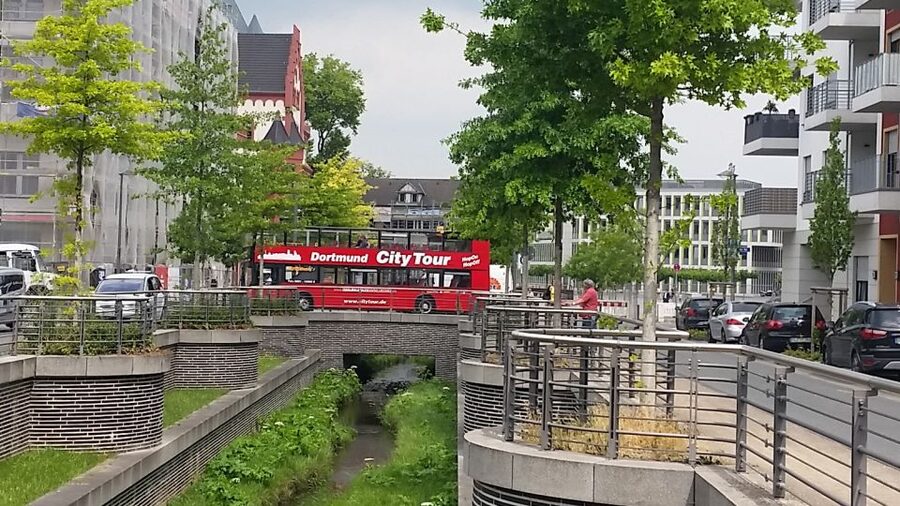
- Open-top views for quick orientation: You’ll spot big anchors of the route without getting stuck in transit gridlock.
- Audio in 11 languages: Commentary comes through via headphones as you travel between stops.
- Hop off anywhere along 13 stops: Build a custom day instead of following a single guided route.
- Industry-to-modern-city stops: Phoenix-area sights are built into the loop, along with major parks.
- Plan for seating reality: No seat reservations means you may need to be flexible on where you sit.
- Comfort and accessibility basics: The lower area is barrier-free, and dogs are allowed on the lower deck.
The 13-stop route and how you make it fit your day
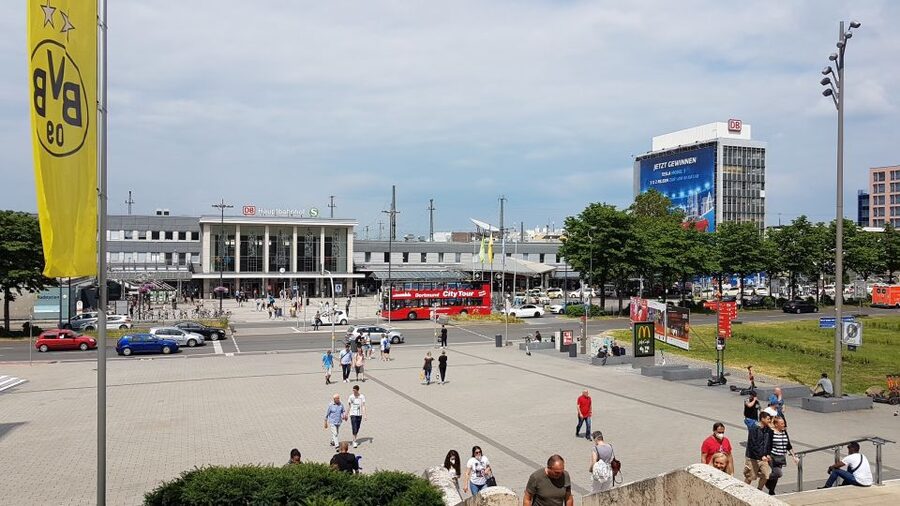
This ticket gives you 24 hours starting from first activation, with the hop-on hop-off format letting you control how much you see by bus versus on foot. You don’t have to memorize anything complicated. You just use the stop list like a menu and decide where you want your next walk.
The schedule is built around departures from Central Station (10:20 a.m., 12:20, 2:20, and 4:20). There are also arrivals back at Central Station at 12, 2, 4, and 6 p.m. The practical move is to start at Central Station and then hop off at whatever point matches your pace and the weather.
A nice thing here: the route isn’t just about pretty sights. It’s designed to show the city’s structure change—how Dortmund evolved from coal mining and steel work into a modern city with culture, sports institutions, and six universities. If you like “why this city looks like this” history, the bus does the heavy lifting.
Central Station: your easiest place to start and restart
Central Station is both a starting point and a return point. If you’re trying to keep your day simple, begin here, then hop off where it makes sense for your interests. If you accidentally end up too far from your next plan, you can ride back toward Central Station during the loop.
Tip: since seats aren’t guaranteed, arriving a little early at Central Station helps. That’s especially true if you’re aiming for a spot with the best sightlines.
Kreuzviertel: a neighborhood stop for getting a feel of daily Dortmund
Kreuzviertel is one of the named hop-off points, which makes it useful if you want to step into a more neighborhood-style area rather than only big, formal landmarks. Think of it as your chance to break up the day between the big-ticket sights.
If your goal is to move efficiently, keep your Kreuzviertel hop-off short. Use it to stretch your legs and then get back on when you’re ready.
Harbour: a change of pace and another look at the city’s geography
The Harbour stop is another route choice that can add variety to your day. Even if you don’t spend hours there, it’s a good place to step off for a quick change in scenery before heading back toward the major attractions.
When you hop off here, take a moment to look around from the street—these are the kinds of micro-views that are hard to notice when you’re only looking from the bus.
DASA and TU Dortmund: where the route hints at Dortmund beyond the classics
Two stops—DASA and TU Dortmund—are included for a reason: the itinerary doesn’t stay locked on old industry alone. It also points you toward the city’s educational and cultural side.
Because details for what you’ll see at each stop aren’t spelled out in the ticket info, treat these as flexible break points. If you want museums, learning hubs, or architecture-related wandering, these are the stops to choose.
Stadion: the sports anchor of the route
The Stadion stop matters if you want Dortmund’s sports identity, not just its historical one. This is where the route ties into the stadium area and the broader football-related story built into the experience.
Practical tip: if you’re a match-day fan, check your plans so you don’t collide with crowds. The bus ticket keeps you moving, but the area around big venues can get busy.
Westfalenpark: one of the big green breaks in the loop
Westfalenpark is listed as a key highlight. This is a classic “hop off, walk a while, then return” stop—especially helpful if your day is heavy on the industrial sights.
Use Westfalenpark as your reset button. Step out for a breather, then get back on when you’re ready for the next section of the city.
Rombergpark: another park stop for pacing yourself
Rombergpark gives you a second park option along the route. Two park stops are a strong sign the itinerary expects you to take your time, not just ride past everything.
If you only have energy for one longer walk, pick the park that matches your mood that day—quiet wandering versus a bigger scene.
Phoenix Hall and Phoenix See: the steelworks transformation you came for
These two stops are the heart of the “from steel to city” idea. You’ll visit the Phoenix-area sights—Phoenix Hall and Phoenix See—linked to the former steelworks Phoenix and the lake area that came out of that industrial transformation.
This is where the audio narration can do real work for you. The bus route is built to help you see change over time, not just list attractions. Getting off here for a walk is one of the best ways to connect the story you hear with what you can actually look at.
If the weather is good, this is also where you might want the most time. Parks and water zones can turn a quick stop into a highlight, even if you’re not a hardcore museum person.
Town Hall: a central landmark for your self-guided time
The Town Hall stop is one of the best points to hop off if you want a more formal city-center feel. It’s also a handy meeting point if you’re using the bus to connect multiple errands or walking segments.
When you hop off at Town Hall, treat it like a base: walk around for a bit, take photos, then decide whether you want to keep exploring downtown or jump back on toward the next attraction.
Reinoldi Church: the other downtown anchor
Reinoldi Church is another named stop that puts you close to a major landmark in the city center. Even if you don’t spend a long time there, it’s useful for understanding the historic side of Dortmund while you’re moving through the city on a tight schedule.
The best strategy: hop off, take in the area briefly, then keep moving. On a hop-on hop-off ticket, “brief and well timed” often beats “too long and you miss the rest.”
Open-top ride comfort: where the views matter most
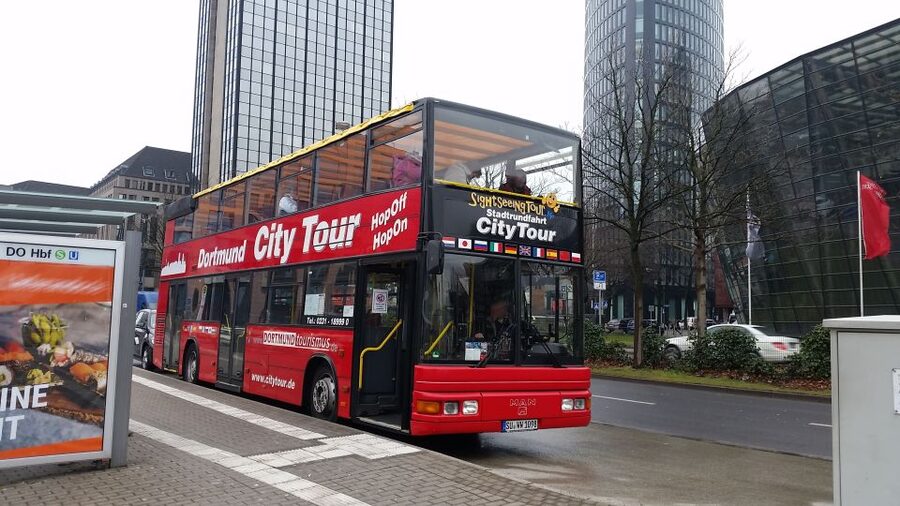
The ticket is made for the open-top format, which is exactly what you want for Dortmund’s variety. You’ll be seeing industrial-to-modern change, plus parks and downtown landmarks. The deck makes those contrasts easier to spot.
That said, the practical issue is comfort and logistics. Seats aren’t guaranteed, and high demand can change your ability to choose where you sit. If you care about the best vantage point, claim it early on the ride rather than waiting.
Also remember the bus is barrier-free in the lower area, which is helpful if you want a more accessible setup. If you’re riding with mobility needs, the lower area is the more predictable choice.
Audio guide in 11 languages: how to use it without missing the street
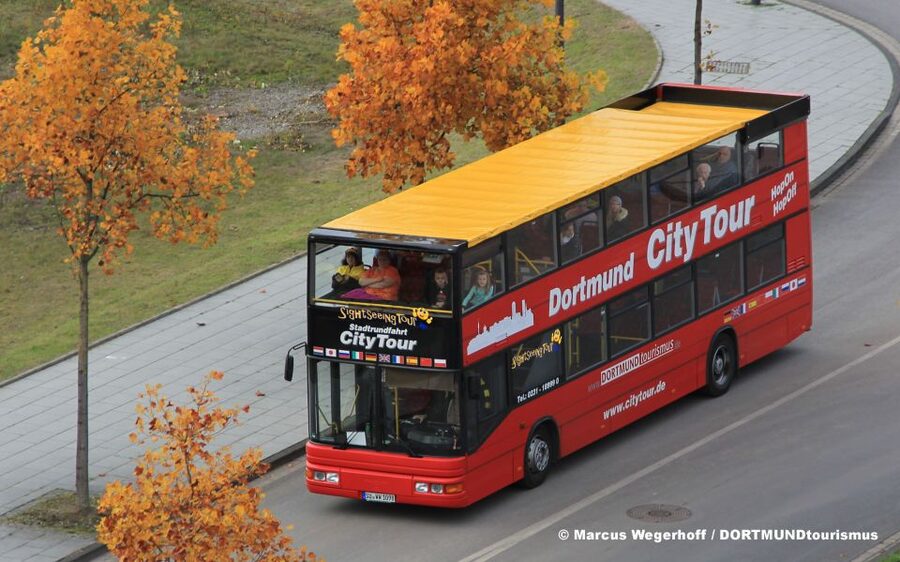
The bus includes a multilingual audio guide in Chinese, German, Dutch, English, French, Japanese, Italian, Polish, Russian, and Spanish. The driver is bilingual in German and English, but the headphones are what bring the full story between stops.
Here’s how to get the most from it: listen during the transit stretches, then hop off with one concrete question in mind. For example, choose a stop like Phoenix-area sights and listen for the part that explains what came before and what replaced it. Then get off and compare what you heard to what you can see.
One caution from the experience you might want to plan around: the commentary can feel a bit out of date in parts. That doesn’t kill the value of the tour, but it’s smart to keep a flexible mindset. If some segments don’t match exactly what’s in front of you that day, you’re not stuck—you can still use the bus for orientation and let your own walking fill the gaps.
Stop-by-stop cheat sheet for a strong one-day plan
If you’re trying to fit everything into one day, I’d aim for a “two big anchors plus downtown” rhythm. That keeps your feet happy and your eyes fed.
A solid flow could look like this:
- Start around Central Station, then ride to one neighborhood or harbor break.
- Spend the longest time at the Phoenix-area section (Phoenix Hall / Phoenix See).
- Add one park stop for pacing (Westfalenpark or Rombergpark).
- Finish with downtown anchors like Town Hall and Reinoldi Church, before looping back toward Central Station.
Why this works: Dortmund’s story is structured around change—industry, then parks and institutions, then city-center landmarks. You’ll get the most “connected understanding” if your time on foot lines up with those chapters.
Where to spend longer vs where to keep it short
- Longer stops: Phoenix-area sights and at least one park stop tend to reward you with real walking time.
- Shorter stops: Kreuzviertel, Harbour, and the educational stops (DASA, TU Dortmund) can be perfect for a quick look and photos, as long as you’re not trying to turn one hop-off into an all-day detour.
- Downtown stops: Town Hall and Reinoldi Church are best as focused, time-limited breaks, then you’re back on the bus to avoid eating up your schedule.
Price and value: does $28 buy enough?
At about $28 per person for a 24-hour ticket, the value comes from flexibility and efficiency—not from seeing only one attraction. You’re not paying for a single museum. You’re paying for a moving tool that connects multiple parts of Dortmund in one day.
This is the kind of price that makes sense if you’ll do at least two or three hop-offs. If you plan to stay on the bus the whole time with no walking, you might feel the cost more. But if you want the “see a lot, understand the city, then wander” approach, it’s a practical deal.
Another value point: you get a multilingual audio guide built into the ride. That matters because Dortmund’s transformation story is part of what makes the itinerary worth it. Without audio, it’d be more like a scenic bus ride with stop names. With audio, the route has context.
Who should book this hop-on hop-off bus?
You’ll probably be happiest with this ticket if:
- you want a one-day way to get oriented in Dortmund without committing to a fully guided walking tour
- you care about the city’s shift from coal and steel into today’s culture, sports, and universities
- you like mixing transit with self-guided exploration rather than following one rigid schedule
- you’re traveling with kids and want a plan that keeps everyone moving through different areas
It’s also a good option if you want a low-effort day. You’re hopping between major zones, not planning a complicated route with multiple buses and transfers.
Booking decision: should you take the Dortmund hop-on hop-off bus?
If your goal is to see Dortmund in one day and come away with a real sense of how the city changed, I think this is worth booking. The combination of open-top views, 13 hop-off stops, and a multilingual audio guide gives you a lot of coverage for your time.
I’d just go in with two expectations: seats may not be perfect if it’s busy, and some audio segments may not match everything precisely. If you can live with that, you’ll get a clean, efficient city preview—and you’ll know where you want to spend more time once you’re on foot.
FAQ
How long is the Dortmund hop-on hop-off ticket valid?
The ticket is valid for 24 hours from the time you first activate it.
How many stops are on the route?
There are 13 stops along the hop-on hop-off bus route in Dortmund.
Where can I start the tour?
You can start anywhere between the 13 bus stops. The list includes Central Station, Kreuzviertel, Harbour, DASA, TU Dortmund, Stadion, Westfalenpark, Rombergpark, Phoenix Hall, Phoenix See, Town Hall, and Reinoldi Church.
What languages is the audio guide available in?
The audio guide is included and available in Chinese, German, Dutch, English, French, Japanese, Italian, Polish, Russian, and Spanish.
What times does the bus depart from Central Station?
Central Station departures are listed at 10:20 a.m., 12:20 p.m., 2:20 p.m., and 4:20 p.m. The bus also returns to Central Station at 12, 2, 4, and 6 p.m. (arrival times).
Is there a guaranteed seat?
Seat reservations are not possible, and seats are not guaranteed if demand is high.
Is the bus wheelchair accessible and are dogs allowed?
The lower area is barrier-free and suitable for wheelchair users, and dogs are allowed on the lower bus level.