
Memphis music didn’t come from nowhere. This high-energy bus tour strings together the city’s biggest legends with live playing and on-the-road storytelling. I like that it blends famous stops (Beale Street, Stax, the Lorraine Motel area) with the why behind the music, not just quick photo stops.
I love the live element most. Guides such as Cecil, Taylor, Andrew, and Tyler have turned the ride into a moving show—songs plus comedy plus history. Second, I like the route logic: it follows the musical trail from blues origins through soul hits and into major civil-rights moments around the Overton Park area.
One thing to consider: the tour’s heart is music-focused, and the flow can lean more toward rock and Elvis-style storylines depending on the guide, so if you want equal weight for every artist, you’ll want to manage expectations.
In This Review
- Key Things You Should Know Before You Go
- Why the Memphis Mojo Bus Tour Feels Like Memphis (Not Like a Lecture)
- Alfred’s on Beale: Where the Tour Starts and Why Beale Street Matters
- Overton Park and the Stax Chapter: Soul Music Meets Civil-Rights History
- Live Music on the Ride: The Performance Factor That Makes It Worth It
- Price and Value: What $43.90 Buys You in Real Memphis Time
- Duration, Route Pace, and the Stops You’ll Actually Remember
- Getting There Without Stress: Meeting Point, Parking, and Mobile Tickets
- Who Should Book the Memphis Mojo Bus Tour (and Who Might Skip It)
- Should You Book It? My Call for Most First-Time Memphis Visits
- FAQ
- How long is the Memphis Mojo Bus Tour?
- Where does the tour start and end?
- What is the price per person?
- Is admission to Sun Studio included?
- Is admission to the Stax Museum included?
- Does the tour include hotel pickup?
- Is the tour offered in English?
- What happens if weather is poor?
- Can I get a refund if I cancel?
Key Things You Should Know Before You Go
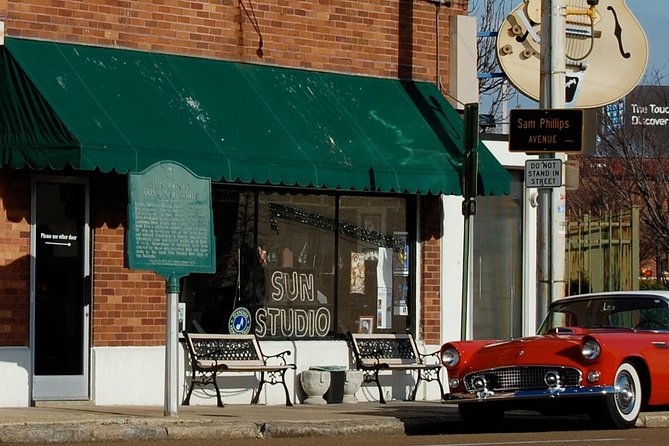
- Live musicians on the bus: you get singing and guitar while you’re learning the stories behind the sound.
- Beale Street as the anchor point: the tour starts and ends at Alfred’s on Beale, so you’re grounded in the city’s blues center.
- Two major music chapters: Beale Street roots, then Stax Records and Southern soul near the Overton Park area.
- A short Overton Park stop that can change: it’s subject to availability and weather, so plan for a quick look, not a long hang.
- Optional add-ons for Sun Studio and Stax Museum: you can expand the experience if you want the museum time.
- Small group size for a bus tour: with a maximum of 36 travelers, it stays lively instead of chaotic.
Why the Memphis Mojo Bus Tour Feels Like Memphis (Not Like a Lecture)

Memphis is a city you’re supposed to hear. The Memphis Mojo Bus Tour is built around that idea: music history told by performers, with actual songs happening while you ride. You’re not stuck reading plaques. You’re moving through the neighborhoods that shaped the sound.
For me, the best part is the way the guide connects places to people. You learn who changed the game, then you get the landmark that matches the story—Beale Street for blues origins, Stax area for Southern soul, and major turning points tied to the civil-rights era. It’s a format that helps even first-time visitors get their bearings fast.
Also, the tone tends to match the city: fun, fast, and a little rowdy in a good way. Multiple guides have been highlighted by name in recent experiences, including Cecil, Taylor, Andrew, and Tyler—each bringing music and humor into the narration. That matters because Memphis stories can get heavy. The tour finds a way to keep the energy up without skipping the key context.
And yes, it’s still a bus tour. You’ll be riding and listening, with some quick street-level stops. If you want a quiet, slow, museum-like pace, this might feel a bit too lively. But if you want Memphis to hit you in the ears while you see the landmarks, you’ll likely love the format.
Alfred’s on Beale: Where the Tour Starts and Why Beale Street Matters
The ride begins right in blues country at Alfred’s On Beale, at 197 Beale St. The whole tour runs from there and returns you back to the same meeting point, so you’re not juggling transfers or complicated pickups.
From the start, the storytelling frames Beale Street as more than a nightlife strip. You’ll hear about how WC Handy became known as the Father of the Blues and why that label stuck. That helps you understand the city’s musical influence as a real origin story, not a vague “Memphis is famous for music” claim.
Along the route and in stops, you’ll also get context tied to major Memphis institutions and symbols, including:
- The history of the South’s grand hotel
- The Cotton Exchange and Cotton Row (how the city’s economy and identity grew around the river and trade)
- Why the Mississippi River mattered for music and migration patterns
- The Presley family’s first real home in Memphis
- Danny Thomas and St. Jude’s
One of the most useful moments on Beale Street is how the tour ties names to the geography you’ll actually see. When you later look at a landmark and understand what happened there—who worked there, what industry it connected to—you remember it. That’s the real value of a guided route like this.
There’s also an optional “birthplace of rock ’n’ roll” admission component in the mix. If you opt in, it’s the kind of add-on that makes the bus tour feel like the start of a longer Memphis day rather than a one-and-done snapshot. If you don’t, you’ll still get the storyline, just without the extra ticketed time.
Overton Park and the Stax Chapter: Soul Music Meets Civil-Rights History
After Beale Street, the tour heads toward the Overton Park area, where you get both a music landmark and a bigger historical conversation. Overton Park Shell is part of the plan, and there’s a short stop connected to Elvis’s first concert, with the timing depending on availability and weather. In plain terms: you might get a quick look and a photo moment, or you might just pass through with a story.
What I like about this section is that it doesn’t treat Southern soul as a disconnected “sound.” It ties the artists to the place. You’ll learn about Stax Records and the wave of performers who became synonymous with that label and style—Otis Redding, Sam & Dave, the Staples Singers, Booker T & the MGs, and many others. Even if you’re only a casual fan, this is where you start to understand why Memphis soul felt different.
Then the tour turns to the 1968 Sanitation Strike and the assassination of Rev. Dr. Martin Luther King, Jr. That shift can land differently depending on the guide’s delivery, but it’s important. Memphis isn’t only a music export. It was also a city where national history unfolded on local streets.
Practically, this means the tour gives you two sides of Memphis at once: what people created and what they fought for. If you’re visiting for music, you’ll still get the songs. If you’re visiting for history, you’ll still leave with music context that helps it make sense.
A quick note on expectations: your experience near Overton Park is short by design. The tour is moving, and the focus stays on the storytelling rather than long museum time unless you choose add-ons.
Live Music on the Ride: The Performance Factor That Makes It Worth It
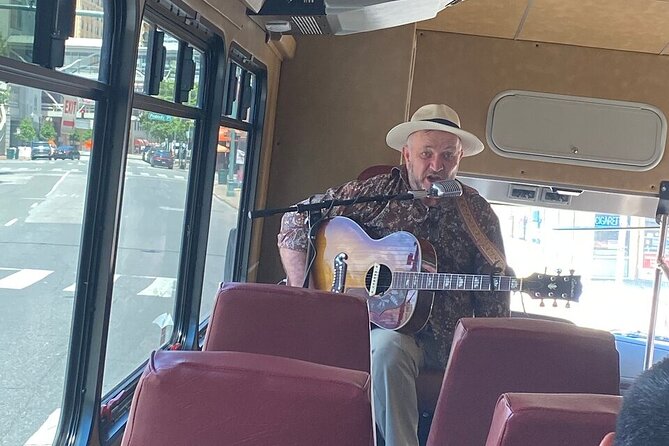
A standard bus tour gives you talking. The Mojo bus gives you performing. Guides are professional Beale Street musicians, and you’ll hear live songs and get guitar and singing during the narration.
In recent experiences, tour guides have been specifically praised for being energetic and for adding songs that match the stories they’re telling. Cecil, for example, has been highlighted as both an energetic guide and an awesome singer; Taylor has been praised for great music and narration; Andrew has been noted as amazing; and Tyler has been called out for interesting points of interest plus standout performance.
This matters because Memphis music is cultural, not just musical. When someone sings a line that reflects what they’re describing—blues turning into rock and rock turning into soul—it helps you retain the timeline.
Also, the comedy component keeps the ride from getting too solemn. That’s a good thing on a route that includes landmarks tied to big national tragedies. The humor isn’t random—it usually helps with pacing so the history lands without draining the mood completely.
Two practical considerations here:
- The bus is moving, so you’ll need to stay seated and listen closely for the details.
- If you’re sensitive to a louder, more interactive style, bring your “bus energy” expectations with you. This tour leans into that style.
Price and Value: What $43.90 Buys You in Real Memphis Time
At $43.90 per person, this tour is priced like an experience that’s meant to be a first or early visit. And that’s exactly how I’d use it. You’re paying for a guided ride through major landmarks with live musicians onboard—plus local taxes included.
You’re also getting some control through optional ticket choices. Admission to Sun Studio is included only if you select that option. Admission to Stax Museum is included only if you select that option. If you don’t select them, you still get the sightseeing and the core storytelling.
Here’s the value logic I think you’ll appreciate: Memphis has a lot to see, and it’s spread out. A 1.5- to 3-hour guided musical route can help you decide what to do next. Do you want more museum time? Pick Sun or Stax. Do you want just the overview and then free time later? Skip the add-ons and keep your day flexible.
One more pricing reality: you’re in a max 36-person group, which is a sweet spot for interaction without turning into an all-day crowd scene. Add live performance into the mix and the value starts making sense quickly.
Also, booking demand is real. On average, this gets booked about 24 days in advance. If your trip dates are fixed, I’d secure your spot sooner rather than later, especially in busy seasons.
Duration, Route Pace, and the Stops You’ll Actually Remember
The tour runs approximately 1 hour 30 minutes to 3 hours. That range depends on the timing of stops and whether you include optional admissions. Either way, it’s a manageable chunk of time that fits well on arrival day or as a first “orientation” outing.
The itinerary has a clear start and finish: Alfred’s on Beale, then back to Alfred’s. Along the way, you’ll pass or stop near major highlights such as Sun Studio, Beale Street, Stax Studio, the Lorraine Motel, Cotton Row, the Peabody Hotel, Overton Park, and early homes connected to Elvis and B.B. King. Even when you’re just riding past, the guide’s narration turns those visuals into a story you can place in your mental map.
Stop-style timing is mostly quick. For example, the Beale Street section starts at the Alfred’s location and includes short, targeted explanations rather than long roaming time. That’s helpful because it keeps the tour moving and keeps you from wasting energy.
One small drawback to plan around is the “short stop” nature of the route. At Overton Park, the Shell stop is subject to availability and weather, and that means you should treat it as a bonus, not a guarantee. If you’re visiting with tight schedules, I’d build in some flexibility.
Restroom planning is also smart. One detailed experience noted that a restroom stop at the park didn’t happen during their run, and that the restroom line at an optional Sun Records area can be long. So I’d treat this as a lesson: use facilities before the tour if you can, and don’t assume every stop will include a bathroom break.
Getting There Without Stress: Meeting Point, Parking, and Mobile Tickets
No hotel pickup is included, so you’ll want to plan to meet at the starting location. The meeting point is Alfred’s On Beale, 197 Beale St, Memphis, TN 38103, USA.
If you drive, the area is a mix of garages and lots. A practical nearby option called out for the closest garage is at 149 Peabody Place (between Second Street and BB King Blvd., next to the Hampton Inn). You can also try metered street parking on Second Street just south of Beale, on Beale between Front and Second, or along Peabody Place from Front to Fourth Street.
The tour uses a mobile ticket, and confirmation is sent at booking time. The tour is in English, and service animals are allowed.
Finally, remember this is a bus departure moment. If you show up late, you may miss the chance to board. The best way to avoid that headache is simple: arrive early, lock in your spot, and let the energy build.
Who Should Book the Memphis Mojo Bus Tour (and Who Might Skip It)
This tour is ideal if:
- You’re a music fan and want the story of blues, rock ’n’ roll, and Southern soul in one sweep
- You want live entertainment while you ride
- You’re visiting for the first time and want a fast orientation across major Memphis landmarks
- You like guides who tell stories with humor and performance, not just facts on repeat
It may be less ideal if:
- You want a very balanced deep profile of every single artist in Memphis (some experiences can lean heavier toward Elvis-focused storytelling)
- You prefer long stops and slow pacing
- You strongly need a guaranteed restroom break on schedule
If you’re the type who likes to get the big picture first and then pick your next moves, this is a strong fit. It sets you up to decide whether you want to add Sun Studio and/or Stax Museum after you’ve learned the “why” behind what you’re seeing.
Should You Book It? My Call for Most First-Time Memphis Visits
If you’re headed to Memphis and you want one early outing that makes the city feel alive, I’d book this. At $43.90, you’re paying for more than a sightseeing loop. You’re buying a guided musical performance with major landmarks, and the crowd size helps keep it from turning into background noise.
Choose optional admissions if you’re the type who likes to see artifacts with your new context. Skip them if you want a lighter day and more free time.
Bottom line: for first-time visitors who love music, comedy, and big stories tied to real places, the Memphis Mojo Bus Tour is one of the easiest ways to understand Memphis fast—without losing the fun.
FAQ
How long is the Memphis Mojo Bus Tour?
It runs about 1 hour 30 minutes to 3 hours, approximately.
Where does the tour start and end?
It starts at Alfred’s On Beale, 197 Beale St, Memphis, TN 38103, and ends back at the same meeting point.
What is the price per person?
The price is $43.90 per person.
Is admission to Sun Studio included?
Admission to Sun Studio is included only if you select that option.
Is admission to the Stax Museum included?
Admission to the Stax Museum is included only if you select that option.
Does the tour include hotel pickup?
No. Hotel pickup and drop-off are not included.
Is the tour offered in English?
Yes, the tour is offered in English.
What happens if weather is poor?
The experience requires good weather. If it’s canceled due to poor weather, you’ll be offered a different date or a full refund.
Can I get a refund if I cancel?
Yes. You can cancel up to 24 hours in advance for a full refund. Canceling less than 24 hours before start time is not refundable.