Munich can be a puzzle. This open-top hop-on hop-off tour turns it into a menu: pick your stops, then linger where you care most. You ride the blue double-decker, track the route with the app, and use audio commentary while the city slides past.
I love two things right away. First, the buses are easy to catch and the system feels smooth, with drivers who help keep the boarding process moving. Second, the included audio guide is actually useful, with commentary in many languages and clear guidance for what you’re seeing.
One consideration: the Orange Line schedule is frequent enough, but if you’re hopping back and forth constantly, you may feel the wait. The Orange Route runs Monday–Friday every 30 minutes and weekends every 20 minutes, and it lasts about 80 minutes.
In This Review
- Key things to know before you board
- Riding Munich’s Most Efficient Sightseeing Plan
- Your ticket gives you time to do Munich your way
- Green Line vs Orange Line: plan your day by route purpose
- Stop-by-stop: the sights that make the route worth it
- Karlsplatz/Stachus to Kunstareal to Odeonsplatz: classic Munich foundations
- Eisbach: a quick detour for the Munich-watching vibe
- Deutsches Museum: construction may reroute your plans
- Marienplatz/Tal and Max-Joseph-Platz: where the city feels most alive
- Viktualienmarkt and Hofbräuhaus area: food and atmosphere without extra transport
- Karlsplatz shopping arcade: a practical stop for breaks
- The Orange Route: Nymphenburg Palace, BMW, and English Garden scale
- Nymphenburg Palace: gardens first, palace second
- Olympiapark, BMW Welt & Museum: modern Munich with skyline views
- Schwabing and the English Garden: the best excuse to wander
- How long should you ride: full loop vs smart hop-off strategy
- Audio guide tips: make it match what you’re seeing
- Open-top buses and WiFi: what they change about your day
- Who this tour suits best (and who should skip it)
- Should you book this hop-on hop-off tour?
- FAQ
- How long is the tour?
- Is the ticket valid for 24 or 48 hours?
- Can I hop on and off as often as I want?
- Where do I start?
- Which stops should I look out for?
- Is the Deutsches Museum stop running?
- What languages are available on the audio guide?
- Is WiFi available on the bus?
- Is this tour wheelchair accessible?
- Do kids need tickets?
Key things to know before you board
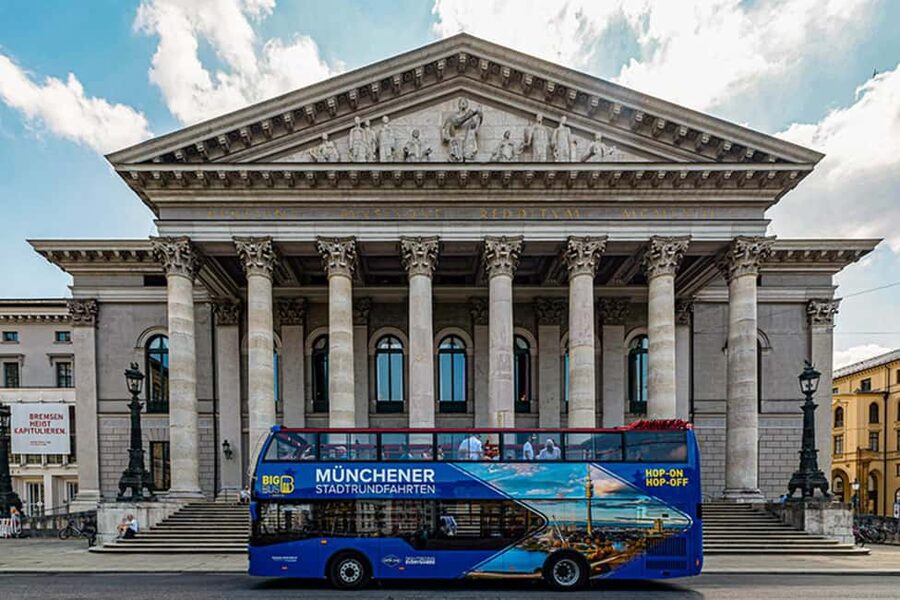
- Karlsplatz/Stachus is your best launchpad: Start at Karlspl. 21 (near Buddy Hotel) or board at other major stops.
- Two route styles: A quick central circuit plus the Orange Route for Nymphenburg, Olympiapark, and BMW.
- Audio guide in 9 languages: Headphones are included, with commentary designed for sight-by-sight learning.
- Open-top views when the sky behaves: Retractable-roof buses make daytime sightseeing more pleasant.
- Deutsches Museum stop may be down: This stop is temporarily suspended during construction.
- WiFi onboard keeps your plans updated: Use the Big Bus app for live tracking and stop changes.
Riding Munich’s Most Efficient Sightseeing Plan
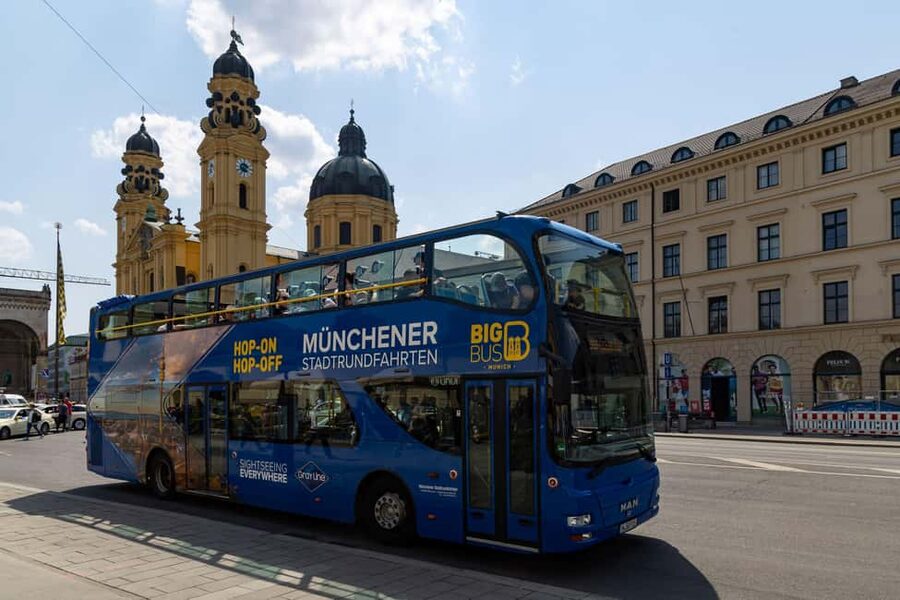
If you’re short on time, Munich can be stubborn. The city is beautiful, but the sights are spread out, and you don’t want to spend your day playing transit roulette. This bus tour gives you a simple promise: sit up top, listen, then hop off when something grabs you.
The real win is flexibility. You can do the full loop in one go, or treat it like a tool: hop on for orientation, hop off to explore on foot, then return later. On a rainy day, this format is even smarter because you still get the big-picture views without losing your whole afternoon.
And yes, you can build your own “Munich day” around neighborhoods, not just landmarks. That matters in a city where one street can feel historical, the next street can feel local, and the next feels like a different era entirely.
Your ticket gives you time to do Munich your way
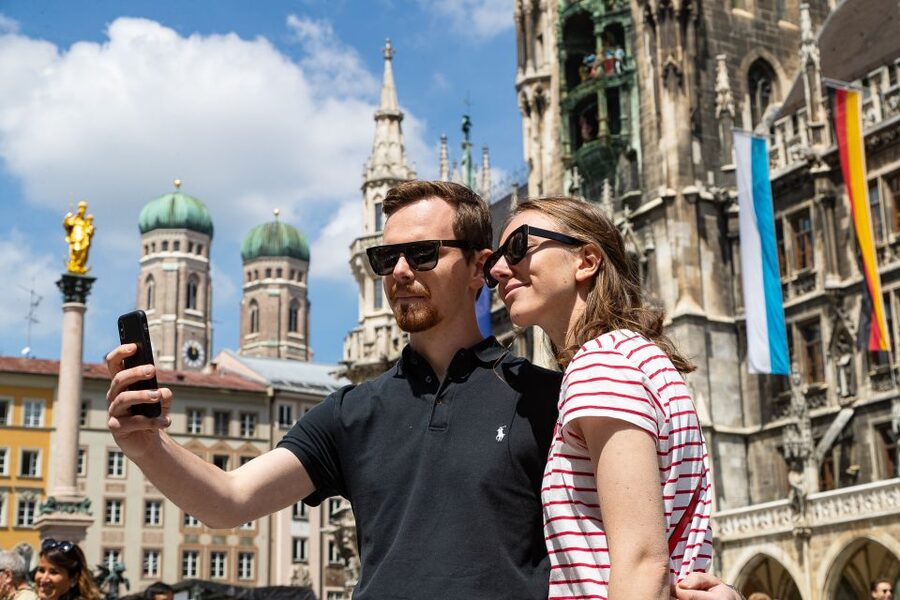
This is a 24- or 48-hour ticket starting from your first use. That’s the difference between squeezing a single tour and actually using a tour as a planning system.
If you stay on board without hopping off, the full route takes about 2.5 hours. That’s enough to get oriented fast—especially if it’s your first day in town. But if you plan to stop for food, photos, or a museum visit, you’ll want the extra time.
It also helps that the bus includes what you actually need to make it work in real life: audio headphones, WiFi onboard, and an easy way to track updates through the app. For most people, that turns a “sightseeing ride” into a moving guidebook.
One note on price/value: at around $27 per person, you’re paying for more than transport. You’re paying for the convenience of the loop, the audio guidance, and the ability to return for extra exploring during your 24–48 hour window. If you’re traveling with a group of adults, it can feel pricey, but it’s often still cheaper than stacking multiple paid attraction tickets just to get context.
Green Line vs Orange Line: plan your day by route purpose
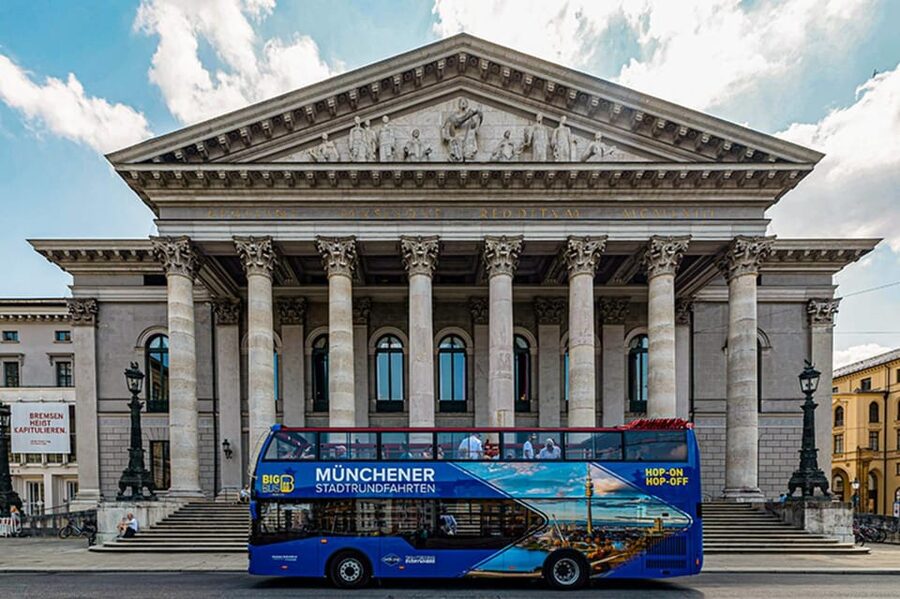
Munich has more than one “best first tour.” Big Bus splits that logic into two different routes you can mix and match.
The Green Line runs daily every 20 minutes and lasts about 60 minutes. Use it when you want central landmarks and a quick sense of the city core.
The Orange Line runs Monday–Friday every 30 minutes and weekends every 20 minutes, lasting about 80 minutes. Use it when you want to go beyond the center—especially toward Nymphenburg Palace, Olympiapark, BMW World and Museum areas, and the English Garden area via Schwabing.
Here’s the practical mindset I’d use: do Green first to learn the “shape” of central Munich, then do Orange to understand the city’s grand institutions and modern Munich at the edges.
Stop-by-stop: the sights that make the route worth it
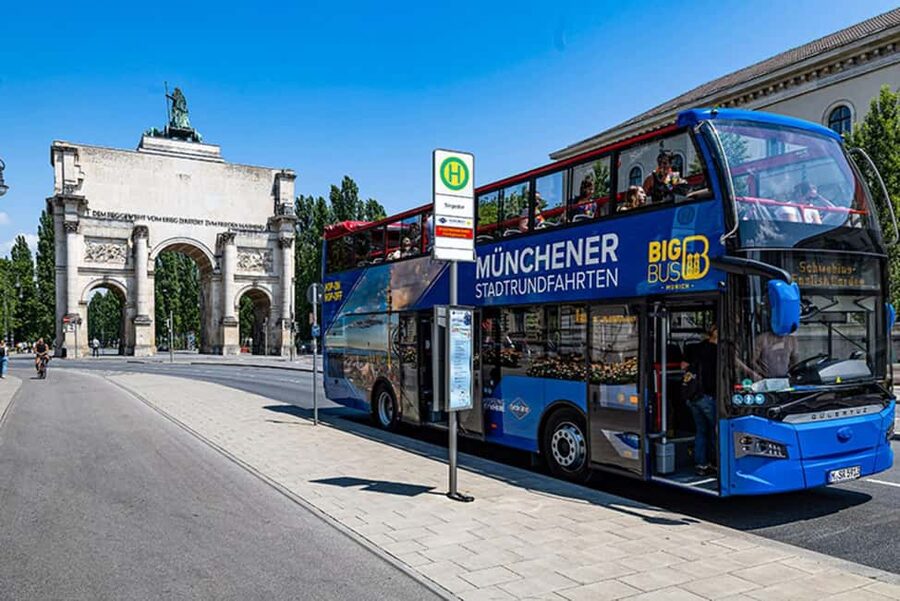
This tour is built around key areas, and each stop makes sense if you know what you’re aiming for. Below is the stop flow you’ll experience, plus why each one is worth your time.
Karlsplatz/Stachus to Kunstareal to Odeonsplatz: classic Munich foundations
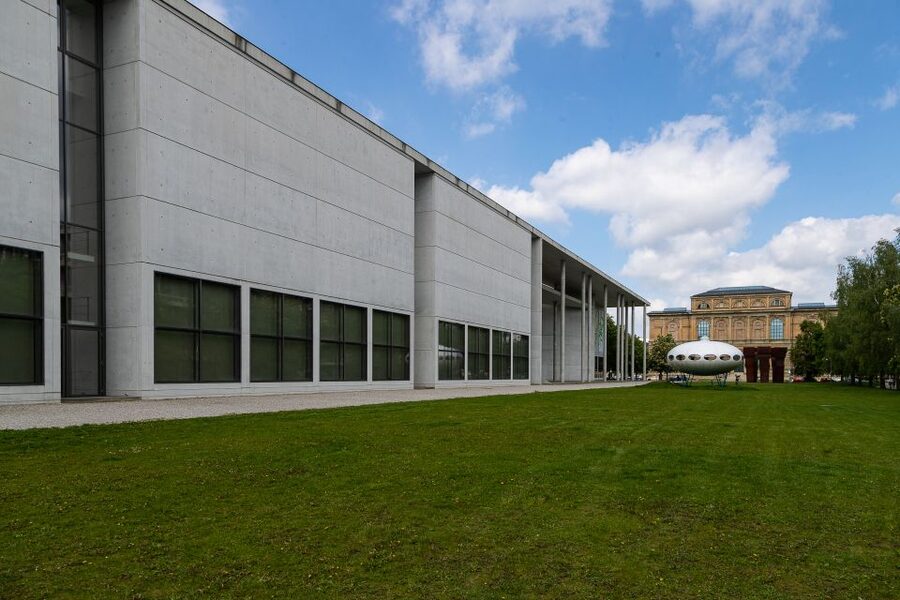
The tour commonly starts at Karlspl. 21 at Karlsplatz/Stachus. This is a smart starting point because it puts you near a lot of pedestrian-friendly strolling and transit connections. From here, you pass toward the Kunstareal area, the zone associated with Munich’s major art institutions and grand architecture.
Next is Odeonsplatz. This is where Munich starts to feel theatrical—big facades, formal squares, and a city that loves stonework. Even if you don’t step off here, the views from the open-top bus help you understand how the city frames its landmarks.
If you like photo stops with minimal effort, this central run is your best friend.
Eisbach: a quick detour for the Munich-watching vibe
You’ll pass Eisbach, famous for the wave in the river that draws attention even from people who aren’t trying to be “touristy.” This is one of those stops where you might not plan a long visit, but it’s a great place to see how locals enjoy the city’s water and public spaces.
If the weather is good, staying on the upper deck here is usually worth it.
Deutsches Museum: construction may reroute your plans
One heads-up: the Deutsches Museum stop is temporarily suspended due to construction work. If you planned a museum visit from the bus, be ready to adjust.
In practice, don’t build your entire timing around this one. Use the bus for orientation and leave yourself flexibility so a temporary stop change doesn’t throw off your whole day.
Marienplatz/Tal and Max-Joseph-Platz: where the city feels most alive
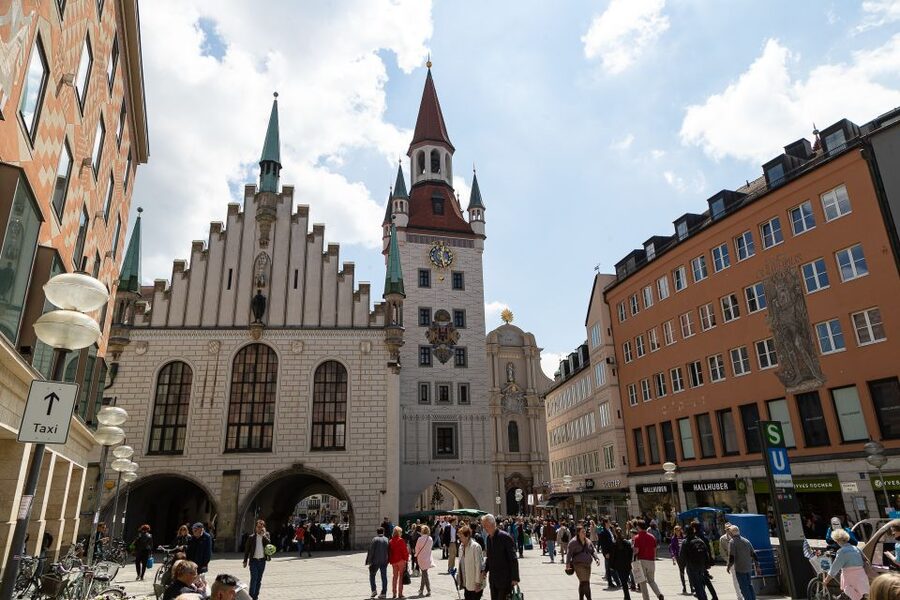
This is the heart of Munich’s story. You’ll pass Marienplatz, then continue through the central rhythm around Max-Joseph-Platz.
If you want a sense of Munich’s public life, this is where you’ll feel it. It’s also a great area to connect to other walking plans because you’re close to shops and street life.
If your time is limited, hop off near Marienplatz for an easy “let me feel the city” block. You can always return to the bus later using your 24–48 hour window.
Viktualienmarkt and Hofbräuhaus area: food and atmosphere without extra transport
The route highlights include Viktualienmarkt, known for good snacks and quick bites. This is the kind of stop where you can spend 30 minutes and walk away happier, even if you never become a full-time market person.
Nearby, you’ll also get a pass by the iconic Hofbräuhaus area. You don’t have to go inside to enjoy the city energy, but it’s there if your group wants the classic Munich beer hall experience.
Karlsplatz shopping arcade: a practical stop for breaks
Karlsplatz is more than a place to catch the bus. It’s connected to a pedestrian zone and shopping arcade, which makes it a great “reset stop” if you need shoes, a charging break, or a quick meal without leaving the sightseeing flow.
This is also a good stop to plan a timed lunch. It’s central enough that you won’t lose your whole day if the next bus is a bit delayed.
The Orange Route: Nymphenburg Palace, BMW, and English Garden scale
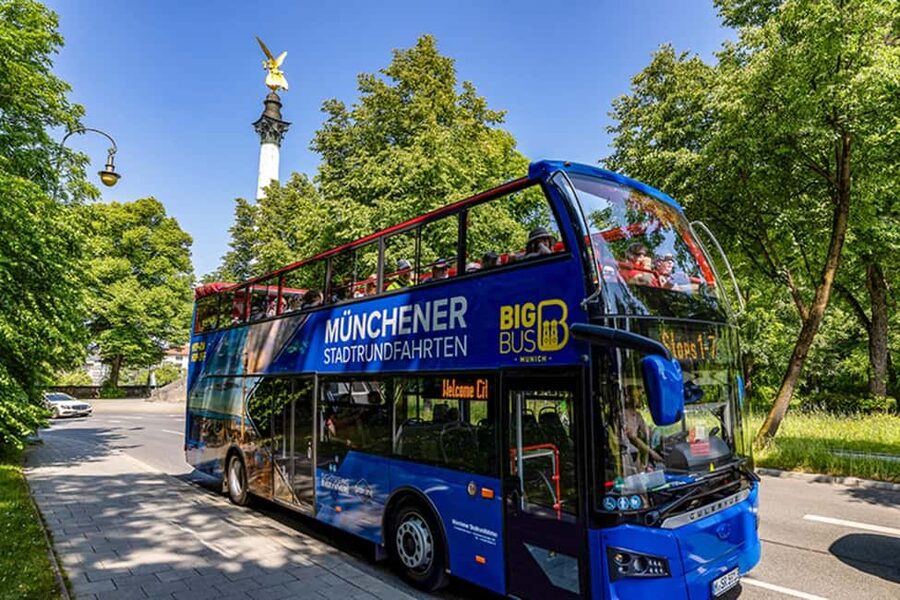
This is where the tour stretches from “city center” into “Munich range.” If central sights are your only goal, you might stop after Green. But if you want the big postcard moments plus real atmosphere, Orange is the one.
Nymphenburg Palace: gardens first, palace second
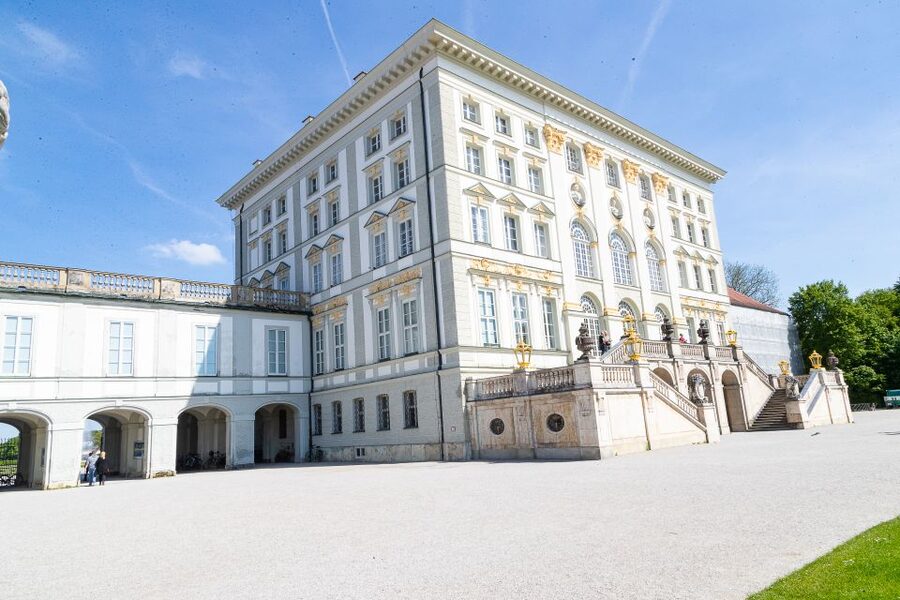
On the Orange Route, you’ll get to Nymphenburg Palace. The standout isn’t just the building—it’s the setting and the chance to slow down.
When you hop off here, you’re in a different tempo than central Munich. Even a short walk through the grounds can help you feel how Munich balances formal beauty with open space.
Olympiapark, BMW Welt & Museum: modern Munich with skyline views
The Orange Route also heads to Olympiapark, and it passes BMW Welt & Museum. From an upper-deck seat, this part of Munich can feel like sci-fi compared with the old-city squares.
You might not spend hours inside museums every time, but the payoff is the perspective. You get to see how Munich’s identity shifts from historic grandeur to design-focused modern spaces.
If you do want to enter BMW World or the museum, plan extra time at the bus stop you choose. The bus route gets you there; your curiosity decides how long you stay.
Schwabing and the English Garden: the best excuse to wander
Finally, the route reaches Schwabing/English Garden. This is where Munich becomes less about buildings and more about life outdoors.
The tour also highlights Neuhausen and the world’s largest beer garden (connected with the English Garden area in the broader Munich landscape). This is the kind of stop that’s perfect for people who like casual travel: sit, snack, watch, then keep walking when the mood is right.
Even if you don’t have time for a long stay, hopping off here gives you a taste of why locals treat this park like an everyday destination.
How long should you ride: full loop vs smart hop-off strategy
You can do this two ways, and the best choice depends on what you’re trying to accomplish.
If it’s your first day and you want orientation, ride the full loop once. The timing is simple: the complete ride is about 2.5 hours without hop-offs. Audio helps you connect what you see with what it means.
If you want your day to feel personal, do it in segments:
- Green first for central structure.
- Orange second for the big outskirts highlights.
- Then use your remaining time to return to the stops that made you stop wanting to rush.
This “segment strategy” avoids a common mistake: hopping off at everything and spending all your time walking back to the bus. With this ticket window, you don’t need to do that.
Audio guide tips: make it match what you’re seeing
The tour includes audio in English, German, Spanish, Italian, Japanese, Chinese, Portuguese, Russian, and French, with headphones provided. That’s a lot of coverage, and it’s usually what turns the ride from passive to meaningful.
Here’s what you can do to keep it smooth:
- Start listening right away so you’re not guessing what a building is.
- When you hop off, pause the audio when you’re moving between viewpoints, then restart when you’re settled.
- If the bus timing feels slightly out of sync with what you hear, don’t fight it. Use the audio as context, not as a strict script.
One more practical note: the driver is listed as German/English, and some departures may use live speech in German with other languages delivered via headphones. Either way, the headphones are your main tool, so keep them handy.
Open-top buses and WiFi: what they change about your day
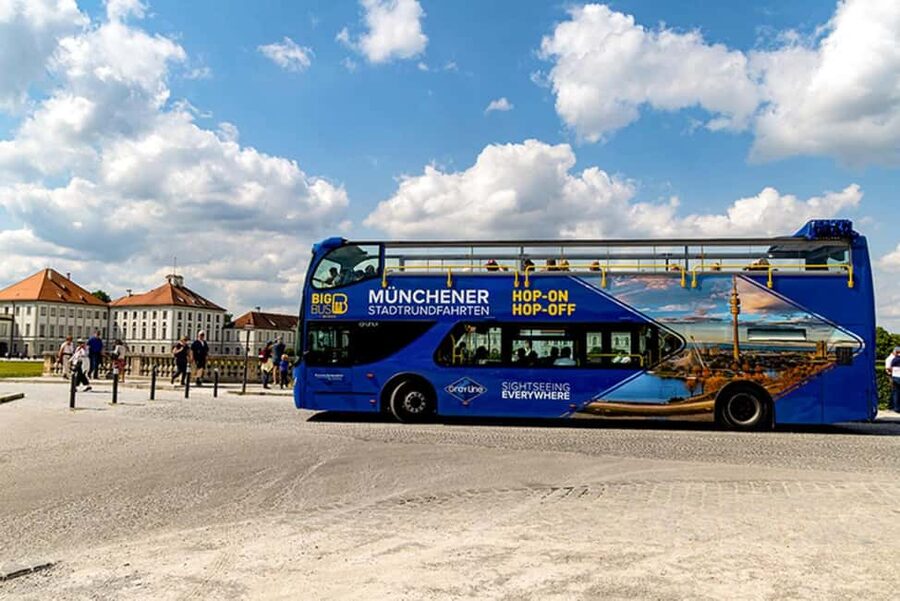
An open-top double-decker is about more than fun. It makes photos and city-scanning easier because you’re not fighting angles through glass.
If the weather turns, the bus still helps because you’re sheltered by the double-decker shape. When you can get upper-deck seats, you’ll often have better sightlines through the major squares and broad boulevards.
WiFi onboard is also practical. When you’re deciding whether to hop off for one more stop or grab a quick bite, checking the app for live tracking reduces stress. You’re not stuck with guesswork.
Who this tour suits best (and who should skip it)
This works best for people who want structure without rigid scheduling. It’s ideal if:
- it’s your first visit and you want a fast orientation
- you like choosing your own walking time
- you want the flexibility of a 24–48 hour ticket
- you’re traveling in mixed interests, from architecture lovers to casual wanderers
It’s less ideal if you already have a tight, museum-heavy plan and you hate shared tourist routes. Also, if you want extremely frequent shuttling along the Orange corridor, you may find the intervals a bit limiting on days when you’re constantly hopping around.
Should you book this hop-on hop-off tour?
Yes, if you want the easiest way to cover major Munich highlights without building a complicated route map. The combination of hop-on flexibility, included audio in 9 languages, and a loop that hits central Munich plus the Orange highlights (Nymphenburg, Olympiapark, BMW area, and English Garden) is strong value for the price.
I’d book it especially if your itinerary has uncertainty—because this tour gives you options even when plans change. If you’re a one-day visitor, you can use it to get oriented fast. If you have two days, you can do it in pieces and actually enjoy the off-bus time.
If you hate waiting and you’re determined to bounce between distant sights minute-to-minute, build more time into your schedule. The route frequency is good, but not “every five minutes good.”
FAQ
How long is the tour?
The full route takes about 2.5 hours if you stay on the bus. The Green Line lasts about 60 minutes and the Orange Line lasts about 80 minutes.
Is the ticket valid for 24 or 48 hours?
Yes. Your Big Bus ticket is valid for 24 or 48 hours from first use.
Can I hop on and off as often as I want?
Yes. It’s a hop-on hop-off sightseeing format, so you can get off at stops and re-board later within your ticket validity.
Where do I start?
A recommended starting point is Stop 1 at Karlspl. 21, next to the Buddy Hotel. You can also activate your voucher and board at other stops along the routes.
Which stops should I look out for?
Key stops include Karlsplatz/Stachus, Kunstareal, Odeonsplatz, Eisbach, Marienplatz/Tal, Max-Joseph-Platz, Nymphenburg Palace, Olympic Park/BMW Welt & Museum, and Schwabing/English Garden.
Is the Deutsches Museum stop running?
The Deutsches Museum stop is temporarily suspended due to construction work.
What languages are available on the audio guide?
The audio guide is available in English, German, Spanish, Italian, Japanese, Chinese, Portuguese, Russian, and French.
Is WiFi available on the bus?
Yes. WiFi is included onboard.
Is this tour wheelchair accessible?
Yes. The buses are wheelchair accessible.
Do kids need tickets?
Infants aged 3 and under travel free and do not require a ticket.