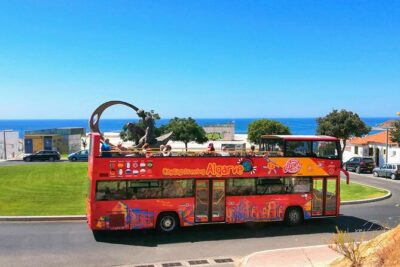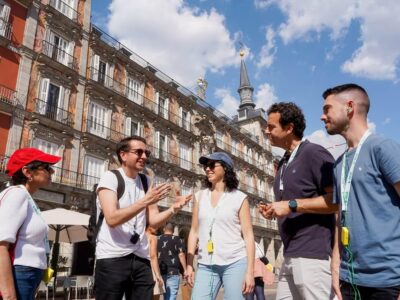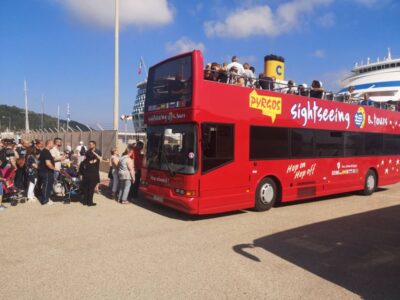
Hiroshima and Miyajima in one smooth day. This bus tour strings together Hiroshima’s Peace Memorial sites in the morning and the famous Itsukushima Shrine torii moments on Miyajima Island later, with an English-speaking guide and audio support. I especially like how the schedule helps you see a lot without wrestling trains or tickets all day.
I also really like the value math: entrance fees and round-trip ferry tickets are included, plus the bus includes free Wi‑Fi. On top of that, the narration is available as multilingual audio (English, French, Spanish, Italian, German, Portuguese, and Ukrainian), which makes the day feel less rushed and more understandable.
One possible drawback: the Peace Memorial area can be crowded, and you may end up in tight one-way-style pedestrian flows, especially near the main sites. Add in the fact it is an 8-hour day, and you’ll want comfortable shoes and patience.
In This Review
- Key things to know before you go
- Price and what you truly get for about $129
- Your day starts at 10:00 and the rhythm stays tight
- Hiroshima’s Peace Memorial sites: moving, structured, and often crowded
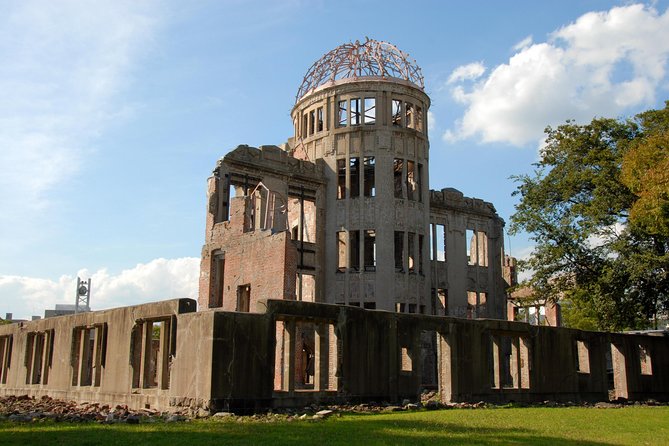
- The Atomic Bomb Dome and Peace Memorial Park (short stops, big impact)
- Hiroshima Peace Memorial Museum (the most time you get, and that’s a good thing)
- A quick castle moment: a 1589 keep with a peaceful-era twist
- Ferry to Miyajima: a mini reset before the UNESCO sights
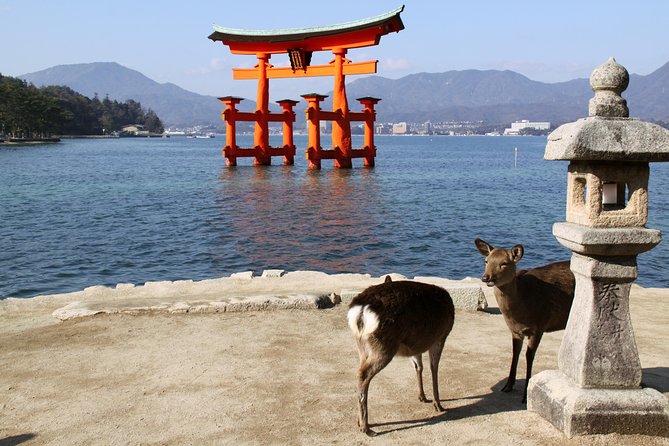
- Itsukushima Shrine and the sea-facing torii effect
- Daishoin Temple: photogenic details and the colorful Jizo guardians
- Lunch on Miyajima: vegetarian okonomiyaki if you choose it
- Guides, audio, and pacing: why the 8 hours feel manageable
- Should you book this Peaceful Hiroshima & Miyajima bus tour?
- FAQ
- What’s included in the tour price?
- How long is the tour and how much time do I get at each stop?
- Do you provide an audio guide, and what languages are available?
- Is the ferry to Miyajima included?
- What does the lunch option include, and is it vegetarian?
- Are there any date-specific changes or train-ticket timing tips?
Key things to know before you go
- Morning is for memory: Atomic Bomb Dome, Peace Memorial Park, and the Peace Memorial Museum come first while you still have full energy.
- UNESCO contrasts in the afternoon: Miyajima’s sea shrine and temple scenes are a different mood than Hiroshima, and that shift is part of the payoff.
- Logistics are handled for you: Ferry ride to and from Miyajima, plus key admissions, remove a lot of planning stress.
- Guide energy matters here: Reviews repeatedly call out guides such as Rino, Momiji, Marin, and Mo for pacing, humor, and clear explanations.
- Audio support helps all day: You get on-bus audio narration in several languages, which is handy when crowds and walking slow things down.
Price and what you truly get for about $129
At $129.25 per person for an 8-hour day, this tour sits in the mid-range for a Hiroshima-area day trip. The reason it feels fair is that you are not paying extra for the big-ticket items that usually add up fast on your own.
You get admission included for the Hiroshima Peace Memorial Museum, Miyajima Island, and Itsukushima Shrine. Round-trip ferry tickets are also included, which is a big deal because Miyajima is not a walk-off-the-bus kind of stop. You’re also riding in an air-conditioned coach with free Wi‑Fi, so you arrive in decent shape even though the day is full.
It’s also built for a specific kind of traveler: the person who has limited time and wants a guided route that hits the essentials without turning the trip into logistics math. With a maximum group size of 45, you usually get a workable balance between guided support and not feeling trapped.
Your day starts at 10:00 and the rhythm stays tight
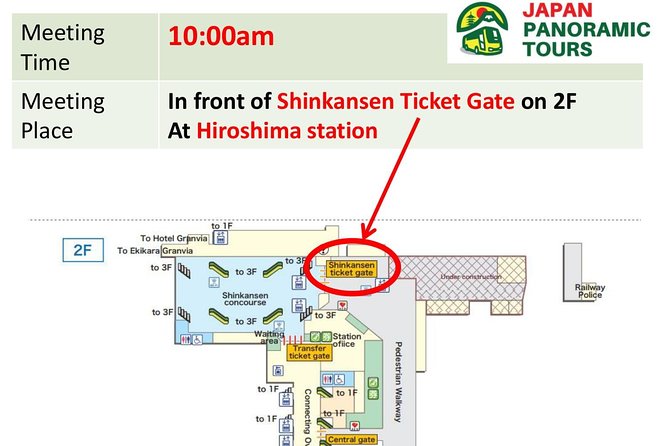
The tour meets at a fixed pickup spot in Hiroshima (near public transportation). Start time is 10:00 am, and it is an out-and-back day trip that returns you to the same meeting point.
The rhythm is straightforward: guided coach travel in between, short timed stops at the major Hiroshima sites, then a ferry hop to Miyajima, followed by shrine and temple time. Expect the order of stops can shift because of traffic, weather, and operations. That’s normal for this region, and it means you should build flexibility into your plans.
One practical tip: if you’re the type who likes to linger, keep your expectations realistic. The morning stops are meaningful, but they are time-boxed so the afternoon still has room for Miyajima’s iconic sights.
Hiroshima’s Peace Memorial sites: moving, structured, and often crowded
The morning is heavy in the best possible way. You are visiting places tied directly to August 6, 1945, so the tone is reflective and serious. The tour helps you keep your bearings because the sites connect visually and thematically, and the guide narration gives you context as you walk.
The Atomic Bomb Dome and Peace Memorial Park (short stops, big impact)
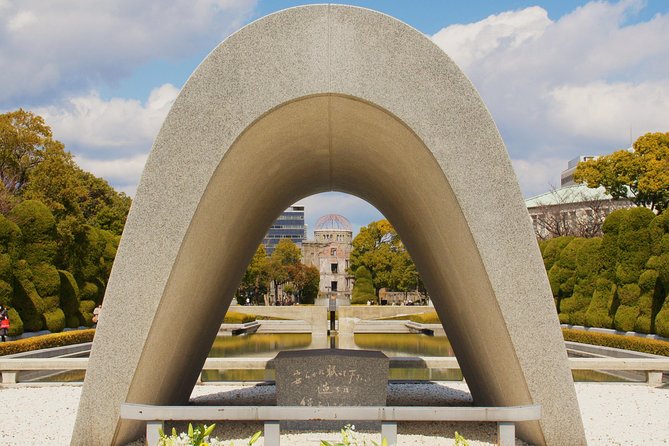
You begin with the Atomic Bomb Dome area. The time block is about 15 minutes, and that can feel short until you realize what you’re actually doing: getting your first close look at a preserved ruin near the epicenter, and then moving on.
Right after that comes Hiroshima Peace Memorial Park for about 35 minutes. This is where the park layout and monuments start to make the scale of remembrance clearer. Admission is free, so you can spend most of your minutes watching where crowds flow and where signage points.
A note on crowd dynamics: the Peace Memorial area can get packed, and sometimes the walkways feel like a controlled funnel. If you hate feeling squeezed, go slow, keep your group together, and give yourself permission to step aside when you need to regroup. You are there to absorb, not to sprint.
Hiroshima Peace Memorial Museum (the most time you get, and that’s a good thing)
The museum stop runs about 1 hour, with admission included. This is the centerpiece for many visitors because it moves beyond landmarks into personal stories, photographs, and artifacts. Reviews also underline that the overall museum visit is respected and managed well, which matters in a place like this.
Here’s how to make that hour work for you:
- Pick a few exhibit threads you want to focus on instead of trying to see everything.
- Let the guide’s explanations set the context so the visuals land faster.
- If the crowd thickens, treat it like a forced pace. Read what you can, then move on.
A quick castle moment: a 1589 keep with a peaceful-era twist
Your route includes a castle site built in 1589, where you can view the main building while the smaller defensive buildings are no longer part of the scene. The idea here is simple: this is a period when peace had arrived, so defense-focused structures were less emphasized than in more chaotic eras.
Don’t expect a long cultural detour. This stop exists to give you a different slice of Hiroshima history before the day shifts fully into 1945 remembrance.
Ferry to Miyajima: a mini reset before the UNESCO sights
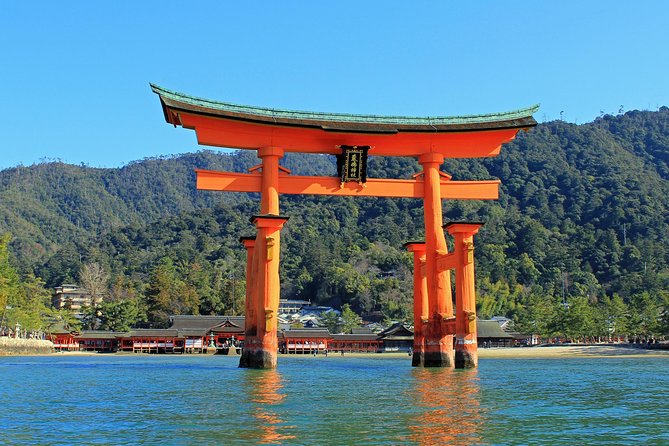
After Hiroshima, you take the round-trip ferry to Miyajima. The ferry segment on this tour is about 20 minutes each way, and that short water crossing does something you’ll feel right away: it resets your pace and your mood.
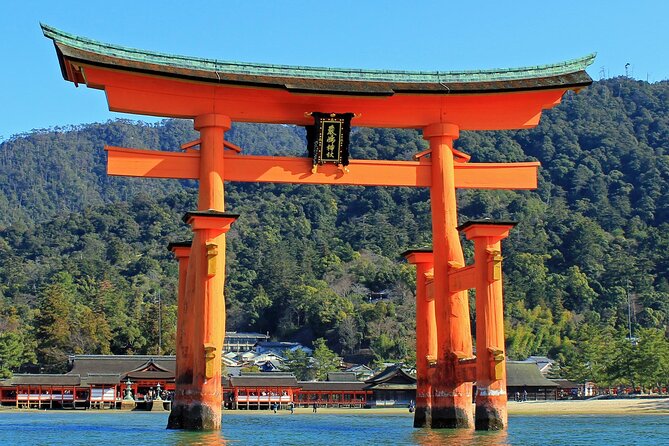
On the way to the island, you’ll start noticing why people call this place iconic. The later torii shrine view depends on timing and positioning, and having the ferry included means you don’t have to solve transport on the fly.
Miyajima Island time is roughly 50 minutes, which is enough to get a first taste and still make it to the shrine area with time for photos and viewpoints.
Itsukushima Shrine and the sea-facing torii effect
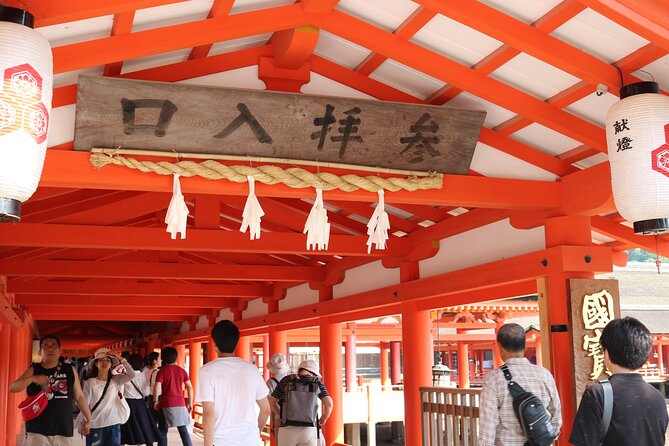
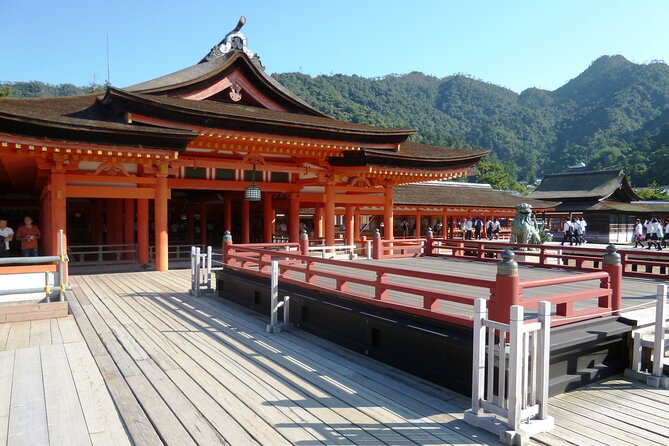
The highlight for most people is Itsukushima Shrine. You get about 50 minutes here, and admission is included.
A few facts that help your visit click:
- The shrine was built in 593, though much of what you see today is tied to later rebuilding (notably in 1168).
- The shrine complex sits on the sea, because ancient beliefs treated Miyajima as connected to a goddess.
- The famous torii idea is all about that sea setting—so even if you’re not standing exactly where every photo was taken, the overall atmosphere is the point.
This is where comfortable shoes matter. The shrine area includes walking on paths and across viewpoints. If you’re thinking of squeezing in shopping, you’ll want to keep movement efficient.
Also, keep an eye on timing and crowd flow. The site is popular, and even with a guided plan, you can get periods where you’re standing still while others move. That is normal here. Treat it like part of the experience, not a failure of the tour.
Daishoin Temple: photogenic details and the colorful Jizo guardians
Next up is Daishoin Temple on Miyajima for about 30 minutes. Admission is free.
This stop is a great contrast to the sea shrine. It’s more about atmosphere: temple corners, lanterns, and the famous Jizo guardian statues in rainbow-colored costumes. There are also Buddha statues and plenty of small visual moments that reward slow looking.
One review detail I’m glad exists: the temple and shrine areas are exactly the kind of places where you’ll see those quick, playful photo opportunities that don’t feel cheesy. If you like taking pictures but hate turning it into a whole production, this is a nice balance.
And yes, deer show up on Miyajima. They are often described as cute, but keep your belongings close and don’t assume they’re timid. If you’ve ever met a confident animal on vacation, you know the drill: stay calm and keep moving.
Lunch on Miyajima: vegetarian okonomiyaki if you choose it
If you select lunch, you’ll get okonomiyaki on Miyajima Island. Hiroshima-style okonomiyaki is described as a regional variation of the classic savory pancake, and it is included as part of the lunch option.
The vegetarian lunch option is specifically noted as no pork, no seafood, yes eggs, yes gluten. If you have a severe allergy, the tour notes there is not an allergy-free lunch, and the safest move is to select without lunch and bring your own food.
A smart alternative idea from real-world experience on this island: if you want more of the street-food vibe, you can skip the included lunch and look for okonomiyaki in the market area instead. This is not a guarantee on your tour day, but it’s a practical way to make your afternoon feel more local if timing works for you.
Guides, audio, and pacing: why the 8 hours feel manageable
The most consistent praise centers on guides. Names that show up repeatedly include Rino, Momiji, Marin, and Mo. The common thread in feedback is that guides keep things organized while staying warm and human, and they bring humor and energy without turning the day into a comedy show.
That matters because this itinerary has two very different emotional gears: the solemn morning in Hiroshima and the scenic, peaceful reset on Miyajima. A good guide helps you switch tones without whiplash.
You also get an audio guide on the bus in multiple languages, plus free Wi‑Fi. Even if you mostly listen to the live narration, that audio layer is useful when you want to re-check context during coach travel.
Finally, the group is capped at 45. That’s big enough to keep the tour efficient, but small enough that your guide can keep track of people at key junctions.
Should you book this Peaceful Hiroshima & Miyajima bus tour?
Book it if:
- You want Hiroshima’s key Peace Memorial stops plus Miyajima’s top UNESCO sights in one day.
- You value planning help: included admissions and ferry ride cut down the usual trip-friction.
- You like a guided structure, especially for a place as meaningful as Hiroshima.
Skip or reconsider if:
- Crowds make you anxious. The Peace Memorial areas can feel packed and your movement may be funnel-like at times.
- You hate long days. This is an 8-hour experience with walking and transitions, even though it’s carefully paced.
- You want deep, unhurried time at just one site. This tour is built for breadth, not for spending a whole day in one museum.
If you fall into the first group, this is one of those rare day trips where the schedule actually supports the purpose. You get the facts, you get the places, and you still get to see the iconic torii setting that makes Miyajima so special.
FAQ
What’s included in the tour price?
The price includes an English-speaking local guide, multilingual audio guidance on the bus, an air-conditioned vehicle, museum and shrine admission tickets, Miyajima entry, and a round-trip ferry ride. A lunch option is also available if you choose it.
How long is the tour and how much time do I get at each stop?
The tour runs about 8 hours. You’ll spend around 15 minutes at the Atomic Bomb Dome, 35 minutes at Hiroshima Peace Memorial Park, about 1 hour at the Peace Memorial Museum, roughly 20 minutes for the ferry connection, 50 minutes on Miyajima, about 50 minutes at Itsukushima Shrine, and around 30 minutes at Daishoin Temple.
Do you provide an audio guide, and what languages are available?
Yes. Audio guidance is available inside the bus in English, French, Spanish, Italian, German, Portuguese, and Ukrainian.
Is the ferry to Miyajima included?
Yes. The tour includes round-trip ferry tickets to get to Miyajima Island and return to Hiroshima.
What does the lunch option include, and is it vegetarian?
If you select lunch, it includes okonomiyaki on Miyajima Island. The vegetarian lunch is listed as no pork and no seafood, with eggs and gluten included. If you have severe allergies, the tour notes there is no allergy-free lunch, so you may need to choose without lunch and bring your own food.
Are there any date-specific changes or train-ticket timing tips?
The Hiroshima Peace Memorial Museum is closed from February 16 to 21, 2026. During those dates, the tour visits the Hiroshima National Peace Memorial Hall for the Atomic Bomb Victims instead, and no refunds are issued for that change. If you plan to take the Shinkansen after the tour, you should purchase your ticket after the tour on the day, or book after 6:30 pm.