Kyoto rewards slow wandering. This tour rewards smart planning, with a one-day loop that hits the big spiritual and scenic stops without you juggling routes. I also like that you can ride in comfort while your guide keeps the day moving, with guides such as Sakura and Mai showing up in the best reviews for clear English and lively commentary.
The two best parts for me: admission tickets are included for the key temples (Kiyomizu-dera, Sanjusangendo, Tenryu-ji, Kinkaku-ji), and you get multilingual audio guidance plus an English-speaking guide, so language barriers don’t steal your attention. It’s the kind of setup that helps you understand what you’re looking at fast.
One real consideration: it is a busy, high-walk day. If you want long, uncrowded museum-style pacing, some stops can feel short and crowded, and you may need to accept that this is built for seeing a lot.
In This Review
- Key highlights you will feel immediately
- A one-day Kyoto loop that saves your planning brain
- Price and value: what $129.25 actually buys you
- Where you start, where you end, and how the day is paced
- Kiyomizu-dera: the hillside climb and the view that makes it famous
- Sanjusangendo: 40 minutes with the 1,001 Kannon focus
- Arashiyama lunch break: a reset in the middle of temple math
- Bamboo forest trail to Tenryu-ji: quick camera time, real atmosphere
- Tenryu-ji: the garden that’s meant for quiet looking
- Kinkaku-ji: Golden Pavilion with a classic Kyoto contrast
- Nijo Castle passing glance, then Fushimi Inari’s torii maze
- Comfort, crowd strategy, and the pacing trade-off
- Who this tour suits best (and who should skip it)
- Should you book the Perfect Kyoto 1-Day Bus Tour?
- FAQ
- How long is the Perfect Kyoto 1-Day Bus Tour?
- What time does the tour start, and where do I meet it?
- Are the temple admission tickets included?
- Is lunch included in the price?
- What languages are available for audio guidance?
- How much walking is involved?
- Is the bus comfortable and equipped for the journey?
Key highlights you will feel immediately
- Air-conditioned coach + WiFi so the long gaps between Kyoto’s sights don’t feel painful
- UNESCO-heavy route built around Kiyomizu-dera, Tenryu-ji, and Kinkaku-ji
- Fushimi Inari’s torii gates with time to actually walk into the shrine area
- Guide-led timing that helps you get through very popular places without extra guesswork
- Optional buffet lunch in Arashiyama with a note for vegetarian diners
- Group size up to 42 which usually keeps the pace manageable for a 1-day tour
A one-day Kyoto loop that saves your planning brain
Kyoto is spread out. That’s the whole trick. If you try to DIY a day like this, you spend mental energy on trains, bus schedules, transfers, and queue strategy—then you still end up standing in line with everyone else.
This tour is designed to remove that headache. You start early (7:50 am), spend the day bouncing between historic districts, and return to the same meeting point at the end. You’re not trying to connect five separate day plans. You’re following a rhythm, and the guide helps keep it understandable.
And yes, it’s a group tour, so you’re sharing space and timing with other people. But the best reviews emphasize how smoothly the day flows and how guides stay engaging on the ride between stops. That matters because the day is long enough that boredom is real if no one is guiding the conversation.
If you’re the type who wants the big names—then wants enough context to remember what you saw—this is a good fit.
Price and value: what $129.25 actually buys you
At $129.25 per person, the price can look simple on the surface. The value is in what’s bundled.
You’re getting:
- An air-conditioned vehicle
- Multilingual audio guidance on board
- A professional English-speaking guide
- WiFi on board
- Temple admissions included for Kiyomizu-dera, Sanjusangendo, Tenryu-ji, and Kinkaku-ji
That admission list is a big deal in Kyoto, because the famous sites aren’t free (and time spent booking tickets yourself is time you don’t have). Fushimi Inari is listed as admission-free for this tour, which helps keep the cost focused on the paid sites.
Lunch is only included if you pick the lunch option ahead of time. If you add lunch on the day, the tour notes an extra fee (3,000 yen), so your best value move is choosing it in advance if you want it.
Bottom line: if you were going to visit most of these highlights anyway, this pricing structure is built to keep you from paying twice—once in money, and once in effort.
Where you start, where you end, and how the day is paced
The meeting point is Tully’s Coffee at Kyoto Avanti (1st floor), near public transport. You meet at 7:50 am, and the day ends back at the same spot.
The tour also warns you about one key reality: the order of stops can change based on traffic, weather, and operation. That’s normal in Kyoto. It’s also why you should plan on being flexible when you book your other plans for that day.
You’ll also want to keep the walking in mind. The tour states moderate physical fitness is required and that you’ll encounter stairs and hills at each place. This isn’t flat-city sightseeing. It’s temple stair-stepping and hillside footwork, especially around Kiyomizu-dera and Fushimi Inari.
If you’re traveling with older relatives or anyone who hates stairs, this is where you decide early whether the format is right.
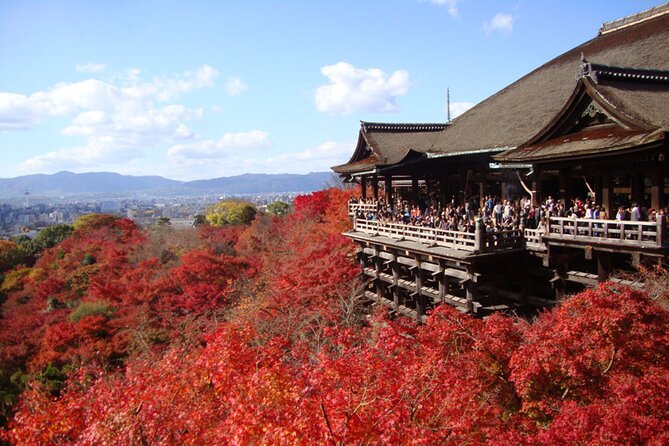
Kiyomizu-dera: the hillside climb and the view that makes it famous

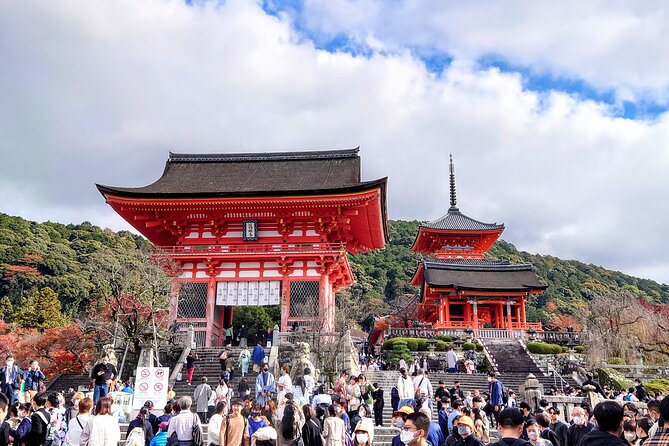
Kiyomizu-dera is one of those Kyoto stops where the setting matters as much as the buildings. It sits on the Higashiyama hill, so the experience is tied to the panoramic look over Kyoto. You’ll get about 1 hour here, and admission is included.
Expect steps. Expect crowd flow. And expect that you’ll spend part of the visit looking out as much as you look around. This is also one of the places where temple rules can affect comfort: one review notes that the flooring can be cold and that you have to take your shoes off. If you run cold easily, pack light layers.
Drawback to accept: the site is popular, so even with guided timing, you’re not getting a private moment in the middle. This is where the tour format helps most—group queues and guidance can reduce wasted time—but you still get Kyoto crowds.
Still, if you want the classic Kyoto silhouette and the feeling of being on a hillside temple complex, this stop delivers.
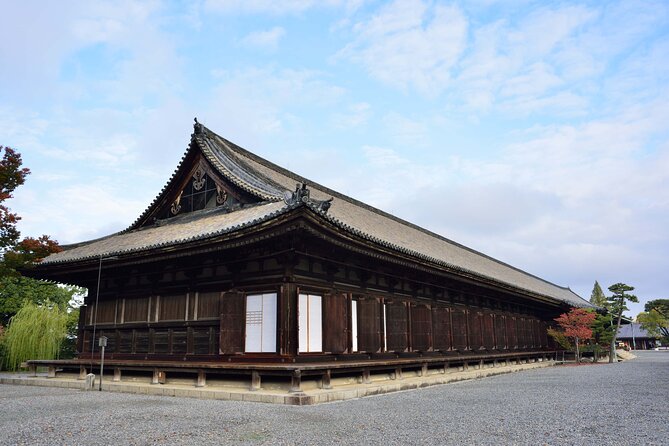
Sanjusangendo: 40 minutes with the 1,001 Kannon focus
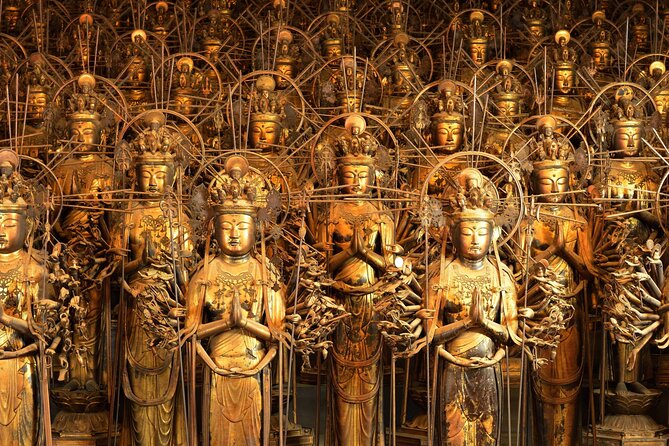
Next is Sanjusangendo Temple, with about 40 minutes on site and admission included. The headline here is the main hall statues: Senju Kannon, also described as 1,001 Kannon figures.
This is the kind of place where a guide really earns their keep. Without context, you can walk the perimeter and think, I saw statues. With context, you start noticing the layout and the sheer repetition that makes the hall feel overwhelming in the right way.
A practical tip: since your time is limited, don’t try to see everything at once. Pick a perspective, look for a while, and then let the rest become background. The power of this temple is in the atmosphere of the hall, not in rushing from corner to corner.
If you love Buddhist art and want one day to hit several major works, Sanjusangendo is a strong mid-morning anchor.
Arashiyama lunch break: a reset in the middle of temple math

After the morning temples, you get a lunch break in Arashiyama. The time window here is about 50 minutes.
Lunch depends on what you select:
- If you choose the lunch option, it’s a Japanese-style buffet with local foods.
- The tour notes that lunch is a buffet and the lunch is the same for vegetarians.
- If you add lunch on the day, you pay more, so planning ahead can matter for your budget.
One caution: the buffet experience is praised by some and criticized by others, including a report that the lunch food was cold and not warmed on warmers. If you have a sensitive stomach or you’re picky about food temperature, consider bringing a snack for peace of mind and treat the buffet as an option rather than a guarantee of hot, perfectly seasoned comfort.
Also, don’t underestimate the timing. This is not a long sit-down meal. It’s a reset so you can keep walking later.
Arashiyama is a good place to breathe for a moment, even if you don’t plan to wander far beyond lunch time.
Bamboo forest trail to Tenryu-ji: quick camera time, real atmosphere
Then comes the bamboo forest trail, which is timed at about 20 minutes. Bamboo being green year-round is part of why Kyoto’s bamboo scenes look good in different seasons.
This section is photogenic, and you should bring a camera even if you’re normally casual about it. The light and the height of the stalks create that classic Kyoto vertical rhythm.
But don’t expect solitude. Bamboo scenes attract everyone. This is one of those moments where your best photos come when you accept the flow of people and step into a spot for a few minutes instead of trying to beat the crowd line-by-line.
From there, you head to Tenryu-ji.
Tenryu-ji: the garden that’s meant for quiet looking
Tenryu-ji Temple is another UNESCO-listed stop, and you get about 30 minutes here with admission included.
The standout is the traditional Japanese garden. The tour highlights that the design has been unchanged for more than 700 years, and that you’ll enjoy flowers and plants that vary by season.
This is one of the few stops on the day where you can choose to slow down. Even in a group tour, you’ll benefit if you let the garden sit in your mind for a moment rather than sprinting to the next landmark.
Crowd level can affect this. If it feels tight, aim for one or two garden viewpoints and take your time there. Quiet attention is what turns the garden from pictures into memory.
Kinkaku-ji: Golden Pavilion with a classic Kyoto contrast
Kinkaku-ji (the Golden Pavilion) is timed at about 40 minutes, admission included. It’s built in the same era as Tenryu-ji and is also UNESCO-listed, and the iconic detail is the pavilion covered with pure gold leaves.
This is Kyoto as spectacle. The pavilion itself is stunning, but the contrast is what sticks: ornate gold against the greenery and the hard lines of the architecture.
Drawback? This is usually a busier stop in the afternoon. Even with good logistics, you may feel like you’re moving through a crowd corridor. That said, a well-run guide can help you stay calm and get the shots you came for.
If you want the best chance for photos, do not wait until you think you have the perfect angle. Take one or two from the first good spot you find, then refine your second set after you’ve seen how foot traffic is flowing.
Nijo Castle passing glance, then Fushimi Inari’s torii maze
On the return route, you’ll pass Nijo Castle. The tour frames it as an important historical place connected to the Tokugawa shogunate returning political power to the emperor. You’re not there for a long visit, but it adds context as the bus moves through the city.
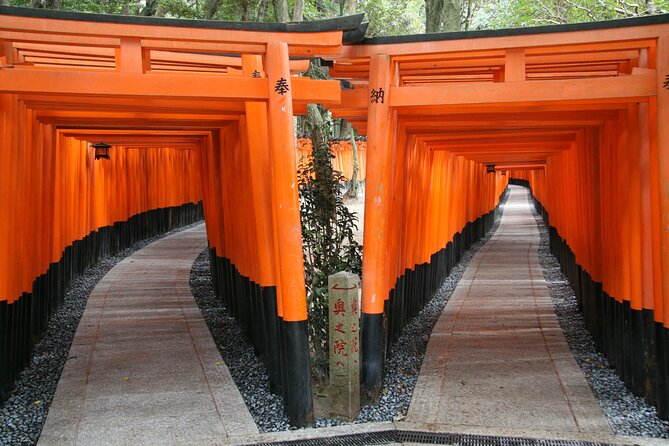
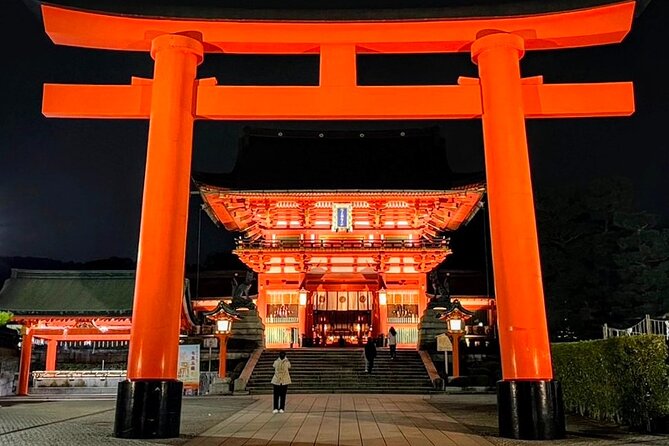
Then you finish with Fushimi Inari-taisha Shrine, and you get about 1 hour. This is the stop many people picture first: the shrine is famous for the thousand torii gates, and you can walk through them.
Practical reality: Fushimi Inari is not a short stroll on level ground. Torii gates mean stairs and climbs, and the tour notes walking up hills and dealing with stairs in each place. If you take Fushimi slowly—pause, look back, and enjoy the gate tunnel effect—you’ll feel like you got more than one “photo stop.”
Also, this is where some people feel the pace is too fast. A past review described the day as too quick and mentioned being forced to run back to the bus due to crowds. You can prevent that experience by controlling your pace: set a goal like, I’ll reach the next viewpoint I can see clearly, and I’ll be ready to move when the group is called.
Fushimi Inari is one of those places where accepting the crowd flow makes the magic work.
Comfort, crowd strategy, and the pacing trade-off
Let’s talk honestly about the main trade-off. This tour is built to fit a lot into a single day. That means each stop is shorter than if you were visiting on your own.
Some people love that. They feel the day is efficient and well organized. Others find it too fast, especially when a site is crowded and time feels tight.
Here’s how you make it work for you:
- Eat a solid breakfast before you start. The tour includes lunch only if selected, and you may not want to rely on snacks during the day.
- Bring small snacks and water if you like having control over your energy.
- Wear shoes for stairs. Kyoto temple days are foot days.
- Use the audio guidance actively. Even if you already know basics, it helps you connect details to what you’re seeing right then.
One review also points out a real advantage of guided group formats: you may be able to access sites through group booking lines, which can help you skip some regular queue time. You still won’t avoid crowds, but you can reduce dead time where nothing is happening.
If your dream Kyoto day is slow and reflective, consider mixing this tour with one or two independent afternoons later in your trip. If your dream is maximum highlights with minimal logistics work, this tour fits that goal neatly.
Who this tour suits best (and who should skip it)
I’d recommend this tour if:
- you have limited time in Kyoto and want to cover the most famous temple-and-shrine lineup
- you want a guide to explain what you’re seeing, not just point at it
- you like clear structure and don’t want to manage trains and transfers
- you appreciate audio support and multilingual guidance
I’d be cautious if:
- you cannot handle long walks, stairs, and hills (the tour explicitly says it includes lots of walking and hills)
- you get stressed by crowds and prefer empty spaces
- you are very particular about food temperature, since buffet lunch quality was criticized by at least one visitor
If you fit the first group, this is a strong one-day orientation to Kyoto’s major highlights.
Should you book the Perfect Kyoto 1-Day Bus Tour?
Book it if you want a guided route that hits Kiyomizu-dera, Sanjusangendo, Tenryu-ji, Kinkaku-ji, and Fushimi Inari in one day, with admission tickets included for several key sites and audio guidance to reduce language friction. It’s also a good choice if you’re the kind of traveler who’d rather spend your energy looking at temples than mapping bus stops.
Skip it if you want slow, uncrowded exploration or if stairs and hills are a deal breaker. Also, if lunch temperature is a big deal for you, plan around it by bringing snacks for backup.
For most people doing a first Kyoto visit with limited time, this tour is a practical, high-impact way to see the best-known Kyoto icons without turning your day into a logistics project.
FAQ
How long is the Perfect Kyoto 1-Day Bus Tour?
It runs about 8 to 9 hours (approx.).
What time does the tour start, and where do I meet it?
The tour starts at 7:50 am. You meet at Tully’s Coffee – Kyoto Avanti Japan, in Kyoto’s Minami Ward (1st floor). The tour ends back at the meeting point.
Are the temple admission tickets included?
Yes. Admission is included for Kiyomizu-dera Temple, Sanjusangendo Temple, Tenryu-ji Temple, and Kinkaku-ji Temple.
Is lunch included in the price?
Lunch is included only if you choose the lunch option. It’s a Japanese-style buffet with local foods. The tour notes the buffet lunch is the same for vegetarians.
What languages are available for audio guidance?
The audio guidance is available on the bus in English, Spanish, French, Italian, German, Portuguese, and Ukrainan.
How much walking is involved?
This tour includes lots of walking, including stairs and hills at each place. It recommends moderate physical fitness and states it is not recommended for travelers who cannot walk long distances.
Is the bus comfortable and equipped for the journey?
Yes. The tour includes an air-conditioned vehicle and WiFi on board.