
The Tiber feels calmer than Rome’s streets. This hop-on hop-off boat gives you a low-stress way to move between major river sights, with an onboard 7-language audio guide to help you connect the dots. I also like that you get a true rhythm to your day: boats run often and you can jump off, wander, and get back on when you’re ready.
The downside is that the service can feel more like a pleasant river break than a full sightseeing solution. The ride depends on daylight (it runs until 7:00 PM) and, if you’re expecting nonstop commentary or guaranteed views all the way down, you might be disappointed—some people found the river embankments limit what you can see.
In This Review
- Quick take: what matters most
- A stress-free way to move: the Tiber is your shortcut
- Ticket value: $24 is fair if you use it like locals
- Where you board and how you activate your ticket
- Castel Sant’Angelo meeting point (easy to find)
- Isola Tiberina meeting point (Trastevere-side access helps)
- The four stops you’ll actually use
- Isola Tiberina: the island stop with instant atmosphere
- Castel Sant’Angelo: when you want fortress views
- Ponte Sisto: a bridge stop for river-crossing convenience
- Piazza del Popolo: the northern anchor
- What the route feels like: about an hour, with sights you can’t get by bus
- Onboard reality check: decks, fumes, and the audio guide
- Audio guide access (no app required)
- Deck choice: upper air is usually better
- Stop-by-stop sightseeing ideas (and what to watch for)
- Isola Tiberina to St. Peter area: connect the city’s icons
- Castel Sant’Angelo: use the river for fortress-to-bridge photos
- Along the route: Palazzaccio and the Sacred Heart church
- Time management: how the 7:00 PM cutoff changes your plan
- Sustainability and why it feels different
- Who should book this, and who might regret it
- Should you book this Rome Tiber River hop-on hop-off boat ticket?
- FAQ
- How long is the boat tour?
- What time does the boat run, and how often do boats depart?
- Where do I exchange my voucher for the ticket?
- Do I get an audio guide, and do I need an app?
- Can I hop on and off for more than one day?
- Is the tour wheelchair accessible?
Quick take: what matters most
- Two days of freedom: Unlimited boarding for 2 consecutive days, not just a single afternoon ticket.
- Frequent departures: Boats leave about every 30 minutes from 4 central stops.
- Audio-first experience: You’ll use the audio guide rather than a live guide talking the whole time.
- River views, but not a full panorama: High embankments can restrict sightlines along sections of the route.
- Deck choice matters: Upper decks are more comfortable for many people, but seats can be limited.
- Time cutoff at 7:00 PM: Plan your hopping earlier so you actually get value from the ticket.
A stress-free way to move: the Tiber is your shortcut
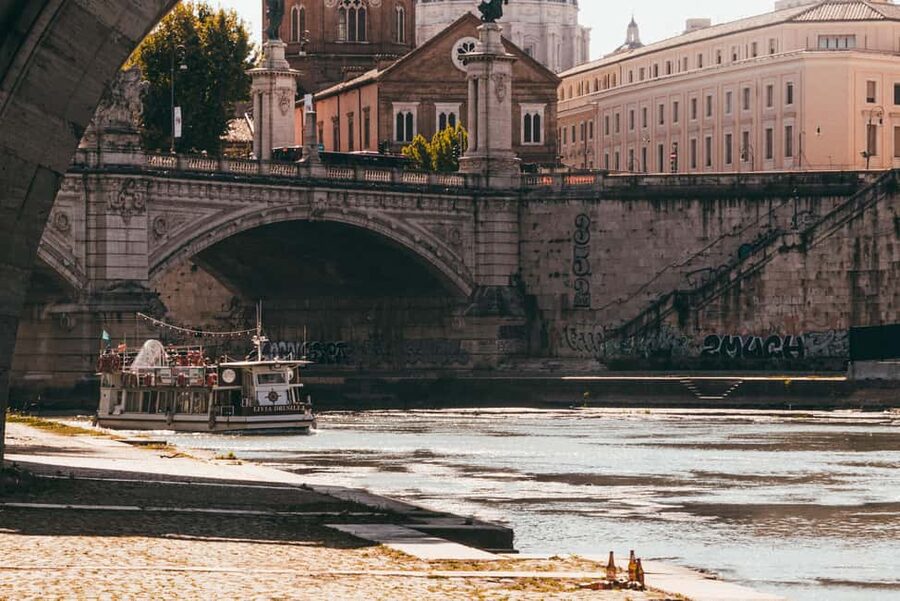
Rome is great, but traffic can be a mood-killer. This boat turns the Tiber into a simple travel lane so you’re not negotiating buses, taxis, and crosswalk chaos. You’re also moving in a way that feels different from walking: slower, steadier, and full of Rome’s big monuments sliding past the waterline.
What makes it especially practical is that it’s hop-on hop-off. You don’t have to commit to one long ride. You can do a quick loop, get off near the sights that actually pull you in, then return when you want a breather.
Ticket value: $24 is fair if you use it like locals
The price is $24 per person, and the key detail is that your ticket is good for two consecutive days of unlimited boarding. That matters because one short boat ride in the afternoon can feel too small for the cost—especially if you planned to use it as transportation all day.
To get your money’s worth, think of this as a river bus you pair with walking. Use the boat to cover the heavy distances between river clusters, then explore on foot from the docks. If you only do a stop or two, you might feel like you’re paying for a nice ride rather than a useful system.
Also, plan around the schedule. The service runs daily from 10:00 AM to 7:00 PM, and the regular departures are every 30 minutes. If you wait too long in the day, you can run out of time to hop, wander, and re-board.
Where you board and how you activate your ticket
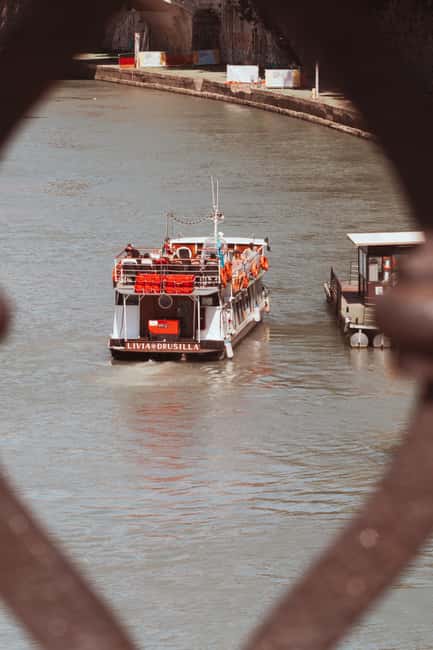
You’ll board at one of four central stops along the river, but there’s a specific rule about first use.
Your first boarding has to be at either:
- Isola Tiberina, or
- Castel Sant’Angelo
That’s also where you exchange your voucher for a valid ticket. If you’re starting your day somewhere else, make sure you route yourself back to one of those two docks for your first ride.
Castel Sant’Angelo meeting point (easy to find)
For the Castel Sant’Angelo dock, take the stairs down from Ponte Sant’Angelo on the riverbank across from the castle. Look for signs and staff, and if you need help, watch for uniforms in a white t-shirt or vest with Rome Boat on it.
Isola Tiberina meeting point (Trastevere-side access helps)
For Isola Tiberina (Lungotevere degli Anguillara), descend the stairs from Ponte Cestio or Ponte Garibaldi (Trastevere side). Either approach can work depending on where you are walking that morning.
The four stops you’ll actually use
This is a city of neighborhoods, and these docks are placed to connect you to river-adjacent landmarks.
Here are the four stops and what they’re best for:
Isola Tiberina: the island stop with instant atmosphere
Boarding and re-boarding at Isola Tiberina is convenient because it’s central and visually distinctive—a historic island in the heart of Rome. If you want to start your day with the feeling of Rome’s river core, this is a strong launch point.
It also works well if you want shorter back-and-forth rides. You can hop on, go toward the St. Peter area, then hop off without committing to a long day of boat time.
Castel Sant’Angelo: when you want fortress views
The Castel Sant’Angelo stop is the most obvious “big attraction” connection. It’s a great dock if you plan to spend time around the castle area, then use the boat as your return route.
Even if you don’t go inside, seeing the castle from the water helps you understand how the river shapes the city.
Ponte Sisto: a bridge stop for river-crossing convenience
Ponte Sisto is one of the central bridge points. If you’re trying to reposition yourself without a long detour through streets, this stop can be useful. It’s also helpful if your day mixes viewpoints on both sides of the river.
From the boat, bridges become more than scenery—they become navigational landmarks.
Piazza del Popolo: the northern anchor
The Piazza del Popolo dock (Lungotevere in Augusta) is a smart choice if you’re pairing the river with the northern historic core. It can save time when you’re trying to get between the classic sights and the river without forcing yourself through traffic-heavy routes.
If you’re the type who plans a loose loop around Rome, this stop makes it easier to keep the loop moving.
What the route feels like: about an hour, with sights you can’t get by bus
The main round trip is about one hour (described as running between the Isola Tiberina area and the St. Peter’s side). Boats depart every 30 minutes, so you’re not locked into a single departure time.
As you ride, you’ll pass iconic Roman set pieces from the water. You should expect to see:
- Isola Tiberina
- Castel Sant’Angelo
- St. Peter’s Basilica visible from the river
- Palazzo della Giustizia (Palazzaccio)
- A Neo-Gothic Sacred Heart Church
- Rome’s historic bridges for photo-friendly angles
One practical note: the Tiber embankments are high, and that can cut down what you can see at times. If you want a river tour where every second is a postcard view, manage your expectations. Think of it as transportation with bonus views, not a constant sightseeing show.
Onboard reality check: decks, fumes, and the audio guide
This is not a talking-narrator tour in the way some bus tours are. It’s an audio guide experience, with multiple languages. Many people appreciate that because you can listen at your own pace, but it does mean there’s no live guide steering your attention.
Audio guide access (no app required)
You’ll get an audioguide in Italian, English, German, French, Spanish, Russian, and Chinese. The tour instructions say to open a link on your smartphone:
https://audioguide.runder.cloud/battellisultevere
No app download is required—just click the link and follow what you see.
That’s useful on a boat because your attention shifts fast. You can replay audio sections as you re-board or pass key spots.
Deck choice: upper air is usually better
The boat has access to both the first and second deck areas. One common concern is comfort. Some people reported that the lower deck has noticeable fumes, so they wanted to sit upstairs in the open air.
If you’re sensitive to exhaust smells, plan to spend most of your time on the upper deck. Just remember: seating upstairs can be limited, so going at a less busy time (or arriving a few minutes early) can help.
Stop-by-stop sightseeing ideas (and what to watch for)
Here’s how I’d use each stop to turn “boat time” into “sight time.”
Isola Tiberina to St. Peter area: connect the city’s icons
If you ride from the Isola Tiberina side toward the St. Peter’s Basilica viewpoint, you’re basically using the boat to frame the Vatican area from a different angle. The river gives you a calmer look over Rome, and St. Peter’s Basilica is visible from the water.
Pair this with short walking breaks after you hop off. The boat doesn’t replace exploring, but it helps you get the broad picture quickly—especially if you’re trying to avoid wasting energy on transit.
Castel Sant’Angelo: use the river for fortress-to-bridge photos
From Castel Sant’Angelo, you’ll get the kind of angles you just don’t get from the street. Even if your main plan is the castle area, the boat helps you see how it sits beside the river bend and how the bridges frame the scene.
Keep your camera ready as you pass historic bridge lines. That’s where the ride can feel most rewarding.
Along the route: Palazzaccio and the Sacred Heart church
Two landmarks called out in the route description are:
- The Palace of Justice (Palazzaccio)
- A Neo-Gothic Sacred Heart Church
If you hear the audio cue for these spots, don’t treat it like background. Sit back for a moment and look for them through openings along the embankments. You might not get an unobstructed view the whole time, but you’ll catch enough to make the audio feel worth it.
Time management: how the 7:00 PM cutoff changes your plan
The service ends at 7:00 PM, and that’s a big deal. Some people found that the boat wasn’t useful enough as transport when they arrived late in the afternoon.
So here’s the simple strategy I’d use: do at least one substantial hop-and-walk loop before early evening. For example, hop in the morning or after lunch, do your main sights, then use the last runs for photos or a relaxed return.
Because boats depart about every 30 minutes, you’re not trapped by one exact departure—but you are trapped by the closing time.
Sustainability and why it feels different
The boat is described as a more sustainable option because you’re traveling by water and reducing reliance on traffic-heavy transport. Even if you don’t care about CO₂ numbers, I think you’ll feel the difference in stress level.
You’re essentially trading street friction for steady movement. And for many people, that’s where the value sits: not just in seeing Rome, but in giving your feet a break while you still make progress.
Who should book this, and who might regret it
This tour is a good fit if:
- You like a relaxed pace and want an easy way to move between river clusters.
- You want two days of flexibility without re-buying tickets.
- You’re comfortable using a smartphone audio guide rather than expecting a live narrator.
- You want to reduce transit time and energy while keeping walking for the fun parts.
You might skip it if:
- You want a full “guided sightseeing show” with constant talking.
- You’re very sensitive to onboard air quality and plan to stay downstairs.
- You need nonstop, unobstructed views the entire time.
- Your plan is mostly one short ride late in the day, since 7:00 PM limits how much time you’ll have to make the ticket pay off.
Should you book this Rome Tiber River hop-on hop-off boat ticket?
If you’ll use it as a river-based transportation tool—with at least a morning or early afternoon ride across the main sights—I think it’s a solid value for $24. The best version of this experience is when you treat the boat like a flexible connector and let walking do the heavy sightseeing work.
If your goal is purely to maximize landmark sighting in a short window, plan carefully. The limited viewing angles from embankments, the audio-first format, and the 7:00 PM cutoff can make it feel less “tour” and more “nice ride.”
FAQ
How long is the boat tour?
The full round trip is about one hour.
What time does the boat run, and how often do boats depart?
Boats operate daily from 10:00 AM to 7:00 PM, with departures every 30 minutes from the central stops.
Where do I exchange my voucher for the ticket?
Your first boarding must be at either Isola Tiberina or Castel Sant’Angelo, where you exchange your voucher for a valid ticket.
Do I get an audio guide, and do I need an app?
Yes. A 7-language audio guide is included. You access it through a smartphone link in the instructions, and no app download is required.
Can I hop on and off for more than one day?
Yes. Your ticket provides unlimited hop-on hop-off access for two consecutive days of service.
Is the tour wheelchair accessible?
No. The activity is listed as not suitable for wheelchair users.
If you tell me your travel dates and where you’re staying (rough area), I can suggest a simple 1- or 2-day “dock-to-dock” plan that fits the boat hours.