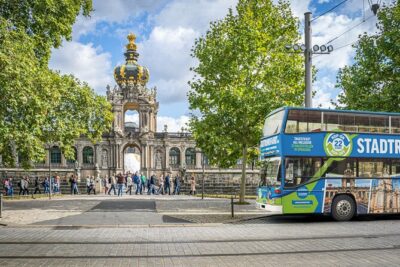
Tallinn by bus sounds simple. In practice, it’s a smart way to get your bearings fast and still see UNESCO-listed Old Town streets and towers without timing every turn yourself. I like that the tour uses two routes, so you can choose between the medieval core and the seaside neighborhoods, and the narration helps you understand what you’re looking at.
My favorite part is the mix of convenience and context: 24-hour hop-on hop-off freedom plus onboard WiFi and an audio guide with headphones in 10 languages. One drawback to plan around: the bus duration is short (55 minutes on the Red Line, 80 minutes on the Green Line), so you’ll still want to hop off for real walking time at the sights you care about most.
In This Review
- Key Things to Know Before You Ride
- Red Line: Old Town streets, towers, and the 14th–15th century feel
- Mere Pst. 5 to the Old Town edge
- Kadriorg Park and Swan Lake on the way
- Song Festival Grounds: culture in plain sight
- City Harbour terminals: Tallinn as a working port
- Swissotel / Radisson BLU areas: where modern and old meet
- Old Town / Toompea Castle: the headline sight
- Towers Square / Railway Station
- Fat Margareth Tower and the end-of-loop vantage
- Red Line note for later departures: Stops 10 and 11 after 1pm
- Green Line: Kadriorg, Pirita, botanic calm, and seaside monuments
- Seaplane Harbour and Patarei Prison area
- Fat Margareth Tower again, for a second-chance view
- Rotermann Quarter: the modern-city contrast
- Kadriorg Park and Swan Lake: park time with payoff
- Song Festival Grounds and Beachwalk
- Maarjamae Castle and Pirita Convent: big landmarks out of the center
- Botanic Garden and TV Tower: calm plus a city perspective
- Pirita (to town) and the Russalka Monument
- Churches and harbor terminals: the practical finish
- Hotel Viru and Cold War Tallinn: a landmark story you can actually spot
- Making the most of 1 day: an easy plan using both lines
- If you’re in mid-season: use Red early and Green midday
- If you’re in late season: fewer departures, more planning
- Off-season reality check: not always hop-on hop-off
- Quick practical tips for your comfort
- Price and value at $37: what you’re paying for
- Included comfort touches you’ll notice fast
- Who this Tallinn bus tour fits best (and who should skip it)
- Should you book this Tallinn hop-on hop-off bus?
- FAQ
- How long is the hop-on hop-off tour in Tallinn?
- Is it a 24-hour hop-on hop-off ticket?
- Where do I board the bus?
- What languages are available on the audio guide?
- Can I use a mobile voucher or do I need a printed one?
- Are attraction tickets, food, and drinks included?
- Are pets or smoking allowed on the bus?
Key Things to Know Before You Ride

- Two routes (Red and Green) let you split your day between Old Town and the Pirita/Kadriorg side of the city
- 24-hour hop-on hop-off access means you can pace yourself instead of doing everything in one pass
- Hotel Viru and Cold War stories are part of the sightseeing vibe, not just random bus stops
- Multiple harbor terminals and landmarks show Tallinn as a working maritime city, not just a postcard
- Audio guide in 10 languages with headphones makes it easy even if your group has mixed language skills
- Vouchers can be mobile or printed, so you don’t have to worry if your phone battery is low
Red Line: Old Town streets, towers, and the 14th–15th century feel
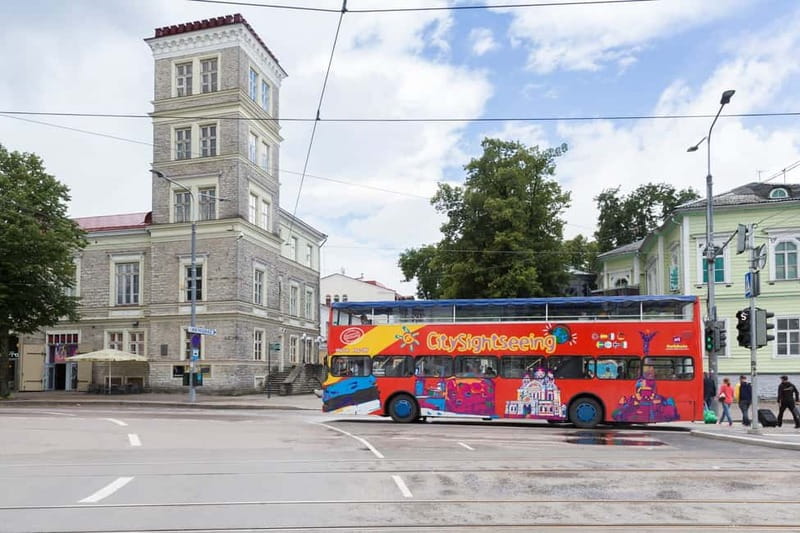
The Red Line is the one that makes Tallinn click. It’s built for the Historic Centre and Old Town, where you’ll see the medieval layout and the kind of architecture that dates from the 14th and 15th centuries. Even if you only hop off for an hour, the bus gives you the big picture, then hands you the streets to explore on foot.
You start at Mere Pst. 5 (Stop 1), but the best part is you don’t have to race to one exact place. You can join at any stop along the Red Line and still build a route that fits your day. The tour itself runs about 55 minutes per loop, which is short enough to feel flexible, but long enough to notice how the city shifts from center to harbor.
A key mindset: use the first loop to spot photo angles and “walkable chunks.” Once you’ve seen where the Old Town concentrates, you’ll know which stops are worth leaving the bus for.
Mere Pst. 5 to the Old Town edge
Early on, you get a sense of where the center starts to tighten. The route goes through areas tied to major sights and landmarks, then moves toward the Old Town approach. This is where the narration helps. Tallinn’s identity is shaped by influences from Germany, Italy, Russia, and Scandinavia, and you can feel those shifts in details like building styles and street layout.
As the bus approaches the Old Town, you’ll also be reminded that there’s a “new town” area right at the edge: Vabaduse Valjak (Freedom Square). It’s not listed as a stop name on the route sheet you have, but the bus timing and direction make it easy to understand why people use the square as a boundary marker between old and new.
Kadriorg Park and Swan Lake on the way
One of the Red Line stops is Kadriorg Park / Swan Lake. This is a good mental reset if you’ve been moving through dense medieval lanes. You’ll likely see open space and calmer views that contrast with the Old Town’s tight streets.
This stop is also handy if you want variety without committing to a full extra trip. If you’re doing only one route, it still gives you a break from Old Town stone.
Song Festival Grounds: culture in plain sight
The Song Festival Grounds come next on the Red Line. Tallinn’s calendar is packed with festivals—music, film, art, theater, culture, and food—and the Song Festival vibe is part of that rhythm. Even if you don’t catch an event, the area tells you what the city values and how public gatherings shape Tallinn’s identity.
When you hop off here, consider pairing it with a quick stroll if the weather cooperates. The bus won’t replace walking, but it will point you toward where the public spaces are.
City Harbour terminals: Tallinn as a working port
One of the most practical things this route does well is it follows the city’s waterfront reality. You’ll see stops at places like City Harbour D-Terminal and City Harbour A-Terminal, plus the City Harbour Cruise Ship Terminal.
If your trip includes a cruise day, the harbor stops matter even more, since you’ll be able to orient yourself quickly around ship traffic and maritime streets. It’s also a visual reminder that Tallinn’s history is tied to the sea.
Swissotel / Radisson BLU areas: where modern and old meet
You’ll also pass the Swissotel / Radisson BLU area. These stops are useful for two reasons. First, they’re easy reference points for meeting up later. Second, they help you understand how quickly Tallinn shifts from older blocks to contemporary city infrastructure.
Old Town / Toompea Castle: the headline sight
A major Red Line stop is Old Town / Toompea Castle. This is where the UNESCO core feels most concentrated. Toompea is one of the big “why Tallinn looks the way it does” anchors, so even a short hop-off time here pays off.
Plan for stairs and uneven ground. You’re in Old Town terrain, and the bus can’t fix cobblestones. Still, you can walk just far enough to see viewpoints and then return.
Towers Square / Railway Station
Next up: Towers Square / Railway Station. This is a useful bridge stop. From here, you can connect your sightseeing to practical plans—like heading onward from Tallinn after your day—without losing track of where you were on the city map.
The narration on the bus helps you avoid the common mistake of treating this area like a “boring transit zone.” In a city like Tallinn, transport hubs are often near key sight clusters.
Fat Margareth Tower and the end-of-loop vantage
A final Red Line highlight is Fat Margareth Tower. It’s the kind of stop where you’ll either want to get photos from the street or hop off for a closer look if you’re spending time in the Old Town area.
If you only have one Red Line loop available that day, I’d still prioritize leaving the bus near Old Town / Toompea Castle and then again near Fat Margareth Tower. Those two points give you the strongest sense of the medieval skyline.
Red Line note for later departures: Stops 10 and 11 after 1pm
You’ll also see references to stops 10 and 11 (the maritime prison/museum area and a tower stop segment) only being used on departures after 1pm. If you’re aiming for those specific sights, don’t assume every loop includes them. Check your departure time and plan your hop-off around it.
Green Line: Kadriorg, Pirita, botanic calm, and seaside monuments
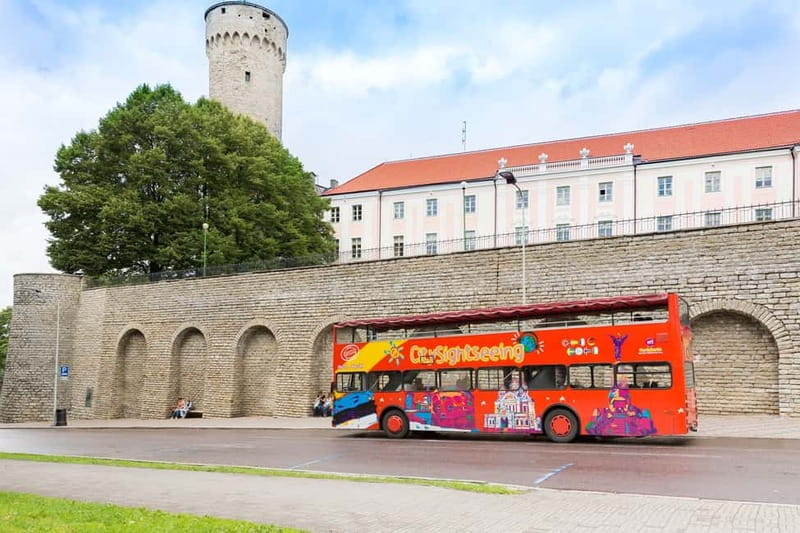
The Green Line is the “see more of Tallinn beyond the medieval center” option. It runs about 80 minutes per loop, which feels longer than the Red Line but still not exhausting. This route is great for breaking the day into zones: parks, gardens, coastal views, and then back toward the harbor.
Just like the Red Line, you can board at Stop 1 (Mere Pst. 5), but you can also join at other stops along the Green Line. The Green Line starts at the same general meeting area, but quickly shifts the scenery.
Seaplane Harbour and Patarei Prison area
Early on the Green Line you’ll hit Seaplane Harbour / Patarei Prison. This is one of those places where Tallinn’s sea connection becomes part of the story. Even if you don’t buy tickets for anything inside, the location itself gives context for how Tallinn’s ports and facilities shaped modern history.
If your schedule is tight, keep your expectations realistic here. A bus stop can show you where to go; it can’t replace the time needed for indoor visits.
Fat Margareth Tower again, for a second-chance view
You’ll also see Fat Margareth Tower on the Green Line route. That overlap is handy. It means you don’t lose your chance at a strong medieval landmark even if you start your day with the wrong line.
Rotermann Quarter: the modern-city contrast
Next: Rotermann Quarter. This is a “modern Tallinn” contrast point. It’s useful if your Old Town walking time needs a recharge. Instead of nonstop stone streets, you get a different vibe and a better chance to rest your feet without giving up on city views.
Kadriorg Park and Swan Lake: park time with payoff
Like the Red Line, you’ll pass Kadriorg Park / Swan Lake here too. On the Green Line, it often works as a mid-day anchor. If you’re trying to avoid crowds, this is a smart place to hop off and slow down for a bit.
Song Festival Grounds and Beachwalk
Then you reach Song Festival Grounds / Beachwalk. This is where Tallinn’s cultural rhythm meets the coast. If you like seeing how cities use their waterfront, this stop helps you spot the relationship between public events and open-air spaces.
A practical tip: if it’s sunny, prioritize this section. Coastal views and broad walking space make good use of time that might otherwise be spent waiting for the next loop.
Maarjamae Castle and Pirita Convent: big landmarks out of the center
You’ll see Maarjamae Castle and Pirita Convent. These stops are valuable because they pull you away from the tight Old Town core and show how Tallinn spreads outward. In a day trip, that matters. Otherwise, the city can feel like only one neighborhood.
If you’re hopping off at either of these, give yourself some walking time. The bus makes them easy to reach, but the payoff comes from being there, looking around, and taking in the setting.
Botanic Garden and TV Tower: calm plus a city perspective
Two more Green Line anchors are Botanic Garden and TV Tower. The Botanic Garden is the “slow down” stop. It’s ideal when your legs start asking questions.
The TV Tower stop is more about orientation and views. Even if you don’t head inside anything, the area gives you a sense of Tallinn’s scale from outside the medieval center.
Pirita (to town) and the Russalka Monument
You’ll also get Pirita (to town), then Russalka Monument / Beachwalk. Russalka is one of the stops that makes the sea feel personal. If you only hop off for one “coast feeling” moment on the Green Line, this is a strong candidate.
The Beachwalk pairing makes it practical: you can choose a quick look from the stop and still have a small walk without committing to a long trek.
Churches and harbor terminals: the practical finish
Finally, the Green Line includes St. Simeon’s and St. Anne’s Church and multiple harbor stops like City Harbour D-Terminal, City Harbour A-Terminal, and City Harbour Cruise Ship Terminal.
These last stops help you end your day with clear orientation. If you’re catching a departure later, you’ll have a better sense of how to move from sightseeing back to getting around.
Hotel Viru and Cold War Tallinn: a landmark story you can actually spot
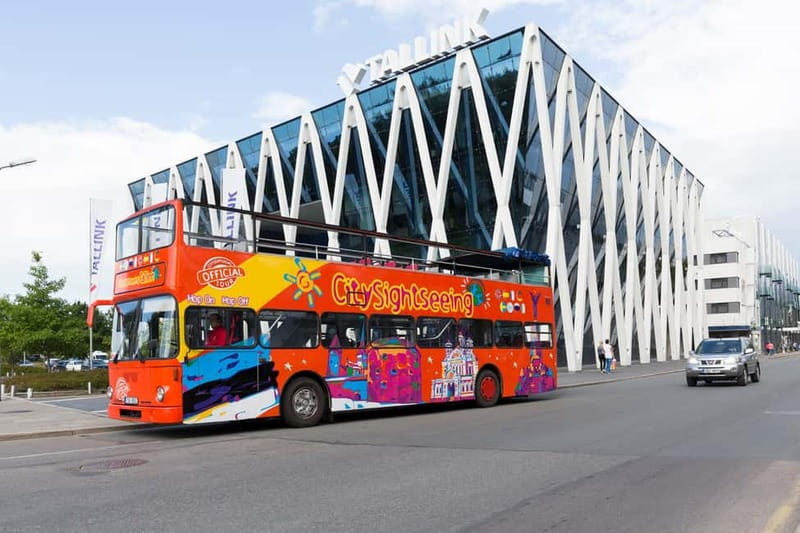
The tour’s sightseeing flavor includes Hotel Viru, described as a giant matchbox and a former tourist flagship tied to Cold War intrigue. The story goes that during that era, rooms were tapped and monitored by the KGB.
Even if you don’t stop directly at the hotel, knowing that context changes how you read the city. You start noticing where power sat, where visitors gathered, and how architecture can carry political history. That’s the kind of background that makes a bus tour more than a moving photo app.
If you like your history with a sense of place, this is part of the value you’re buying. The audio guide in 10 languages is the tool that turns “a building” into “a chapter.”
Making the most of 1 day: an easy plan using both lines
This tour is built for flexible pacing. You buy into a 24-hour hop-on hop-off pass, so you can do “morning culture, afternoon parks” or the reverse. Your loops are time-bound (55 or 80 minutes), but your day isn’t. Hop off when something clicks, then hop back on when you’re ready.
Here’s a simple way to structure your time during the bus season.
If you’re in mid-season: use Red early and Green midday
During 17th May to 14th September, Red Line departures from Stop 1 run daily at 10:30am, 11:25am, 11:55am, 1:50pm, and 2:55pm. That gives you a lot of choice for where you want to start your Old Town loop.
During 1st June to 3rd September, Green Line departures run daily at 12:55pm, 2:25pm, and 4pm. So a practical rhythm is: do one Red Line loop in the late morning, then switch to Green for Kadriorg, Pirita, and the coast.
If you’re in late season: fewer departures, more planning
From 15th September to 30th September, Red Line departures are daily at 10:30am, 11:55am, 1:50pm, and 2:55pm. Green Line shifts too: 4th to 30th September includes departures at 12:55pm and 4pm, with an extra 2:25pm only on Saturdays, Sundays, and cruise ship arrival days.
From 1st October to 10th November, Red Line starts at 11:55am, while Green Line departs at 12:55pm and the 2:25pm departure runs only on Saturdays, Sundays, and cruise ship arrival days.
The takeaway: check the departure time window for your dates, then plan your “must-see” stops around the loops that actually run.
Off-season reality check: not always hop-on hop-off
One important detail: off-season departures are audio-guided bus tours and not a hop-on hop-off service. If you’re traveling in the cooler months, don’t assume you can hop off whenever you want. It’s still a guided ride, just with less freedom.
Quick practical tips for your comfort
Bring layers. Tallinn weather can switch fast, and you’ll be walking after you hop off.
Also, use the onboard WiFi if you want map help or restaurant planning while you’re in motion. The bus tour also includes a map and offers booklet, which can reduce decision fatigue later.
And yes: mobile or printed vouchers are accepted, so you can travel without stressing about document formats.
Price and value at $37: what you’re paying for
The price is $37 per person, and the real question is whether the package helps you see more with less hassle. For most first-time visitors, it does.
What you get that’s hard to replicate on your own:
- 24-hour hop-on hop-off access (or the guided equivalent off-season)
- WiFi onboard
- An audio guide in 10 languages with headphones
- An information booklet with a map and local attraction offers
What you don’t get:
- Attraction tickets
- Food and drinks
So think of it like this: you’re paying for transportation plus interpretation. It doesn’t replace paid museum time or meals, but it reduces the “how do I get around?” problem and gives you a guided narrative while you travel.
If your day is short, this is a good match. If your schedule is wide open and you enjoy heavy walking, you might spend less money doing it independently. But if you want structure and easy access across multiple neighborhoods, the $37 usually feels fair.
Included comfort touches you’ll notice fast
Even the small stuff matters when you’re sightseeing for hours.
The tour provides headphones and a multilingual audio guide (Spanish, English, Estonian, Finnish, French, German, Italian, Russian, Chinese, Swedish). That’s a big help if you’re traveling with friends who speak different languages—or if you want to switch languages without guessing.
Onboard WiFi is a simple perk, especially if you want to look up opening times for places you plan to hop off at next. And the printed information booklet is useful when you don’t want to keep your phone out.
Also, note the rules: no pets and no smoking. It’s one more reason the ride tends to stay calm and straightforward.
Who this Tallinn bus tour fits best (and who should skip it)
This is a strong option if you’re:
- In Tallinn for a day and want broad coverage
- New to the city and want context while moving
- Traveling with mixed language needs
- The type who likes to choose stops based on mood, not a rigid schedule
It’s not for everyone. It’s listed as not suitable for wheelchair users, so if mobility access is a concern, you’ll need an alternate plan.
Also, keep expectations grounded: it’s a bus tour. You’ll see a lot from the road, and then you decide how much time to spend on foot at specific stops.
Should you book this Tallinn hop-on hop-off bus?
I’d book it if you want a simple, efficient way to cover Old Town, Kadriorg, Pirita, and the harbor areas in one day. For many visitors, the combo of 24-hour freedom, audio in 10 languages, and a route that links medieval sights to waterfront neighborhoods offers real value for the time you have.
Skip or at least rethink it if you know you’ll only care about one tiny pocket of Tallinn. In that case, the money may not match the payoff. And if you’re traveling in the off-season, confirm whether your dates offer true hop-on hop-off or a fixed audio-guided ride.
If you’re aiming for maximum city coverage with minimal fuss, this bus tour is a smart first move.
FAQ
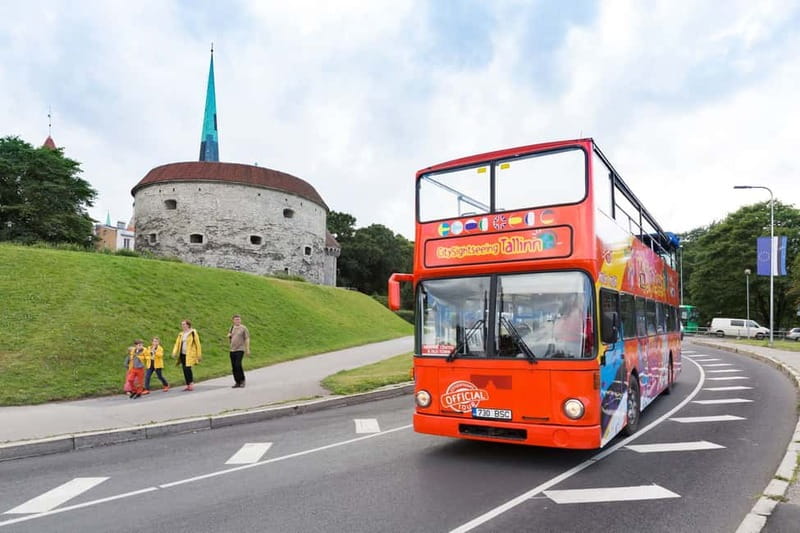
How long is the hop-on hop-off tour in Tallinn?
The Red Line tour takes about 55 minutes, and the Green Line tour takes about 80 minutes.
Is it a 24-hour hop-on hop-off ticket?
Yes. The tour is listed as a 24-hour hop-on hop-off bus tour.
Where do I board the bus?
Stop 1 is Mere Pst. 5, but customers can join at any stop along either of the two routes.
What languages are available on the audio guide?
The audio guide is available in Spanish, English, Estonian, Finnish, French, German, Italian, Russian, Chinese, and Swedish.
Can I use a mobile voucher or do I need a printed one?
Both mobile and printed paper vouchers are accepted on this tour.
Are attraction tickets, food, and drinks included?
No. Attraction tickets and food and drinks are not included.
Are pets or smoking allowed on the bus?
Pets are not allowed, and smoking is not allowed.