Trieste is best seen from the coast to the hill. This Trieste bus tour with audio guide gives you a fast layout of the city while you glide past big landmarks and get clear, synchronized commentary along the way. I liked that it’s built for short time and real orientation, not just slow sightseeing.
Two things I really like: the bus is comfortable (including air-conditioning) and the audio guide is thoughtfully done in multiple languages—so you can understand what you’re seeing as you pass it. You also get the practical freedom of hop on, hop off so you can spend more time where you care.
One thing to consider: Miramare is worth it, but the bus doesn’t drop you right at the castle door, so plan on walking and heat/steps—especially if you have mobility limits.
In This Review
- Key things to know before you ride
- Why this Trieste bus tour works: audio + route layout in 90 minutes
- Before you board at Molo Audace: finding the start and getting ready
- The 90-minute route in order: from old port views to Miramare Castle
- 1) Molo Audace and the maritime Trieste vibe
- 2) Sea museum, tram/train nodes, and the edge of the old city
- 3) Theater street, Santa Maria Maggiore, and Trieste’s Roman layers
- 4) Orthodox temples and mixed-faith architecture
- 5) Grande Canal and big civic squares: Vittorio Veneto, Borsa, and more
- 6) Saint Giusto Hill: the castle-and-church payoff
- 7) Goldoni Square, Carducci Boulevard, and the tram/train feel
- 8) Old Port engineering and the shift to the coast
- 9) Barcola pine forest, beach, and the final sea views
- 10) Miramare Castle: worth the walking, know what to expect
- 11) The Greek Orthodox church near the end, then back to the start
- Audio guide tips: how to get value from the commentary
- Hop on, hop off for 24 hours: build your own Trieste day plan
- Comfort and real-world perks: air-conditioning, USB charger, and bag sanity
- Value and who this tour is best for
- Should you book it? My straight answer
- FAQ
- How long is the Trieste bus tour with audio guide?
- How much does it cost?
- What languages are available for the audio guide?
- Can I hop on and off the bus?
- Is the ticket valid only for the one ride?
- Where do I board and where does the tour end?
- Are pets allowed on the bus?
Key things to know before you ride

- Route-synced audio guide in English, German, Italian, and Spanish helps you “place” each stop as the bus moves.
- Air-conditioned comfort makes a big difference in warm weather when you’d otherwise be walking.
- 24-hour ticket validity lets you build your own mini-itinerary, as long as you catch the next bus.
- On-board assistance + USB charger are small perks that keep the trip easy.
- Miramare and Barcola are the feel-good finale: sea views now, castle vibes later (with some walking).
- Pets policy is straightforward but strict: only allowed with a muzzle.
Why this Trieste bus tour works: audio + route layout in 90 minutes
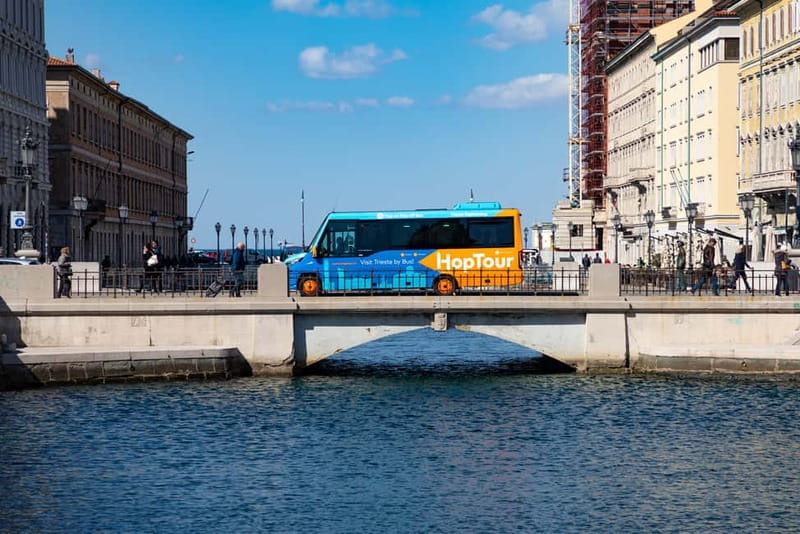
Trieste can feel like a patchwork city at first. You’ve got Italian streets, Austro-Hungarian-era architecture, and sea-breeze paths that all meet in one tight area. This tour is useful because it doesn’t just show highlights; it helps you understand where the highlights are relative to each other.
The magic is the audio guide synchronized with the route. As the bus passes landmarks like Molo Audace and Miramare, the commentary stays tied to what’s outside your window. That means you’re not stuck doing mental map-making later.
The second thing that makes it click is the pace. At 1.5 hours, it’s long enough to cover a lot of ground, yet short enough that you still have energy (and daylight) left for choosing where to go next on foot.
Before you board at Molo Audace: finding the start and getting ready
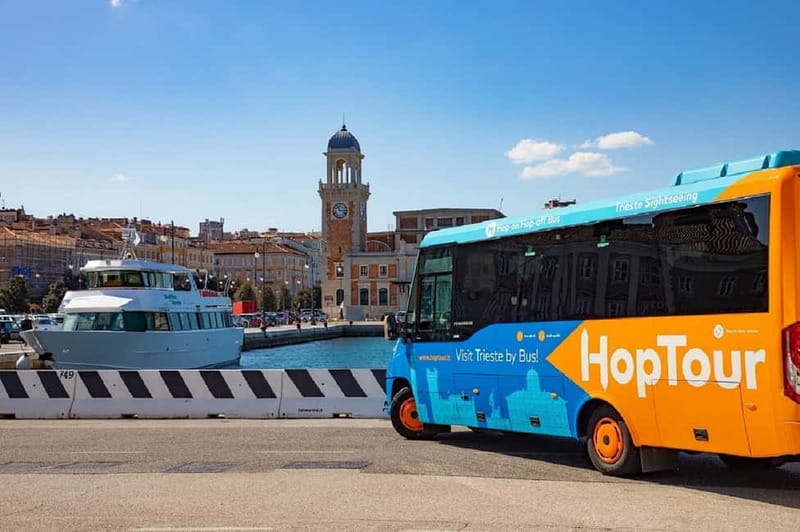
You board at the Molo Audace area, in front of Piazza Unità d’Italia, and the tour ends back there. That’s a helpful setup because it anchors the experience near the city’s waterfront and a natural starting point for exploration.
A practical tip: the pickup can be easier once you’re already near Piazza Unità d’Italia. One common snag is simple signage—if you’re arriving from far off, give yourself a few extra minutes so you don’t wander the port zone looking for the right bus.
What’s included beyond the ride is also worth noting:
- Audio guide in multiple languages (English, German, Italian, Spanish)
- USB charger
- On-board assistance
- A bus that’s air-conditioned
If you’re arriving in Trieste with luggage (like after a cruise), you’ll be glad you’re not forced into complicated transport on day one. Keeping your bags squared away is part of the comfort here.
The 90-minute route in order: from old port views to Miramare Castle
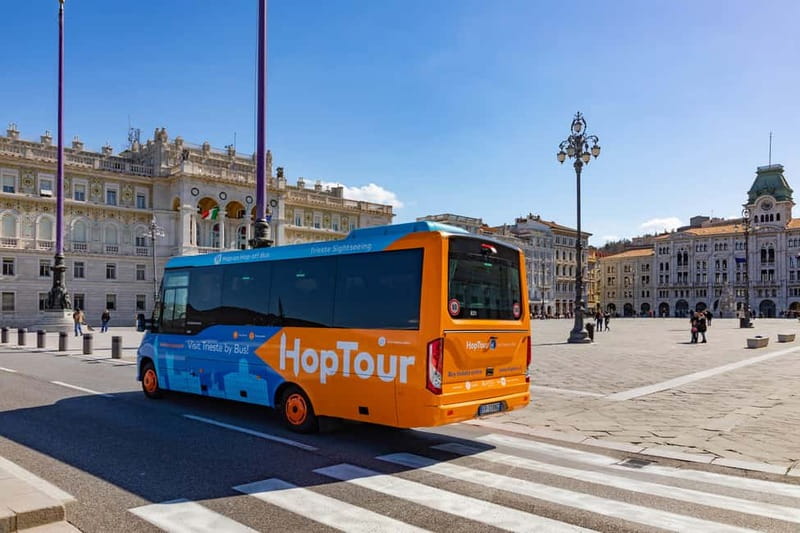
Think of the loop as three moods: harbor and maritime Trieste, the historic city core and its religious mix, then the coast out toward Barcola and Miramare.
1) Molo Audace and the maritime Trieste vibe
The ride starts by swinging past Molo Audace—a pier area tied to Trieste’s seafaring identity. This is the kind of spot where it’s easy to watch ships and forget history. The audio helps you connect the setting to why the waterfront looks the way it does, including the idea that the pier relates to an old shipwreck.
As you continue, the bus reaches the sea-facing parts of town, setting up what comes next: the port, the squares, and the “why Trieste is Trieste” feeling.
If you want photos: grab them early. Waterfront light often looks best before you start moving deeper into street canyons.
2) Sea museum, tram/train nodes, and the edge of the old city
The loop includes stops and pass-by sights along the shoreline of the historic center. You’ll see places like:
- Salone degli Incanti – Eataly along the waterfront area
- La Lanterna and the Lighthouse along Via Ottaviano Augusto, plus La Lanterna Baths
- Campo Marzio Street and the Sea Museum
- Campo Marzio Station area viewpoints
- Piazza Venezia / Piazza Venezia waterfront zone
This section is good for one reason: it shows how Trieste’s city life hugs the water. You’ll also get a clearer sense of why certain streets feel like “front doors” to the harbor.
3) Theater street, Santa Maria Maggiore, and Trieste’s Roman layers
Next comes one of the strongest history stretches: the area around the Roman Theater. The route takes you past the Theater Roman of Trieste and the nearby Santa Maria Maggiore Church.
This is where the audio guide becomes more than background. You’re not just seeing stone and columns from a distance—you’re hearing how Trieste connects to older eras, so the city feels less random.
Practical note: if you hop off here, you’ll likely want a bit more than a quick glance. The church and theater area is compact, and it rewards walking slowly for a few minutes.
4) Orthodox temples and mixed-faith architecture
The route then heads toward the religious and architectural diversity that makes Trieste unusually interesting for a relatively small city. You pass by:
- The Orthodox Serbian Temple of Saint Spyridon on Saint Spiridione Street
- Maria Teresia (as referenced on the route)
- Saint Antonio Square and Church of Sant’Antonio Nuovo
If you like cities where multiple cultures leave visible marks, this part is worth paying attention to through the audio. It helps you notice details you might otherwise gloss over from a bus seat.
5) Grande Canal and big civic squares: Vittorio Veneto, Borsa, and more
After the sacred sites, the bus moves through a more civic rhythm. You’ll see:
- Piazza Vittorio Veneto
- The Grande Canal area
- Ponterosso Square
- Piazza della Borsa (Borsa Square)
In a short loop, these kinds of squares are useful because they tell you where the city’s “public life” sits. It’s easier to plan a later walk when you already understand which squares are central and which ones feel like edges.
6) Saint Giusto Hill: the castle-and-church payoff
Then you climb into the iconic viewpoint area: Saint Giusto Hill. On the bus route you’ll pass San Giusto Castle and Church, which is the kind of sight that instantly signals you’re in a city with layers of power and defense.
This is also a good moment to decide your strategy:
- If you hop off here, you might turn the hill into part of your walking plan.
- If you stay onboard, you still get the “where to go later” value, which is the whole point of a bus orientation tour.
7) Goldoni Square, Carducci Boulevard, and the tram/train feel
You’ll continue past areas like:
- Piazza Carlo Goldoni
- Via Giosuè Carducci / Carducci Boulevard
- Piazza Guglielmo Oberdan (tram station area)
- Piazza della Libertà (train station area)
These stops are practical more than dramatic. They help you map transit and shortcuts, which matters because Trieste is best explored on foot once you’ve picked a base.
8) Old Port engineering and the shift to the coast
As the tour keeps going, you’ll pass sights tied to the port’s working side—like the Central Hydrodynamics of the Old Port of Trieste—and then transition toward the greener seaside stretch.
This matters because it changes the feel of the city. Trieste isn’t only historic stone; it also has a working harbor and a coast that’s meant for lingering.
9) Barcola pine forest, beach, and the final sea views
Now you move into the Barcola area:
- Pinewood of Barcola
- Barcola Beach
- Barcola Crossroads (near the way to Miramare)
- Barcola Seafront and Topolini Baths
If you’re visiting in warmer months, this is the part that turns a bus tour into a mood shift. Even without hopping off, you get those long-waterline views that make the city feel open and coastal.
10) Miramare Castle: worth the walking, know what to expect
The highlight payoff is Miramare Castle. The route brings you to the Miramare area and the bus includes a stop where you can get off.
Here’s the key consideration: the bus stop isn’t right against the castle grounds for everyone’s comfort. If you want to see the castle and grounds, plan on a walk and sun/heat management. This can be tiring, especially if you’re traveling with older family members or you’re sensitive to long strolls.
When it’s your time priority, don’t try to do everything at Miramare. Pick your must-sees, give yourself the breathing room to enjoy the view, and avoid turning it into a sprint.
11) The Greek Orthodox church near the end, then back to the start
As you finish the loop, you’ll pass:
- The Greek Orthodox Church of Saint Nicolò (Tre Novembre area)
- And return to Molo Audace / Piazza Unità d’Italia
That ending section is still useful. It’s a final chance to catch any landmark you want to reconsider before you leave Trieste.
Audio guide tips: how to get value from the commentary
The audio guide is a big part of the value here. It’s not random narration—it’s tied to the route, and it’s available in several languages, so you can follow along even if you’re not fluent.
I’d use it like this:
- Start the audio immediately so you begin learning the city’s structure from the first stretch.
- When you hear a name you care about, mentally note where it appears along the loop. Then you can decide later if you’ll hop off for a closer look.
- Keep an eye on the timing. The bus is moving, so if you wait too long to scramble for photos, you’ll just end up disappointed with your own sprint.
Also, the tone matters. On-board assistance helps when you’re figuring out how hop on/hop off works in practice. The setup is meant to be straightforward, but it still pays to ask if you’re unsure.
Hop on, hop off for 24 hours: build your own Trieste day plan
One of the best perks is the ticket validity for 24 hours. That means this isn’t only a single 1.5-hour ride. It can become your framework for the day.
Here’s how to make that work without frustration:
- Start early if you can. If you want a few hop-offs, you need enough time between buses to get out, see something, and return.
- Pay attention to the stop flow. When you hop off, your “next move” is simply catching the next bus that continues the route.
- Seat reality check: the seat is guaranteed only for the course you booked, so if you’re coming back later, you may have to wait for an opening.
A small but important practical note from real experience: the system is hop on/hop off and the ticket lasts 24 hours, but it’s worth reading the instructions carefully up front so you know what you’re working with. Don’t assume it’s automatic in the way some city tours market it.
Pets are allowed only if you wear a muzzle, so if that’s relevant for your family, plan ahead.
Comfort and real-world perks: air-conditioning, USB charger, and bag sanity
The bus itself is modern and comfortable, and that’s not fluff. In Trieste, weather can swing, and even on warm days the air-conditioning makes a big difference. It turns the tour into a “reset” between walking blocks.
Two small details add up:
- USB charger means you can keep your phone ready for maps and photos.
- On-board assistance is useful if you’re figuring out how to use hop on/hop off with your specific time slot.
If you’re arriving with luggage, this kind of bus orientation is also practical because you’re not forced to immediately start hauling bags to every stop. It can buy you time to settle in.
Value and who this tour is best for
At about $19 per person for a 1.5-hour loop, this is best understood as buying orientation and time savings. You’re paying for:
- Transport around the core sights
- An audio guide in multiple languages
- Comfort that keeps you from walking everything in heat or rain
- The option to extend your sightseeing with hop on/hop off across the next day
This tour is ideal if:
- It’s your first visit and you want a map of where everything sits.
- Your time is short and you want to decide where to return.
- You’d rather be seated while you learn Trieste’s layout and history cues.
It may not be your top choice if:
- You want deep, long stops at just one or two museums or churches.
- Your day is built around long hikes where walking distances are not a problem. (Miramare can add walking, and the pace is still designed for a loop.)
Should you book it? My straight answer
If you want a clean start in Trieste and a simple way to understand the city fast, I’d book this. The combination of audio guide clarity, comfortable bus ride, and 24-hour hop on/hop off gives you flexibility without turning the day into logistics.
I’d only pause if Miramare walking distances would be a real problem for your group. In that case, you can still use the loop for orientation and focus your castle time on a plan that matches your mobility.
FAQ
How long is the Trieste bus tour with audio guide?
The duration is about 1.5 hours. Check availability to see your starting time option.
How much does it cost?
The price is listed as $19 per person.
What languages are available for the audio guide?
The audio guide is available in English, German, Italian, and Spanish.
Can I hop on and off the bus?
Yes. You can hop on and off at the stops, and you can take the next bus if there is a seat.
Is the ticket valid only for the one ride?
No. The ticket is valid for 24 hours.
Where do I board and where does the tour end?
You board at the Molo Audace area, in front of Piazza Unità d’Italia, and the tour ends back at the same meeting point.
Are pets allowed on the bus?
Pets are allowed only if wearing the muzzle.