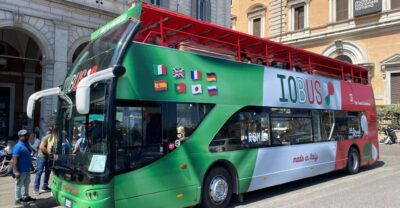
Get your bearings in one loop. This hop-on hop-off double-decker ride gives you live English commentary as you float past Jackson Square and the French Market, then keep rolling through the neighborhoods that make New Orleans feel like its own world. You’re not locked into one plan either, because the ticket is valid for the day and you can hop off whenever something catches your eye.
The only real catch is time: the last tour ends at 5:30pm, and the last departure is 4pm, so a late start can cut your loop short.
In This Review
- Key points I’d use to plan your day
- The Double-Decker Loop That Helps You Plan NOLA Fast
- Where You Start: 700 Decatur St and a Quick Voucher Exchange
- Hop 1: Jackson Square and St. Louis Cathedral (Plus Beignets)
- Hop 2: French Market for Produce, Souvenirs, and Local Energy
- Hop 3: Marigny, Bywater, Frenchmen Street Music Clubs, and Crescent Park
- Hop 4: Treme and St. Augustine Church Area
- Hop 5: Basin St. Station and the City’s Inner Rhythm
- Hop 6: Canal Street to Bourbon, Royal, Chartres, and Back Again
- Hop 7: Harrah’s, the American Italian Cultural Museum, and Italian Piazza
- Hop 8: Poydras & Loyola, Lafayette Square, and Gallier Hall
- Hop 9: St. Charles Avenue Area and the Streetcar Culture
- Hop 10: Museum Row Energy Near the WWII Museum and Ogden Museum Area
- Hop 11: Magazine Street Shops and Restaurants (Plus Garden District on Magazine)
- Hop 12: Convention Centre and Mardi Gras World
- Hop 13: Arts District and Julia Street to the Outlet Collection at Riverwalk
- Hop 14: Riverfront Stops, Observation Deck, Aquarium, and Creole Queen
- How the 30-Minute Cadence Changes Your Whole Day
- Price: Is $51 a Good Deal for a One-Day Pass?
- The Live Guide Factor: Why This Tour Works When Others Don’t
- Practical Tips That Matter on the Ground
- Who Should Book This Bus Tour
- Should You Book It?
- FAQ
- How much does the New Orleans hop-on hop-off bus tour cost?
- How long is the tour?
- How often do the buses run?
- Where do I exchange my voucher to start the tour?
- Where does the tour end?
- What time are the first departures?
- What is the last departure time?
- Is there a live guide?
- Can I use a mobile voucher or a printed voucher?
- What do I need to bring, and what’s not allowed?
Key points I’d use to plan your day
- Open-top sightseeing from a double-decker deck for city views, not just street-level staring
- Unlimited 1-day hop-on hop-off with buses running every 30 minutes
- Major anchors covered: St. Louis Cathedral area, French Market, Royal Street corridor, Garden District, WWII Museum zone, and the Riverfront
- Live English guide who turns the route into an easy orientation (guides like Logan and Gary, Deidre, Sydney, Bill and Lita, Chris, Ellen, Mary, and Linda are the kind of personalities you might catch)
- Voucher-friendly: mobile or printed paper accepted, redeemable at stops along the route
- Wheelchair accessible buses, plus no pets and no smoking on board
The Double-Decker Loop That Helps You Plan NOLA Fast
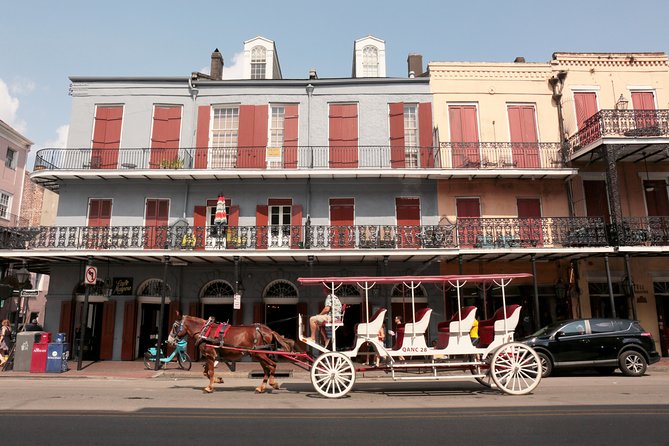
New Orleans has a lot going on at once. Streets feel close together, neighborhoods feel different, and the best move is to get a simple map in your head before you commit to long walks or expensive detours. That’s exactly what this 1-day hop-on hop-off bus is built for: you ride, you listen, you look, and then you decide where you want to slow down.
What I like most is that the tour isn’t only about scenery. The live English guide adds context as you pass the big landmarks and the smaller details that you’d miss while rushing around. The second thing I really value is flexibility. With buses running about every 30 minutes, you can jump off, do a focused visit, and still catch your next ride without panic.
There’s one more thing to know up front: the tour has a hard stop. If you’re the type who likes to sleep in and stroll late, make sure you’re on the early loop. The last tour ends at 5:30pm, and last departures happen at 4pm, so you’re managing daylight, not just schedules.
Where You Start: 700 Decatur St and a Quick Voucher Exchange
The tour is centered on 700 Decatur St, right by the Jackson Square area. If you’re arriving with a voucher, you exchange it at Jackson Square (700 Decatur Street) or at Basin St. Station (Stop 5). After that, you’re ready to ride the loop at your pace.
This matters because your day in the French Quarter can go two ways: either you feel organized, or you end up walking in circles with a hot head and no plan. Starting at this hub gives you an easy first win. You also get access to the route in multiple directions depending on where you choose to board later (since vouchers can be redeemed at stops along the route).
Hop 1: Jackson Square and St. Louis Cathedral (Plus Beignets)
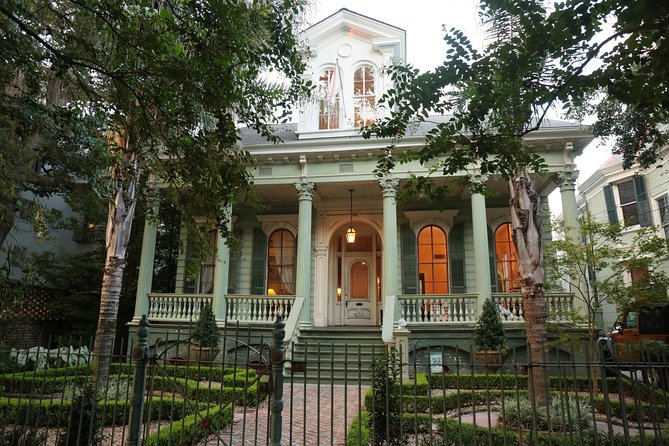
The first major anchor is the Jackson Square & St. Louis Cathedral area. This is the kind of stop where you don’t need a long explanation to appreciate it. The Cathedral area is a built-in photo moment, but it’s also the classic starting point for understanding the French Quarter’s layout and why the streets feel the way they do.
Right in this stop area you’ll find beignets and cafe au lait as part of what the neighborhood offers. The bus tour doesn’t include food, but it gets you to the point where grabbing a quick sweet bite is easy and convenient if you’re starting your day hungry.
My practical advice: use this stop as your orientation reset. Even if you plan to do other neighborhoods later, this is where you can stand for a few minutes, look around, then decide what to tackle next while the day is fresh.
Hop 2: French Market for Produce, Souvenirs, and Local Energy
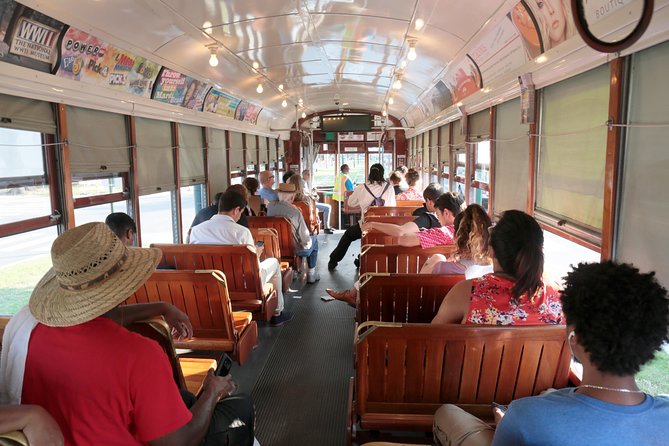
Next up is the French Market area. This is a smart hop-off because it’s less about one “must-see monument” and more about wandering. You’ll see stands with fresh local produce, plus all the usual festival-style mix of keepsakes and souvenirs.
There’s also a market mindset here. If you’re the type who likes to break the day into small wins, the French Market is ideal: browse, snack if you want, and then get back on the bus when you’re ready to move. The route also includes a nearby flea market vibe, which can be fun for a quick look even if you’re not shopping.
One caution: markets can be crowded at peak hours. If you feel boxed in, don’t fight it. Step back, let the crowd move, and treat it as a short stop rather than an all-day event.
Hop 3: Marigny, Bywater, Frenchmen Street Music Clubs, and Crescent Park

If you want New Orleans to feel alive beyond the French Quarter, this is where the tour helps. The route includes the Marigny Bywater area and Frenchmen Street music clubs, plus Crescent Park.
This section is great for anyone who wants to understand the city’s music gravity. You’re passing through neighborhoods known for late-night sounds and big personality, and the bus drops you close enough to walk without needing to “figure it out” from scratch.
The possible downside is timing and mood. If you’re sensitive to noise or you want a quiet afternoon, you might not want to stay here for long midday stretches. But even a brief stop pays off because you get a sense of where the nightlife lives and how the city changes street to street.
Hop 4: Treme and St. Augustine Church Area
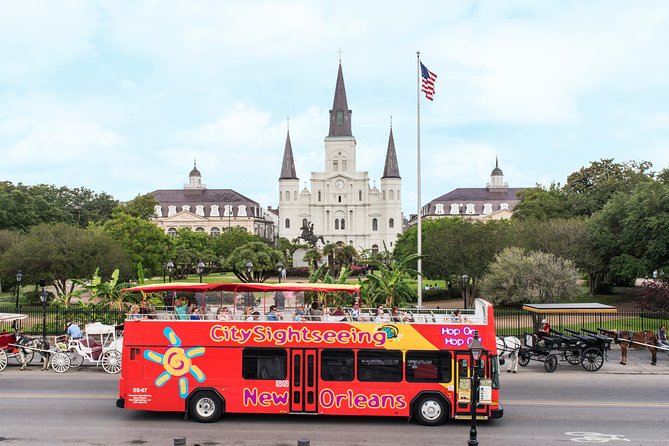
The tour also heads through Treme, with a stop that highlights St. Augustine Church and the Tomb of the Unknown Slave.
This is one of those stops that’s worth slowing down for, even if you don’t do a long indoor visit. The point is to get out of the “only landmarks” mode and see how history sits in everyday places. It also gives you a different New Orleans angle than the big-ticket sights.
If you prefer light and fun all day, this stop might feel heavy. But if you want your day to feel real, not just scenic, it’s a strong balance.
Hop 5: Basin St. Station and the City’s Inner Rhythm
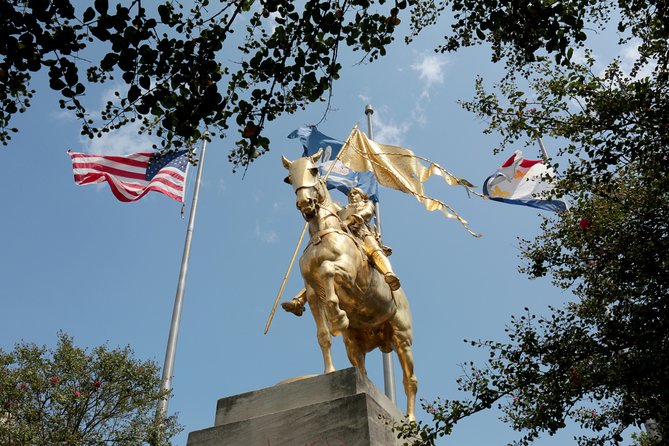
You’ll also pass through Basin St. Station (and it’s listed as a redemption/boarding point). This is a practical stop, because it’s a good “reset” area: grab a breather, check your next move, and keep the loop going.
Sometimes station stops feel like filler on hop-on hop-off tours. This one is still useful because it breaks up the French Quarter focus and supports that hop-on plan. If you’re hopping in and out, you’re likely to use stops like this to avoid stress.
Hop 6: Canal Street to Bourbon, Royal, Chartres, and Back Again
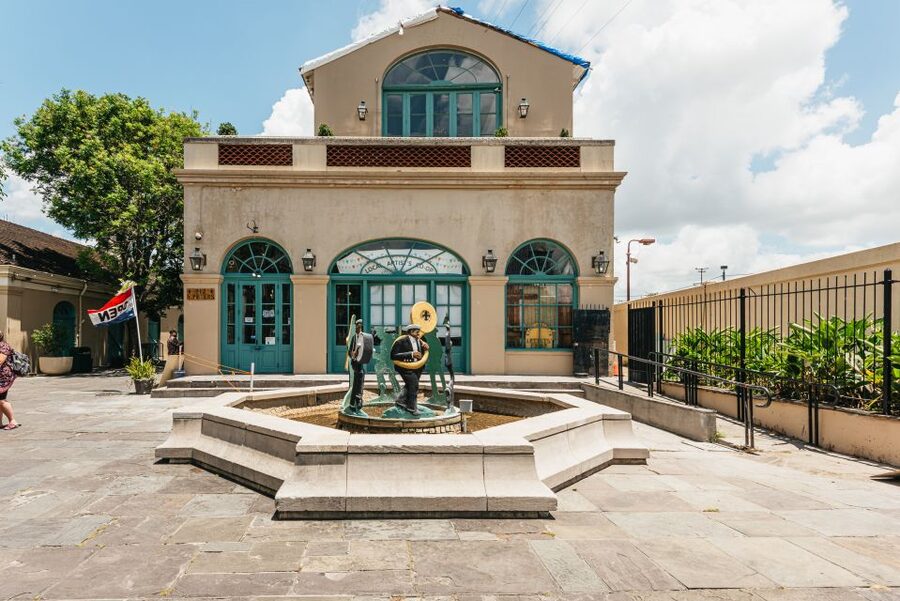
One of the most famous segments is the stretch around Canal Street that loops past Bourbon Street, Royal Street, and Chartres Street (including Canal Street hotels).
This is the commercial heart of tourist New Orleans, yes. But it’s also a key visual “map” lesson. Seeing these streets from the bus helps you understand how walking distances work, where the crowds concentrate, and how quickly the vibe shifts from one block to the next.
What I’d do here: treat it as a choose-your-own-adventure corridor. If you want energy, hop near Bourbon. If you want older streets and craft-style browsing, hop closer to Royal Street. If you want easy navigation and a place to pivot back to your bus, use the Canal Street area as your anchor.
Hop 7: Harrah’s, the American Italian Cultural Museum, and Italian Piazza

The route includes a stop near Harrah’s Casino, plus the American Italian Cultural Museum and Italian Piazza.
This is a “variety” stop. It gives you a break from pure street-walking and offers a more structured, attraction-like area. Even if you don’t plan to enter everything, it’s useful because it provides a different kind of landmark density than the Quarter.
Keep in mind that casino areas can feel different from the historic streets. If you’re trying to keep your day focused on culture and architecture, you may want to keep this as a short stop unless something specifically interests you.
Hop 8: Poydras & Loyola, Lafayette Square, and Gallier Hall
Another strong neighborhood stretch is around Poydras & Loyola (1100 Poydras), plus Lafayette Square and Gallier Hall.
This part can help you understand New Orleans beyond the postcard zones. It’s a good section if you want to see more of the city’s civic and architectural side. It also acts as a convenient bridge between major museum and shopping zones.
If you’re planning multiple hops that day, this is the kind of area where you can step off, take a quick look, and avoid burning time on places you’re not sure you’ll love.
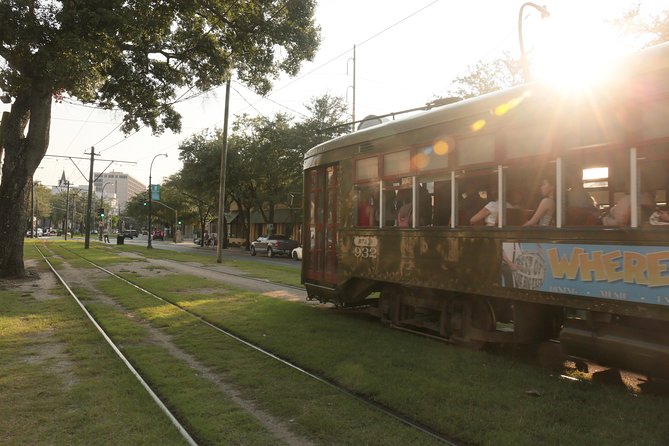
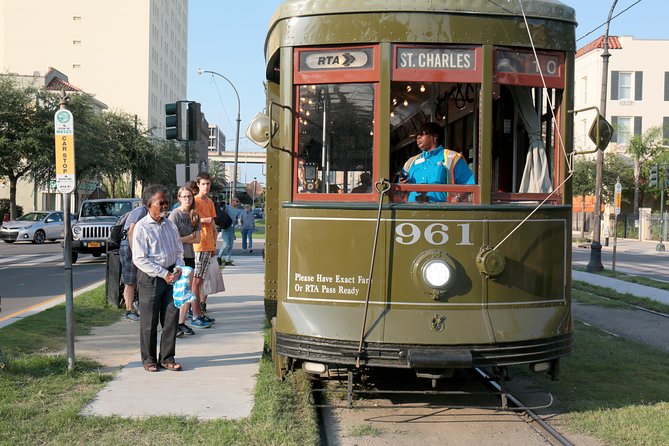
Hop 9: St. Charles Avenue Area and the Streetcar Culture
The tour includes St. Charles at Lafayette (545 St. Charles) and also notes St. Charles Avenue Streetcar stops.
This matters because St. Charles is where New Orleans starts to feel more open and a bit more elegant, with a different rhythm from Bourbon-and-Quarter intensity. Even if you don’t plan a full streetcar ride, seeing the avenue from the bus helps you grasp why people keep returning to this side of town.
If you’re using the bus as your first-day planner, this is a great time to decide whether you’ll return for a longer, slower follow-up later.
Hop 10: Museum Row Energy Near the WWII Museum and Ogden Museum Area
This is a major value chunk of the route. The bus stop includes the National WWII Museum area and also lists Ogden Museum of Southern Art, the Contemporary Arts Center, and the Confederate Civil War Museum as part of the same zone.
If you like history with structure, this segment is one of the best “time-efficient” uses of your hop-on pass. You’re dropped near multiple attractions without needing to coordinate rides across town. It also makes your day easier if your interests vary between people you’re traveling with.
Potential drawback: museums can swallow time. If you hop off here too early and plan to do more than one, you might miss other neighborhoods you also wanted. The fix is simple: pick one museum focus, then let the rest be a future trip.
Hop 11: Magazine Street Shops and Restaurants (Plus Garden District on Magazine)
The bus route hits Magazine Street with shops and restaurants, and it also serves the Garden District on Magazine Street plus Lafayette Cemetery.
Magazine Street is a great “slow down” corridor. It’s not just shopping in the generic sense; it’s the kind of street where browsing feels like part of the day, not an obligation. If you want New Orleans with fewer crowds than the Bourbon zone, this is often the calmer alternative.
The Garden District segment and cemetery stop add a different flavor: architecture, greenery, and the distinct look of the neighborhood. This is also the part of the tour where you can burn time quickly if you like taking photos and wandering.
Hop 12: Convention Centre and Mardi Gras World
The route includes the Convention Centre and Mardi Gras World.
This is another “bigger stop” that can be appealing even if Mardi Gras itself is not on your travel dates. It helps you tie the city’s street energy to a more behind-the-scenes, exhibit-style experience.
If you’re museum-tired by this point, keep it light: hop off, take in what you came to see, then use your next bus to continue without turning the day into a marathon.
Hop 13: Arts District and Julia Street to the Outlet Collection at Riverwalk
The route continues into the Arts District, including Julia Street, Julia Street shops and galleries, and The Outlet Collection at Riverwalk.
This segment is useful because it gives you a “mid-afternoon reset” option. You can browse galleries or keep it practical with shopping. It’s also a nice change of pace from the cemetery and museum zones, especially if you’re trying to keep the day balanced.
I’d treat this as your flexible stop. If you’re energized, explore a little more. If you’re tired, step off for a quick walk and return to the bus sooner.
Hop 14: Riverfront Stops, Observation Deck, Aquarium, and Creole Queen
Finally, the route runs out to the Riverfront, including Paddlewheeler Creole Queen, VUE Orleans Observation Deck, and Audubon Aquarium & Insectarium.
This is a strong finishing area because it’s visually different from the French Quarter streets. Even if you don’t do multiple indoor attractions, seeing the Riverfront at the end of the day helps your brain connect the dots about where the city opens up.
One important reality check: because the last tour ends at 5:30pm and the last departure is at 4pm, you don’t want to wait too long to reach the Riverfront if you plan to hop off for anything beyond quick wandering.
How the 30-Minute Cadence Changes Your Whole Day
Buses run about every 30 minutes, and the bus tour segment is listed as 1.5 hours. On paper, that might sound like a simple loop. In real life, it’s the difference between a tour you can enjoy and one you feel trapped inside.
Here’s the practical way to use it: pick 2 to 3 “real” hop-off moments, then keep the rest as “see it, decide later” hops. If you try to do everything like a checklist, you’ll run out of time before the last loop winds down.
Also, note that the tour’s starting departures are only in specific windows: the first departures from Stops 1, 5, 6, and 17 fall between 9:30am and 9:40am. If you’re planning to board later, you still can, but you’ll want to build your plan around getting on sooner rather than later.
Price: Is $51 a Good Deal for a One-Day Pass?
At $51 per person for a 1-day unlimited hop-on hop-off pass, this isn’t a “cheap and cheerful” add-on. But it can be good value if your goal is efficiency: you want to see a lot of New Orleans without constantly sorting out routes, taxis, or long backtracking walks.
What you get for the price is the key: live English guide, stops near major sights, and an easy way to reach multiple districts in one day. The tour covers the hard part of first-day navigation. Tickets to attractions and food are not included, so you still pay for entries you choose to do.
To judge if it’s worth it for you, ask this: will you realistically hop off multiple times? If yes, the pass tends to pay for itself in saved time and fewer transportation decisions. If you only want one or two stops, you might spend the money and still feel like you barely used the flexibility.
The Live Guide Factor: Why This Tour Works When Others Don’t
This tour’s real strength shows up in the guide. The commentary is live and in English, and the tone is often reported as funny and helpful. Names that come up include Logan and Gary, Deidre, Sydney, Bill and Lita, Chris, Ellen, Mary, and Linda.
Even if you don’t catch every detail, the guide helps you build a story of the city as you travel. That’s what turns a bus ride into a map in your head. If you’re trying to figure out what to do next while you’re already in New Orleans, that kind of live, city-specific guidance is a big win.
One caution from feedback: if you need language beyond English, you shouldn’t count on translation. Plan to rely on the English commentary or your own backup materials.
Practical Tips That Matter on the Ground
Bring the basics the tour asks for: a passport or ID card and cash. Vouchers work in two forms, too: mobile and printed paper are both accepted, and you can redeem them at stops along the route.
A couple of behavior notes are built in: no pets and no smoking. And if you’re using a wheelchair, the buses are wheelchair accessible.
Finally, remember the time cutoffs. This is not a midnight-style tour. The bus system winds down, so your best strategy is to ride earlier and plan your last hop-off with the 5:30pm end time in mind.
Who Should Book This Bus Tour
Book it if:
- You’re visiting for the first time and want an easy orientation to French Quarter, Garden District, museums, and Riverfront
- You want to minimize transportation stress and see multiple neighborhoods in one day
- You like the idea of making decisions on the fly while you move around the city
Skip it or consider a different approach if:
- You have a late-day schedule and can’t work within the 4pm last departure / 5:30pm end window
- You only plan to visit one or two nearby places and don’t need the hop-on flexibility
- You need commentary in a language other than English
Should You Book It?
If your goal is to get oriented, see the big districts, and choose what to revisit, this bus tour is a strong buy. The combination of live English commentary, open-top views, and a route that touches the major anchors makes it a smart backbone for your day.
I’d especially recommend it for first-timers, and for anyone traveling with mixed interests since the stops cover history, music neighborhoods, shopping streets, and museum zones. Just start early enough to enjoy the loop, and treat the hop-off moments as your main events rather than trying to do everything at once.
FAQ
How much does the New Orleans hop-on hop-off bus tour cost?
It costs $51 per person.
How long is the tour?
The bus tour duration is 1.5 hours, and your ticket is valid for 1 day.
How often do the buses run?
Buses run every 30 minutes.
Where do I exchange my voucher to start the tour?
You can exchange your voucher at Jackson Square (700 Decatur Street) or at Basin St. Station (Stop 5).
Where does the tour end?
The tour ends back at the meeting point (700 Decatur St).
What time are the first departures?
The first departure from Stops 1, 5, 6, and 17 is between 9:30am and 9:40am.
What is the last departure time?
The last departure from any stop is at 4pm, and the last tour ends at 5:30pm.
Is there a live guide?
Yes, there is a live tour guide in English.
Can I use a mobile voucher or a printed voucher?
Yes. Both mobile and printed paper vouchers are accepted, and they can be redeemed at any of the stops along the route.
What do I need to bring, and what’s not allowed?
Bring a passport or ID card and cash. Pets and smoking are not allowed.